
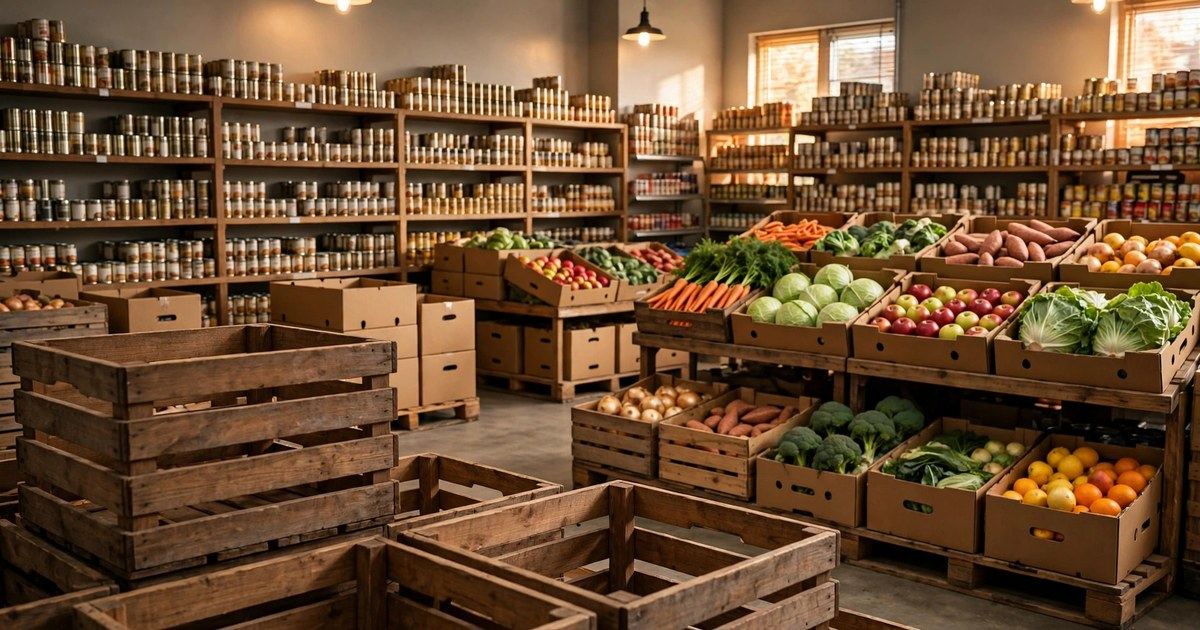
Food bank use in Canada has reached a record 2.3 million monthly visits, according to a new report from Food Banks Canada released on October 21, 2026 — more than double the number of visits recorded in 2019. The figures, reported by outlets including the Globe and Mail, CityNews and Narcity, paint a stark picture of food insecurity in one of the world's wealthiest countries, with nearly one in five of those turning to emergency food assistance now employed.
The report lands as Canadians continue to grapple with elevated grocery prices and a cost-of-living squeeze that has outlasted the worst of the inflation surge. For policymakers, the numbers are a political problem: they suggest that having a job is no longer a guarantee of being able to feed a family.
What the report found
Food Banks Canada's annual HungerCount-style survey found 2.3 million visits to food banks in a single month — the highest level ever recorded in the survey's history. The Globe and Mail reported that usage has more than doubled since 2019, before the pandemic and the inflation wave that followed it.
Perhaps the most striking finding is who is showing up. Employed Canadians now make up almost a fifth of those turning to emergency food assistance, according to the Globe and Mail's reporting on the study. That marks a profound shift in the profile of food bank users: the crisis is no longer confined to the unemployed or those on fixed incomes, but has spread deep into the working population.
Grocery costs are the single biggest driver cited in coverage of the report. While Canada's overall inflation rate has cooled from its peaks, food prices remain elevated, and the cumulative increase since 2020 has permanently reset what households pay at the checkout. For families already stretched by housing costs, there is simply no slack left in the budget.
Why this is happening
The roots of the crisis stretch back to the pandemic-era inflation surge. Supply-chain disruptions, the war in Ukraine's effect on grain and fertilizer markets, and extreme weather hitting harvests all pushed food prices sharply higher from 2021 onward. Central banks raised interest rates to fight inflation, which cooled price growth but raised mortgage and borrowing costs — squeezing the same households from both sides.
Canada's particular vulnerability comes from its concentrated grocery sector. A handful of large chains dominate the market, and their profitability during the inflation years drew political scrutiny. Parliamentary hearings examined whether grocers were profiting excessively from higher prices — a debate that echoes similar "greedflation" arguments in the United States and Europe.
Housing costs compound the problem. In cities like Toronto and Vancouver, rent absorbs a share of income that leaves little room for food-price shocks. When both shelter and groceries rise faster than wages, food banks become the pressure valve.
The working poor
The finding that roughly one in five food bank users is employed deserves emphasis. It reflects a labour market where many jobs — in retail, hospitality, gig work, and care — pay wages that have not kept pace with the cost of essentials. Minimum-wage increases in several provinces have helped at the margins, but not enough to close the gap for households facing 2026's price levels on 2019's wage growth.
This is also a story about the limits of Canada's social safety net. Employment insurance, provincial assistance programs, and federal benefits were designed for a world in which work reliably lifted people above the poverty line. The report's numbers suggest that design no longer matches reality for millions of visits each month.
What it means for policy
The report will inevitably become ammunition in Canada's political debate. Opposition parties are likely to frame the 2.3 million figure as evidence that the government's affordability measures have failed. The government, for its part, can point to programs like the Canada Child Benefit and recent grocery-rebate measures — but the trend line is moving against it.
Policy options on the table include further targeted transfers to low-income households, stronger competition enforcement in the grocery sector, and support for the food banks themselves, which are straining under demand that keeps breaking records. Some anti-poverty advocates argue that only a more fundamental rethink — such as a basic income floor — will address a problem that now reaches into the employed population.
There is also a measurement lesson. Monthly visits are not the same as unique individuals — the same person may visit multiple times — but the trend is unambiguous, and it is consistent with other indicators of hardship, from rising demand at community meal programs to surveys showing Canadians cutting back on fresh produce.
A crisis years in the making
The 2.3 million figure did not appear overnight. Food bank use in Canada was already climbing before the pandemic, driven by precarious work and housing costs that had been rising for a decade. What the 2019-to-2026 doubling captures is an acceleration: a pre-existing vulnerability met by an inflation shock, and the result was a step-change rather than a blip.
The changing face of the food bank user is the clearest evidence. When surveys a decade ago profiled visitors, the typical user was far more likely to be outside the labour force. The shift toward employed users reflects structural changes in the job market itself: the growth of part-time, contract, and gig arrangements that offer flexibility to employers but income volatility to workers. A retail clerk working 25 hours a week at minimum wage was already close to the edge in 2019; at 2026 prices, that edge has moved.
Provincial differences matter too. Food insecurity is not evenly spread: resource-dependent provinces facing commodity downturns, and major cities where rents have detached from local wages, tend to show the sharpest demand. Rural and northern communities face a double burden — higher food prices from transport costs layered on thinner incomes. The national 2.3 million figure aggregates very different local crises.
Why it matters
Canada is not alone: food insecurity has risen across much of the developed world since 2020. But the scale of the increase — a doubling in seven years — and its spread into the working population make the Canadian case particularly stark. A country that prides itself on a strong social safety net is watching that net fray in real time.
The deeper question the report poses is whether the post-inflation economy has left a permanent scar on living standards. Prices may have stopped rising as fast, but they have not fallen back — and for the 2.3 million monthly visits' worth of Canadians relying on food banks, the crisis is not a memory. It is this month's grocery run. Related reading: Trump's $8 billion harvest fuel relief plan for farmers, the US Social Security cost-of-living adjustment for 2027, and the Social Security Administration's historic database cleanup.
The pressure is global: the UN warns 19 million Afghans face acute hunger this winter as funding cuts close clinics.
Relief is not coming from rates: the Bank of Canada is expected to raise its policy rate to 2.50% on October 28, adding to household pressure.