
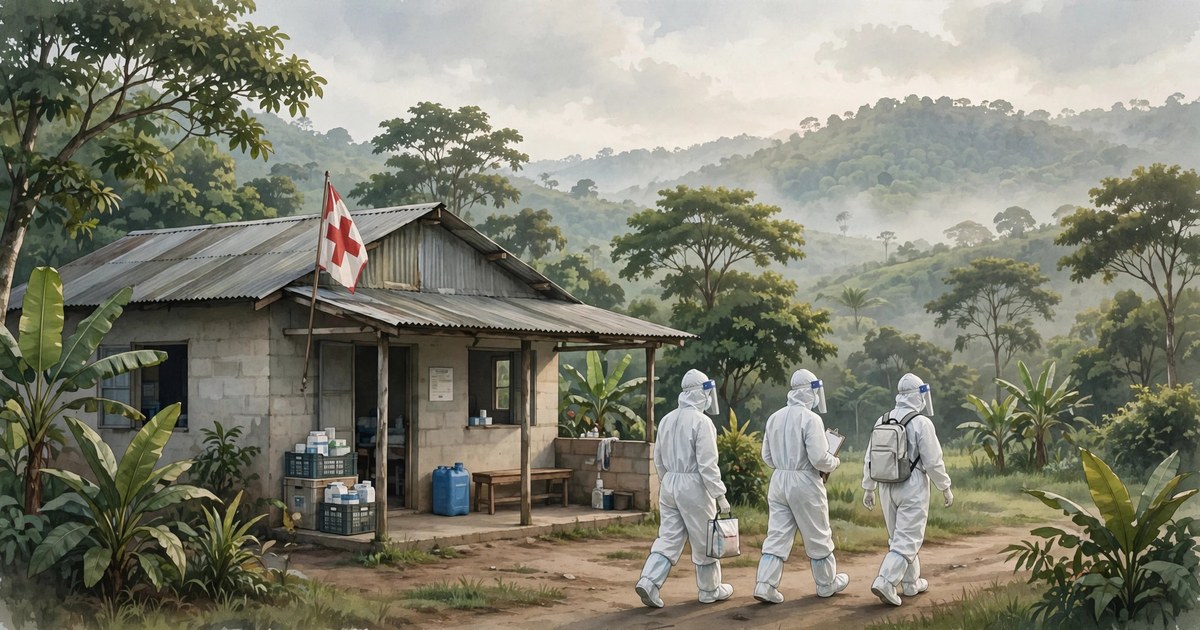
Ebola deaths in DR Congo have passed 5,000, government data released on Saturday 31 October 2026 shows, making this the deadliest Ebola outbreak in the country's history and the second-largest ever recorded anywhere in the world. The Democratic Republic of the Congo's Ministry of Public Health reported 5,026 deaths among 10,351 confirmed cases — a case fatality rate of 48.6 percent, meaning nearly one in every two people infected has died. The story is trending per news coverage, with Reuters, the BBC and Al Jazeera all reporting the grim milestone within hours of the figures being published.
The milestone comes less than a week after the same ministry reported 4,887 deaths among 10,060 cases as of 25 October, a rise of 139 deaths and 291 cases in six days. A total of 2,788 people have recovered from the virus so far. The World Health Organization estimates that about one-third of all deaths occurred without any medical care at all — a measure of how far the outbreak has outrun the response in the conflict-hit east of the country, where the virus first emerged in May.
Ebola Deaths in DR Congo: The Latest Figures
The figures released on 31 October put the scale of the crisis in stark terms. Of the 10,351 confirmed cases recorded since the outbreak was declared on 15 May 2026, 5,026 people have died and 2,788 have recovered, leaving the remainder either still in treatment or unaccounted for in the official count. The case fatality rate of 48.6 percent has barely moved for weeks, and experts quoted in international coverage say the true number of infections may be two to three times higher than the official count, because many cases in remote and conflict-affected areas are never recorded.
The outbreak is now DR Congo's 17th Ebola outbreak on record, and it became the country's deadliest ever in August, when it passed the 2,299 deaths recorded in the 2018–2020 epidemic. It is also the second-largest Ebola outbreak in history, behind only the 2014–2016 West African epidemic, which recorded 28,616 confirmed cases and more than 11,300 deaths across Guinea, Liberia and Sierra Leone. The United Nations has warned that the current outbreak is claiming lives at a significantly faster rate than previous epidemics. For the full picture of how the case count reached five figures, see our earlier report on the Congo Ebola outbreak passing 10,000 cases.
Why Ebola Deaths in DR Congo Keep Rising
The epicentre of the epidemic remains Ituri province, in the country's north-east, which accounts for 71.7 percent of confirmed cases. Ituri and neighbouring North Kivu together account for 9,782 confirmed cases and 4,792 deaths. Both provinces have endured armed conflict for decades, and that insecurity is now one of the biggest obstacles to stopping the virus: health workers cannot safely reach some communities, contact tracing breaks down, and treatment centres themselves have come under attack. A nurse was killed in an attack on an Ebola facility in Bafwasende earlier in the outbreak, and health workers continue to face violence in the field.
Eight of DR Congo's 26 provinces have now reported infections, and the virus is moving faster than the teams chasing it. The Africa Centres for Disease Control and Prevention (Africa CDC) has warned that the continent is "not winning so far" against the outbreak, its director-general Jean Kaseya told African health ministers, as he urged countries to step up surveillance and cross-border cooperation. The World Health Organization declared on 17 May that the situation in DR Congo and Uganda constituted an emergency that threatens other nations, noting a high level of regional risk, and on 21 August the United Nations said urgent additional resources were needed to contain an epidemic spreading through a region with immense humanitarian needs.
The Bundibugyo Strain: Why There Is No Approved Vaccine
A central reason this outbreak is so hard to fight is the virus itself. The strain spreading in DR Congo is not the Zaire strain behind most previous Ebola outbreaks, but the rare Bundibugyo species — and there is no approved vaccine or specific treatment for it. That leaves doctors relying on supportive care, isolation of patients, safe burials and contact tracing, the same tools used for decades, while the virus spreads through communities where trust in health authorities is already low.
There is, however, a trial under way that could change that. The TUMAINI adaptive vaccine trial began on 23 October in Bunia, the capital of Ituri province, using ring vaccination with tens of thousands of doses of Ervebo, the vaccine approved for the Zaire strain. A German laboratory study found that people vaccinated with Ervebo generate T-cell responses that can recognise the Bundibugyo virus, but those lab results do not prove the vaccine prevents illness or death from this variant — that is exactly what the trial is designed to measure. Bundibugyo-specific vaccine candidates from Oxford and Moderna are due to be added once safety checks are complete, but developers and experts say broad public availability is unlikely before mid-2027. Read more about the trial in our report on the Ebola vaccine trial testing the first Bundibugyo shots.
How Far the Ebola Outbreak Has Spread
The outbreak has already crossed DR Congo's borders. Kenya has recorded nine confirmed cases and two deaths after an imported case was confirmed in October, Nigeria confirmed its first case on 26 October in a returnee from Uganda, and Uganda recorded two deaths and 20 cases shortly after the outbreak began, although no new cases have surfaced there since August. Health authorities in the region are tracing contacts and screening travellers, and Kenya's imported case is covered in our report on Kenya confirming an imported Ebola case, while the West African angle is explained in our report on Nigeria confirming its first Ebola case.
The spread beyond DR Congo is what has turned a national emergency into a regional one. Africa CDC has warned that the virus poses a threat to neighbouring countries as it continues to spread, and the WHO's regional risk assessment remains high. For now the exported cases have been contained through isolation and contact tracing, but each new crossing raises the same question: whether surveillance and border screening can keep pace with a virus moving through one of the world's most porous and conflict-affected regions.
How This Outbreak Compares With Past Ebola Epidemics
The numbers put the current crisis in grim historical context. The 2014–2016 West African epidemic remains the deadliest Ebola outbreak ever, with 28,616 confirmed cases and more than 11,300 deaths, and it spread beyond Africa to Italy, the United Kingdom and the United States. DR Congo's previous worst outbreak, in 2018–2020, killed 2,299 people. The current outbreak, with 5,026 deaths, has now killed more than twice as many people as that 2018–2020 epidemic — in under six months, against the two years that epidemic ran.
What alarms epidemiologists most is the speed. The West African epidemic took two years to reach its toll; the DR Congo outbreak reached 5,000 deaths in under six months, and the UN warns it is claiming lives at a much faster rate than previous epidemics. The combination of a strain with no approved countermeasure, a conflict zone as its epicentre, and a health system stretched by decades of crisis has produced an outbreak that is, by the numbers, already the second-worst in the history of the disease.
What Happens Next in DR Congo
The immediate question is whether the TUMAINI trial can deliver an answer — and a vaccine — fast enough to matter. Results from the ring vaccination study in Bunia will show whether Ervebo offers real protection against Bundibugyo, while the Oxford and Moderna candidates move through safety checks. In parallel, the response depends on the basics: reaching Ituri's communities safely, tracing contacts, isolating patients quickly, and making sure the one-third of victims who currently die without medical care can reach treatment in time.
Health officials will also be watching the weekly ministry figures closely. If the death toll keeps rising by more than 100 a week, as it has over the past six days, the outbreak will pass 6,000 deaths before the end of the year. For now, the 5,000-death milestone stands as a grim marker: DR Congo's deadliest Ebola outbreak ever, the second-largest in history, and a crisis that — six months in — is still spreading.
Sources: Reuters; BBC; Al Jazeera; DRC Ministry of Public Health; World Health Organization; Africa CDC.