
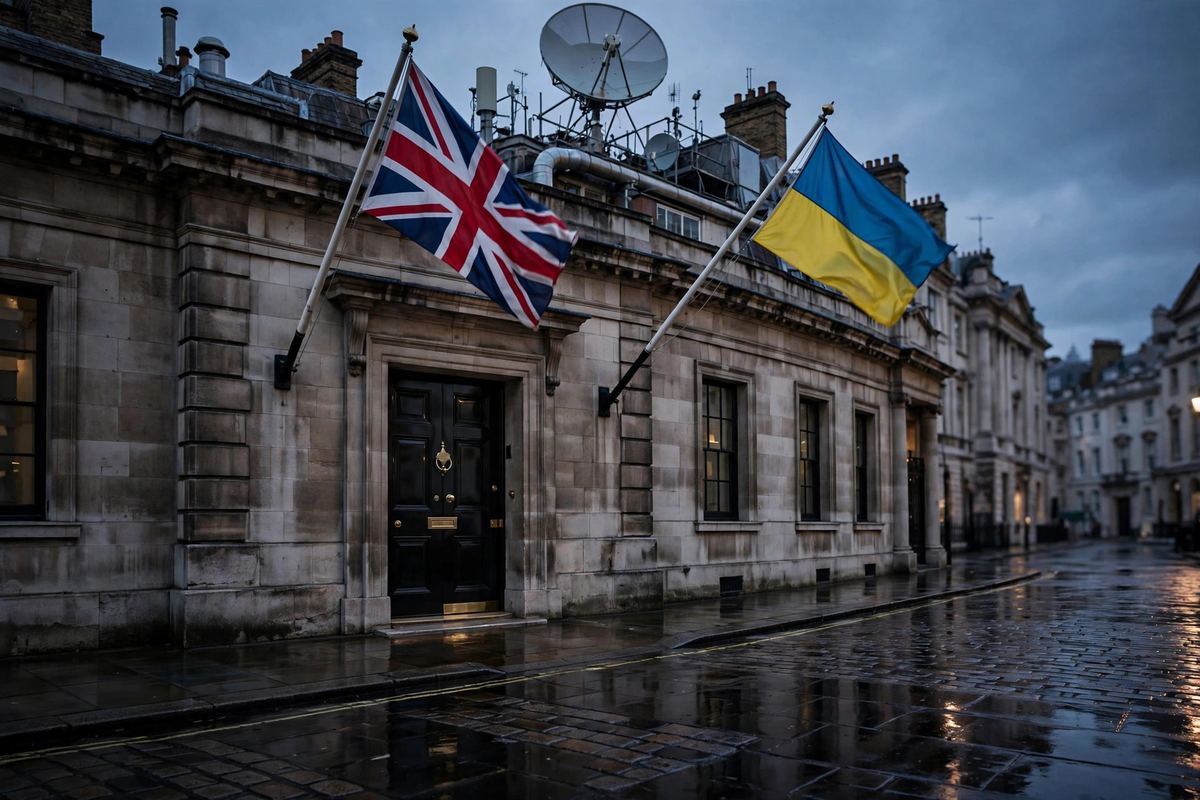
A visit at a moment of strain
Ukrainian President Volodymyr Zelenskyy arrived in London on Wednesday, October 14, for a visit that was both a show of solidarity and a working trip about a very practical problem: the satellite internet and intelligence links that Ukraine's military depends on. Hours before he landed, Ukraine had accused Elon Musk's SpaceX of crippling its drones by limiting Starlink services. In London, Zelenskyy said it was "a pity" that Ukraine had faced difficulties with Starlink and intelligence sharing, and that developments in the partnership with the United States had surprised him. "We just want to be very honest, very clear and be strong partners," he said, speaking alongside British Prime Minister Andy Burnham.
The London visit echoed a similar moment in February 2025, when Zelenskyy came to the British capital shortly after a clash with US President Donald Trump and Vice President JD Vance. This time, the trigger was different but the pattern was familiar: a sharp deterioration in the relationship with Washington, followed by a red-carpet reception in London designed to show that Ukraine still has firm friends. Zelenskyy was received by King Charles III at Buckingham Palace, given a ceremonial guard at Downing Street, and embraced by Burnham, who told him: "We are behind you, and that will not change."
What is the Starlink dispute about?
Starlink is the satellite internet constellation operated by SpaceX. Ukrainian forces use its terminals to coordinate battlefield operations, conduct strikes in Russian-occupied territory and operate interceptor drones. Any slowdown or restriction therefore has immediate military consequences. Ukrainian officials raised concerns that Washington could be behind reduced speeds on some Starlink terminals, and a senior Ukrainian official confirmed that Washington had recently threatened to suspend intelligence on incoming Russian missile launches — information critical to Ukraine's air defences. Trump denied that allegation.
Zelenskyy appealed directly to Musk to restore full service, warning of the human cost if the disruptions continued. At the same time, he acknowledged that the problems might stem from a technical failure rather than a deliberate restriction, saying he hoped it was "a mistake, maybe a huge technical problem," and asking for the service to be switched back on. The careful wording mattered: Ukraine cannot afford to burn bridges with either Washington or SpaceX, both of which remain essential to its war effort, but it also cannot stay silent about a disruption that affects its ability to defend its cities. For background on the military pressure Ukraine faces, see our earlier report on Zelenskyy's missile warnings and overnight strikes on Ukraine's energy system.
What Britain promised
Burnham's message was that Britain would "go further and faster" in its support. The headline commitment was a planned delivery of £45 million (about $59.6 million) of surface-to-air missiles used to target jet-powered Russian drones, with £10 million of that package fast-tracked to meet an urgent need in Ukraine. The prime minister also asked officials to draw up further sanctions, military aid and fiscal support, and his foreign and finance ministers have been lobbying allies to follow Britain in banning maritime services that support Russian liquefied natural gas exports.
Burnham framed the support as a matter of British security as well as Ukrainian survival, saying backing for Ukraine was vital to keeping people in Britain safe. The visit also carried a pointed policy difference with Washington: Britain has said it does not support the US-Russia diesel deal, under which Trump cut a deal with Moscow to lift sanctions on Russian diesel exports, and has called for allies to keep up economic pressure on Moscow. Days earlier, Trump had said Zelenskyy should be replaced as Ukraine's leader — a remark that made the London reception, and its emphasis on legitimacy and continuity, all the more deliberate.
Why the US relationship matters so much
Ukraine's war effort rests on three pillars: its own soldiers and industry, European military and financial aid, and American intelligence, weapons and diplomatic weight. The first two have grown steadily; the third has become less predictable. The diesel deal, the reported threat to intelligence sharing, and the Starlink dispute have combined to create what Zelenskyy described as a series of surprises "on which you can't count when you have real partnership." His London remarks were an attempt to repair that partnership without conceding that it is broken: honest about the difficulties, insistent that Ukraine still counts on the United States, and clear that it wants to be treated as a partner rather than a problem.
The stakes of that argument are visible every night in Ukraine's cities. Zelenskyy arrived in London after another night of heavy Russian attacks, and the missiles Britain promised are specifically aimed at the jet-powered drones Russia has been using against Ukrainian infrastructure. Air defence is a race between the number of incoming drones and missiles and the number of interceptors available to shoot them down. Every delay in intelligence — for example, early warning of an incoming missile launch — shortens the time defenders have to act. That is why the intelligence-sharing question, which might sound bureaucratic, is in practice a life-and-death issue, as Ukrainian officials and analysts have stressed.
What happens next
Three tracks will decide whether the London visit changes anything. The first is technical: whether Starlink service is fully restored and whether intelligence sharing continues without interruption. The second is diplomatic: whether Britain's lobbying persuades other allies to hold the line on sanctions and on maritime services for Russian gas exports, and whether Washington returns to a steadier footing with Kyiv. The third is military: whether the fast-tracked missiles arrive quickly enough to blunt the next wave of drone attacks. The broader context — including the US-Russia diesel arrangement and the debate over Ukraine's leadership — is covered in our explainer on the diesel deal and the row over Ukraine's leadership. For now, the London visit's message was simple: Britain is not wavering, and Ukraine is asking its partners to be as steady as it needs them to be.
Key facts
- Zelenskyy visited London on October 14, 2026, meeting King Charles III and Prime Minister Andy Burnham.
- He raised difficulties with Starlink services and intelligence sharing, while saying Ukraine still counts on partnership with the US.
- Britain pledged £45 million in surface-to-air missiles, with £10 million fast-tracked.
- Britain said it does not support the US-Russia diesel deal and wants economic pressure on Moscow maintained.
- Trump had said days earlier that Zelenskyy should be replaced as Ukraine's leader.
Starlink's role in the war has drawn leaders in directly before: Trump called Musk to press him to lift Starlink restrictions on Ukraine, according to reports.