
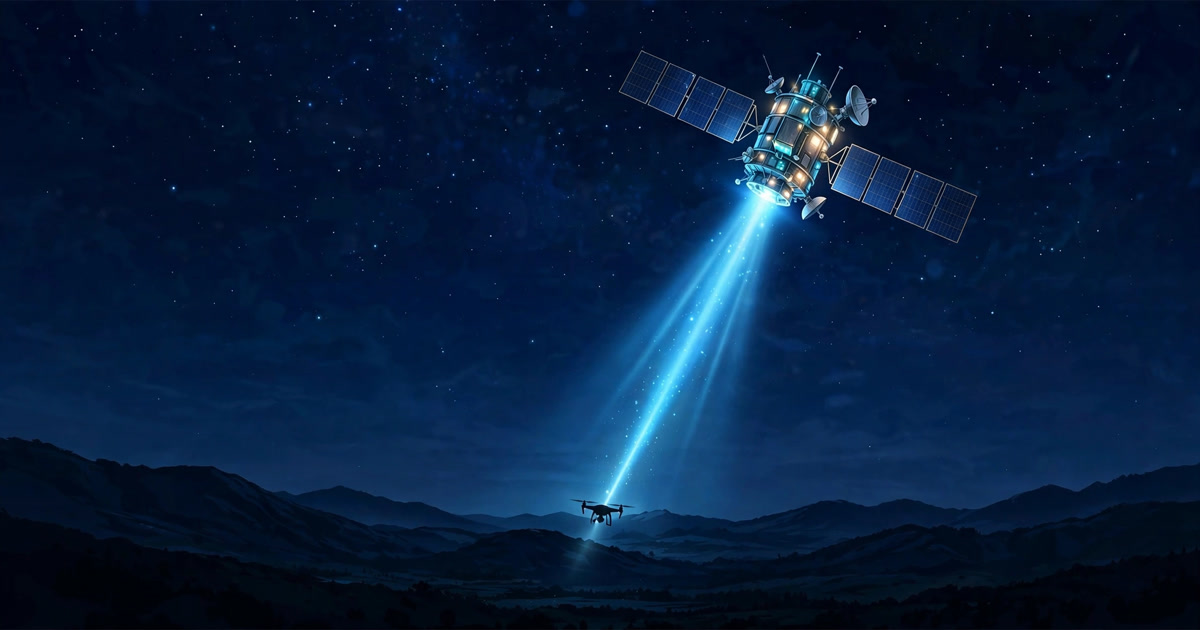
President Donald Trump personally called Elon Musk on Wednesday, October 22, and asked the SpaceX chief to lift restrictions he had placed on the military-grade version of Starlink in Ukraine, the Wall Street Journal reported, citing U.S. officials. By Thursday, the system was working more normally, according to U.S. and Ukrainian officials, in what is trending per news coverage as the most consequential development yet in the week-long saga over satellite throttling on the Ukrainian front line.
The phone call that reversed the throttle
The conversation, reported by the Journal on Thursday, Oct 23, marks a remarkable moment: a U.S. president intervening directly with the world's richest man to undo a decision that had scrambled Ukraine's drone warfare. Trump told Musk he was frustrated that the system's speeds remained capped at around 100 miles an hour, officials told the Journal. That speed limit had rendered some of Ukraine's offensive drones and interceptor drones powerless against Russian attacks.
"Removal of the throttle limit will do much to enable Ukraine's strike capabilities at operational depths and its current effort to scale up deployment of jet-powered interceptors," said Michael Kofman, an expert on the war at the Carnegie Endowment for International Peace. Kofman added that he had heard from Ukrainian military units that early tests suggest the system is now working more regularly.
Trump has told aides and allies this week that he wanted to reverse the slowdown of Starlink, which Ukraine's forces rely on to defend themselves along the front line, the officials said. When asked about the Journal's reporting on Thursday, Trump declined to confirm the call directly but left no doubt about the outcome. "I don't comment one way or the other," Trump said. "The bottom line: He put it back."
However, the restoration is not complete everywhere. A Ukrainian official told the Journal that some military units had experienced higher Starlink speeds while others were facing the same cap. "We keep waiting for the information and clarification from the American side about the situation. There is no response yet," the official said. Ukraine is still awaiting an official U.S. response explaining what happened and whether all restrictions have truly been removed.
What the speed cap did to Ukraine's defenses
The slowdown began on the night of October 13-14, without warning, when connections on Ukraine's military-grade Starlink terminals started to drop. Until last week, Starshield — SpaceX's military and intelligence service — had offered a fast, reliable connection for drones all over Ukraine, including on missions deep into occupied territory. The new restriction capped how fast a terminal could travel while maintaining service, at around 100 miles per hour, rather than limiting download speed.
The effect on the battlefield was immediate and severe. The commander of a Ukrainian drone-interceptor unit, who goes by the call sign Sokol, told the Journal that his biggest challenge is now jet-powered long-range Geran drones, which can reach speeds of as much as 370 mph — far harder to shoot down than earlier propeller-powered Russian drones. His interceptor drones can fly at around 250 mph and can still take out some of the Gerans. "But the task becomes much more difficult if an interceptor drone can only fly at 90 mph," Sokol said. "It's a serious limitation."
Ukraine's 7th Rapid Reaction Corps reported interruptions lasting 10 to 20 seconds even below the announced 100 mph threshold, forcing units to cancel missions. Ukrainian officials said the throttling had allowed Russian missiles to evade their defenses, and the disruption affected both Ukraine's ability to strike Russian forces and its ability to intercept incoming attack drones. The episode has also coincided with complaints from Kyiv that it had stopped receiving customary advance warnings of Russian ballistic missile launches — intensifying questions about the reliability of American support.
Who ordered the slowdown? Conflicting accounts
At the center of the controversy is a dispute over who is responsible. The Journal reported that Musk ordered the slowdown after frustration from both Musk and Trump over Ukrainian drone strikes on Russian oil refineries — a campaign Trump has criticized amid elevated U.S. energy prices. Two unnamed people told the Journal that Musk and Trump discussed the decision by phone shortly after the slowdown became public, and one of them said the two had also discussed it before the restrictions took effect.
But SpaceX and the White House have offered differing accounts about whether Musk acted alone or at the administration's behest. Trump told reporters Wednesday: "I don't know who did it, but I was not involved," and he has repeatedly denied ordering the restrictions or knowing who authorized them. Secretary of State Marco Rubio, speaking in India on Wednesday for the third time in four days, insisted the administration had no role. "There was no foreknowledge," Rubio told reporters. "That's a private company. The president doesn't run that company and can't direct that company to do anything."
Defense Secretary Pete Hegseth has likewise denied any American role, characterizing the slowdown as a commercial decision governed by SpaceX's contractual terms. "The bottom line is that that is governed by a private commercial contract as to how their stuff can be used and what speeds they'll allow it to be used at," Rubio said Wednesday, with Hegseth adding earlier this week that "there are terms of service that ultimately need to be complied to" and that "Starlink has the option to make those decisions."
Musk, for his part, has pointed responsibility back toward Washington. He distinguished commercial Starlink from Starshield and noted that Starshield systems are owned and controlled by the U.S. government. "Any limits on speed or usage are decided by the US military and ultimately POTUS," he wrote on X on October 14 — a message Trump himself responded to approvingly. Vice President JD Vance defended Musk on Thursday, saying, "It's completely understandable that he doesn't want to get in the middle of a war without the U.S. government effectively directing him on what to do."
The blame-shifting has unfolded against a backdrop of souring U.S.-Ukraine ties. Ukraine's top diplomat in Washington, Denys Sienik, sent a frantic message to U.S. lawmakers in the early hours of the slowdown warning that restrictions on military-grade Starlink terminals would give Russia an upper hand. Kyiv immediately suspected the order came either from the president or from Musk, noting that the slowdown followed criticism of Zelensky from both men and disputes over Ukrainian refinery strikes. Trump has also delayed major new sanctions on Russia, sought to import Russian diesel, and pressed Ukraine to concede more to Moscow to end the war.
Congress demands answers — from both parties
The episode has triggered an unusually bipartisan backlash on Capitol Hill, where lawmakers in both parties say a private billionaire should not be able to flip a switch on a foreign ally's war effort. This is part of the same storm that produced calls by U.S. senators for a probe into the Starlink and Starshield outage.
Senator Adam Schiff said the contradictory statements from the administration and Musk made a full Senate investigation necessary, and he called for Musk to testify under oath. Senator Richard Blumenthal announced an inquiry on Thursday into how the satellite technologies were slowed without advance notice and into the Pentagon's reliance on SpaceX for critical satellite communications. Senator Chris Coons said Musk should not have the power to influence the outcome of a war "with the push of a button," while Senator Elizabeth Warren warned of the risks created when a private company executive effectively determines U.S. foreign policy. Democratic Representative Ami Bera said the slowdown had "paralysed Ukrainian defences and put innocent lives at risk" and called on Congress to establish who authorized the decision.
Republicans have been equally vocal. Representative Brian Fitzpatrick of Pennsylvania, co-chair of the Congressional Ukraine Caucus, has called for a full congressional investigation with witnesses put under oath. "These allegations demand a full congressional investigation. We will establish the facts, determine who was responsible, and pursue accountability," Fitzpatrick wrote. Speaking on CNN, he warned of "immediate harsh and punitive budget cuts to any responsible agency or agency head" and said lapsing Starshield in a way that costs human lives must carry consequences. Retiring Representative Don Bacon of Nebraska and outgoing Senators Thom Tillis of North Carolina and John Cornyn of Texas have also demanded accountability, with Tillis calling the episode either "an unacceptable error or lapse" or a conscious "decision to clear the field for a Russian attack."
Separately, a bipartisan group of nearly two dozen House members sent a letter on October 21 urging Trump to pressure Musk to let Ukraine use Starlink to strike Russian missile-launch positions inside Russian territory. "If Ukraine cannot reliably intercept Russian 'arrows', it must be able to shoot the 'archer'," the lawmakers wrote — a demand that remains unresolved even as the throttle lifts.
Why this moment matters
The timing of the restoration is striking. It came as Russia launched another major overnight attack against Kyiv, despite Moscow having agreed to participate in trilateral peace discussions with Washington and Ukraine — a reminder that any disruption in Ukraine's defenses carries immediate consequences. This follows weeks of escalating Russian drone barrages against Ukrainian cities and accusations that the U.S. withheld vital intelligence from Kyiv, charges the Trump administration denies.
The episode has also highlighted the singular, almost unprecedented influence of one private individual over a major war. As the Journal noted, with a seeming flick of a switch, Musk has the power to alter the course of a deadly conflict — a reality underscored by his 2022 decision to deny a Ukrainian request to use Starlink in Russian-occupied Crimea, hampering attacks on the Russian navy. That history, combined with the fact that Musk is a major Trump ally and one of the biggest financial backers of the president's party ahead of the midterm elections, has turned the Starshield controversy into a political as well as military crisis.
What to watch next
Several questions remain unresolved. First, whether the restoration is complete: Ukrainian officials report a patchy picture, with some units back to higher speeds and others still capped, and no official clarification from the American side. Second, who actually ordered the slowdown — and whether Congress will follow through on promises of hearings, investigations, and budget consequences. Third, whether Ukraine will gain the additional capability the bipartisan House letter demanded: permission to use Starlink to strike the missile-launch positions from which Russia attacks its cities.
What is clear is that the fundamental vulnerability has not changed. Ukraine's military communications and drone warfare remain heavily dependent on a commercial network controlled by one private company — a dependence Kyiv, Washington, and Europe's capitals are all now being forced to reckon with. Trump's direct intervention may have reopened the throttle this time. It has also made plain, to allies and adversaries alike, how narrow the margin between connectivity and darkness has become.
Musk's two empires keep moving closer together, fuelling the talk behind his suggestion that a Tesla–SpaceX merger could work.
Sources: Wall Street Journal; Reuters; CNN; Newsmax; Military.com.