
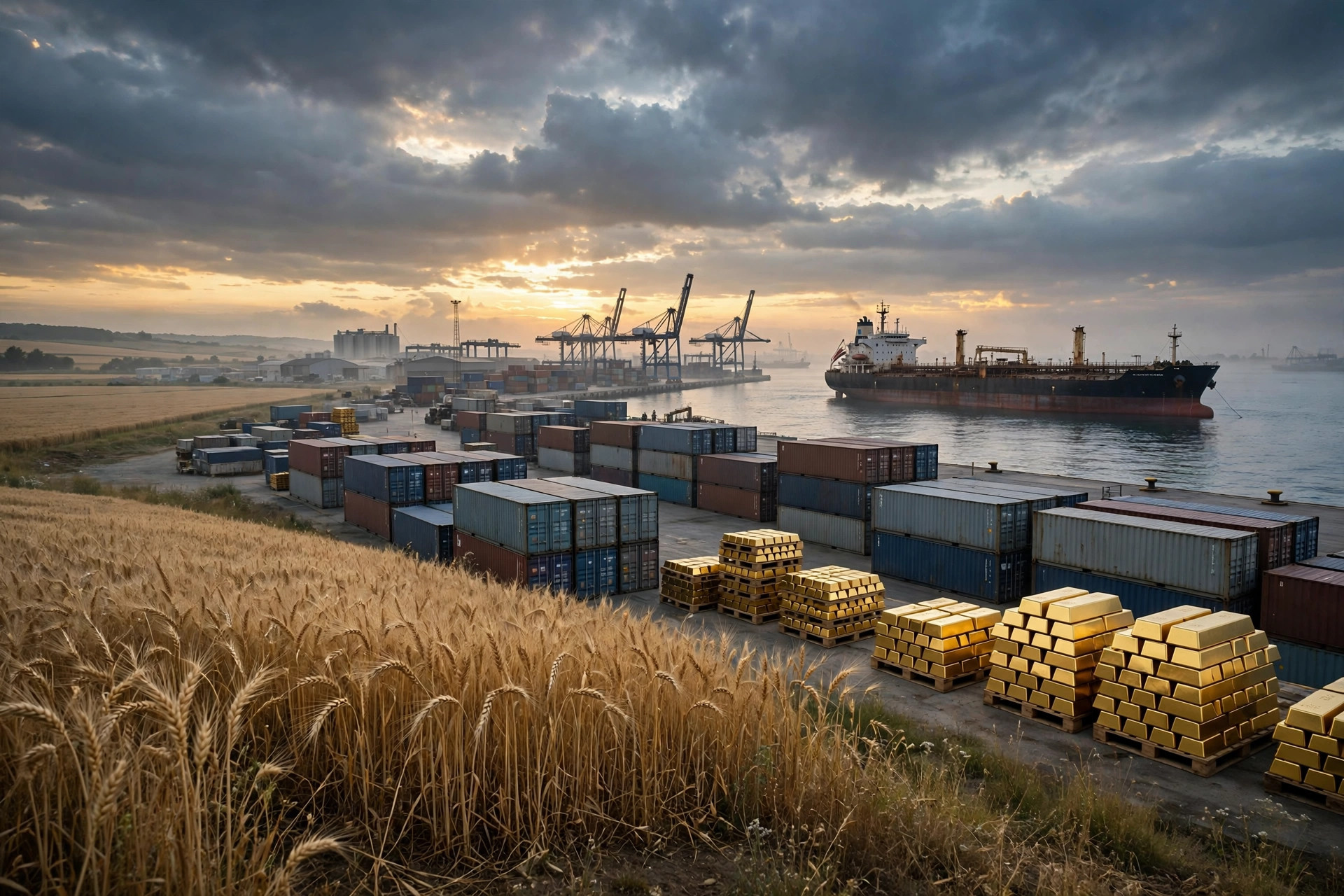
The commodity prices 2026 forecast from the World Bank points to a sharp rise in the cost of the raw materials that shape everyday life, from fuel and food to metals used in manufacturing. Published on 28 October 2026, the World Bank Commodity Markets Outlook expects overall commodity prices to rise by 23% in 2026, then fall by 7% in 2027. That pattern matters because commodity prices feed directly into petrol prices, grocery bills, heating costs and the price of goods made from metals and other inputs. When those prices move together, households feel it quickly, businesses face higher costs, and governments must decide how to protect people who can least afford another squeeze.
This article explains the commodity prices 2026 forecast in plain terms. It sets out what the World Bank projected, why prices are expected to rise, which groups of commodities are driving the increase, what risks could make the outlook worse, and what to watch next. The figures here come from the World Bank outlook and reporting by Reuters in October 2026. No single forecast can capture every local price, and the outlook is a projection based on conditions at the time it was prepared, not a guarantee of what shoppers will pay in any one shop or country.
Commodity Prices 2026 Forecast: What the World Bank Projected
The headline figure in the commodity prices 2026 forecast is the 23% rise in overall commodity prices during 2026, followed by a 7% fall in 2027. Energy is the largest driver. The World Bank expects energy prices to rise by 32% in 2026, reaching a four-year high and reversing three years of declines. Within energy, the Brent crude oil benchmark is forecast to average about 91 dollars a barrel in 2026, compared with 69 dollars in 2025, before easing to about 79 dollars in 2027. A move of that size in oil would normally show up in transport fuel, air travel, delivery costs and any business that depends heavily on moving goods.
Food is also expected to become more expensive. Food commodity prices are projected to rise by about 10% in 2026 and by another 7% in 2027, a cumulative increase of about 18% over the two years. Fertilizer prices are forecast to rise by 14% in 2026, which matters because fertilizer is a major cost for farmers and can push up food production costs with a delay. Metals are projected to rise by 25% to a new high, while precious metals are expected to rise by 40%. Together, those moves describe broad pressure across energy, food and industrial inputs rather than a rise in one market alone.
Background: Why Commodity Markets Are Under Pressure
Commodity markets do not move in isolation. Oil, gas, grain, fertilizer and metals are connected through transport, energy costs and global trade routes. When shipping is disrupted, grain and energy can both become harder and more expensive to move. When fuel and fertilizer costs rise, farming becomes more expensive, which can affect food supply and prices later. When investors worry about conflict or economic uncertainty, some turn to gold and other precious metals as a store of value, adding demand that can push those prices higher. The World Bank outlook describes several of these pressures arriving at the same time.
The drivers named in the outlook include the conflict in the Middle East, depleted oil stocks, disruption to grain shipments in the Black Sea, wider shipping disruption, safe-haven demand for gold, and high fuel and fertilizer costs. Each driver works through a different channel, but they reinforce each other. Lower oil stocks leave less room to absorb a supply shock. Shipping problems can delay deliveries and raise freight costs. Higher fertilizer costs raise the cost of growing food. Safe-haven buying can lift precious metal prices even when industrial demand is not rising at the same pace. Understanding those links helps explain why the forecast covers so many commodity groups at once.
What Happened: Oil Supply, Demand and the Energy Outlook
One of the most striking parts of the outlook concerns oil supply and demand. Global oil supply is expected to fall by 5.2% in 2026, described as the biggest drop in four decades outside the recession year of 2020. At the same time, oil demand is forecast to fall by 2.5%. That combination may sound confusing at first: if demand is also falling, why would prices rise so sharply? The answer in the outlook is that the fall in supply is larger and more abrupt than the fall in demand, and that stocks are already depleted, leaving the market tighter and more sensitive to further disruption.
The energy forecast should be read alongside recent oil market news, including concerns about supply after attacks affecting energy infrastructure. Readers who want the wider energy context can read about the attack on the Ras Tanura refinery and oil prices and how supply shocks reach fuel markets. Energy prices also interact with interest rates and household budgets, which is why the Federal Reserve decision to hold interest rates in October 2026 is relevant background for anyone tracking the cost of borrowing alongside the cost of energy. In the United Kingdom, energy bills are shaped by more than wholesale prices, including the decision to scrap gas standing charges in the 2026 Budget, which shows how policy can change one part of a household bill even when wholesale costs move in the other direction.
Why the Commodity Prices 2026 Forecast Matters
The commodity prices 2026 forecast matters first for households. Food and energy make up a large share of spending for lower-income families, so a 23% rise in overall commodity prices, with food up about 10% and energy up 32%, would weigh most heavily on people who already spend a high proportion of income on essentials. Even if retail prices do not rise by the same percentage as wholesale commodity prices, the direction of pressure is clear. Higher transport and input costs also tend to filter through to other goods and services over time, which is why central banks watch commodity prices closely when they judge inflation.
It also matters for businesses and governments. Manufacturers that use metals face higher input costs. Farmers face higher fuel and fertilizer costs. Airlines, hauliers and delivery firms face higher fuel bills. Governments in countries that import food and fuel may face larger import bills and pressure on public finances, while exporting countries may see higher revenues but also greater volatility. For poorer countries, the risk is sharper: if food prices rise further than expected, more people can be pushed into hardship. The World Bank warning about a possible food crisis underlines that this is not only a market story but a human one.
Key Facts From the World Bank Outlook
The following points bring together the main numbers and warnings from the outlook, as reported in October 2026. They are projections and assessments, not records of prices already paid by consumers.
- Overall commodity prices are forecast to rise 23% in 2026 and fall 7% in 2027, according to the World Bank Commodity Markets Outlook released on 28 October 2026.
- Energy prices are forecast to rise 32% in 2026 to a four-year high, reversing three years of declines, with Brent crude averaging about 91 dollars a barrel in 2026, against 69 dollars in 2025, and easing to about 79 dollars in 2027.
- Food commodity prices are forecast to rise about 10% in 2026 and another 7% in 2027, a cumulative rise of about 18%, while fertilizer prices are forecast to rise 14% in 2026.
- Metals prices are forecast to rise 25% to a new high, and precious metals prices are forecast to rise 40%, reflecting industrial costs and safe-haven demand.
- Global oil supply is forecast to fall 5.2% in 2026, the largest fall in four decades outside 2020, while oil demand is forecast to fall 2.5%.
- Drivers include Middle East conflict, depleted oil stocks, Black Sea grain shipment disruption, shipping disruption, safe-haven demand for gold, and high fuel and fertilizer costs.
- The World Bank provided 8.7 billion dollars in low-cost loans and aid to 25 countries affected by the Middle East war, as reported by Reuters.
- A worst-case El Nino event, described as the worst since 1950, could push food prices 12% higher than expected and risk a food crisis similar to the early 2010s, when more than 40 million people were pushed into extreme poverty.
Risks That Could Make the Forecast Worse
Forecasts come with risks on both sides, and the World Bank outlook highlights several that could push prices higher than projected. Escalation of conflict could disrupt supply further. Damage to Russian oil infrastructure could tighten oil markets. A severe El Nino could damage harvests and push food prices well above the central forecast. Ayhan Kose, the World Bank deputy chief economist, captured the sense of overlapping pressures when he said: "Commodity markets are being hit by several major shocks at once." That sentence is important because it explains why the Bank expects broad rises rather than a single-market spike. When shocks arrive together, the usual buffers, such as stocks, alternative suppliers and shipping capacity, are under strain at the same time.
There are also risks that could ease pressure, although the outlook does not present them as the central case. A faster easing of conflict, a rebuilding of oil stocks, smoother shipping, or a better-than-expected harvest could all reduce upward pressure. Demand falling faster than expected could also soften prices, but that would often reflect weaker economic activity, which brings its own problems for jobs and incomes. Readers should therefore treat the 23% figure as a central projection under stated conditions, not as a fixed outcome. The balance of risks described by the Bank leans toward further disruption rather than a quick return to calmer markets.
What Happens Next: What to Watch in 2026 and 2027
The outlook was released two days before foreign ministers from the Group of 20 countries were due to meet in Atlanta, which placed commodity and food security questions in a diplomatic as well as economic setting. In the months that follow, the most useful things to watch are oil stocks and supply reports, Black Sea grain shipments, shipping conditions, fertilizer prices, and harvest and weather forecasts, including any El Nino developments. Each of those will give an early signal about whether the central forecast is holding or whether risks are building.
For households, the practical implication is to expect continued pressure on food and energy costs during 2026 if the forecast proves broadly correct, and to watch how governments and regulators respond on support, energy bills and food assistance. For businesses, the implication is to plan for higher and more volatile input costs rather than assuming a quick return to the lower prices of recent years. The projected 7% fall in 2027 offers some hope of easing, but it follows a large rise and would still leave many prices above their 2025 levels. The next World Bank update, along with monthly price data, will show whether energy, food and metals are moving together as projected or whether one market is breaking away from the rest.
Sources: World Bank, Reuters, October 2026.