
The Ras Tanura refinery attack claim arrived on Tuesday, 27 October 2026, when Yemen's Houthi group said it had fired a ballistic missile at Saudi Arabia's largest oil refinery and caused large fires. By Wednesday morning, oil prices had jumped by more than $2 a barrel, with Brent crude trading near $116. Yet one essential fact has not changed: Saudi Arabia has not confirmed that a missile struck the refinery, or that the refinery itself was damaged. This article separates what was claimed, what Saudi authorities have confirmed, and what remains unverified, so readers can follow a fast-moving energy story without mistaking a claim for an established fact.
Three things are established from reporting by Reuters and other outlets. Missiles and drones were fired toward Saudi Arabia's Eastern Province on Tuesday, and Saudi-led coalition air defences said they intercepted several of them. A fire broke out near the Ras Tanura oil export terminal and was contained, according to Bloomberg reporting cited in coverage of the incident. And oil traders pushed prices sharply higher on Wednesday. What is not established is whether a Houthi missile caused that fire, hit the refinery, or damaged oil infrastructure at all. That distinction matters, because the market reaction and the physical damage are two different questions.
What the Houthis Claimed in the Ras Tanura Refinery Attack
Houthi military spokesperson Yahya Saree said the group targeted the Ras Tanura refinery in Saudi Arabia's Eastern Province with a ballistic missile. Reuters reported the claim on Tuesday, quoting Saree as saying the missile hit its target and caused large fires at the site. In separate statements carried by news agencies, the Houthis described Ras Tanura as the biggest refinery in the kingdom. The claim was presented as a direct hit on the heart of Saudi Arabia's oil system, on the Gulf coast far from Yemen.
The Ras Tanura claim did not stand alone. The Houthis also claimed attacks on the Saudi Defence Ministry building in Riyadh, military transport aircraft at Najran Airport and an air base at Khamis Mushait, and Abha airport. They also said they had halted an advance by Saudi-backed forces near the Bab el-Mandeb Strait, the strategic waterway linking the Red Sea with the Gulf of Aden. None of those additional claims has been confirmed by Saudi authorities either. Readers should therefore treat the whole package of Tuesday claims as claims, not as a confirmed list of hits, until Saudi Arabia, Aramco, or independent evidence confirms more.
What Saudi Arabia Has Confirmed About the Ras Tanura Refinery Attack
Saudi and coalition statements confirmed a serious air-defence engagement, but not a refinery hit. The Saudi-led coalition said on Tuesday that its air defences intercepted and destroyed three ballistic missiles launched toward the Eastern Province and four drones targeting the kingdom's southern region. Separately, the coalition said it intercepted and destroyed two ballistic missiles launched toward Riyadh. Saudi Civil Defence reported material damage from falling debris after an interception over the capital, affecting a building, a construction site and a vehicle, and it briefly issued an air raid alert in Riyadh.
Civil Defence also issued early warning alerts in Najran, Abha and Khamis Mushait, later saying the danger had passed without specifying what had prompted the warnings. Aramco, which operates the Ras Tanura refinery, did not immediately respond to a request for comment on the attack claim, according to Dow Jones reporting. On the fire, Bloomberg, citing a person familiar with the matter, reported that Saudi Arabia had contained a fire near the Ras Tanura terminal, without confirming a strike on the refinery itself. The extent of any damage and any impact on oil-loading operations remained unclear in Wednesday reporting. In short, Saudi Arabia has confirmed interceptions, alerts and debris damage. It has not confirmed the central Houthi claim.
Why Ras Tanura Matters: 550,000 Barrels a Day and a Main Export Hub
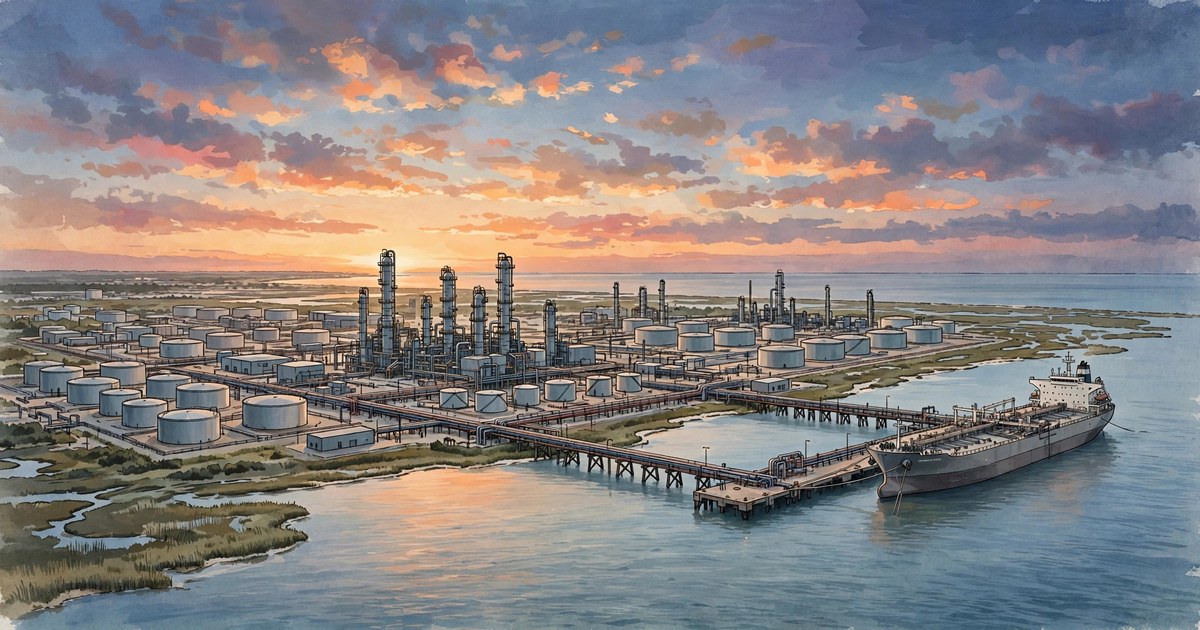
Ras Tanura is not an ordinary industrial site. The refinery has a processing capacity of 550,000 barrels a day, making it Saudi Arabia's largest refinery, and it sits inside a complex that also holds a major crude export terminal. Ras Tanura and Yanbu, on the Red Sea coast, handle nearly all of Saudi Arabia's oil exports, so any confirmed disruption at either port would matter far beyond Saudi Arabia. The refinery has also become a major diesel supplier for Europe since 2022, which is one reason traders watch it closely when Middle East tensions rise.
Geography adds to the significance of the claim. Coverage of the incident put Ras Tanura about 1,260 kilometres from the Houthi stronghold of Saada, on the far side of Saudi Arabia from Yemen. A claim to have reached it is therefore also a statement about range and reach, even before any question of damage is settled. That is why analysts quoted in coverage distinguished between a fire near a loading terminal, which is mainly a logistics problem, and damage to a distillation unit at a 550,000-barrel-a-day refinery, which would be a supply problem. The evidence reported so far supports concern about the first, not proof of the second. Previous Houthi attacks on a Riyadh airport and a Saudi oil pipeline show how quickly this conflict has already reached aviation and energy infrastructure, which helps explain why traders did not wait for confirmation before repricing oil.
Why Oil Prices Jumped After the Ras Tanura Refinery Attack Claim
Oil prices rose by more than $2 on Wednesday, 28 October, after the attack claim renewed concerns about supply risks from Middle East conflict. Reuters reported that Brent crude futures rose $2.02, or 1.8 percent, to $115.90 a barrel as of 07:35 GMT, while US West Texas Intermediate crude gained $2.01, or 2.0 percent, to $101.91. Dow Jones Newswires, via Morningstar, reported December Brent at $116.03, up 1.9 percent, and December WTI at $101.91, up 2 percent. The rise reversed a fall of nearly $2 on Tuesday, when prices had dropped before the Ras Tanura claim and the Wednesday rebound took hold.
Analysts described the move as a rising risk premium rather than proof of lost barrels. ING commodity strategists said the market was still pricing in a greater likelihood of re-escalation and was waiting for greater clarity on US President Donald Trump's next move toward Iran, adding that if the period after the US midterm elections on 3 November passed without renewed strikes on Iran, the risk premium might start to erode. ANZ Research analysts said risks to crude supplies continued to increase. US inventory data added support: market sources citing American Petroleum Institute data said US crude stocks fell by 2.03 million barrels in the week ended 23 October, against analyst expectations of a small build, ahead of the official US Energy Information Administration report due later on Wednesday. For households, the practical link is straightforward: when traders expect tighter supply, fuel and energy costs tend to follow, even before any physical shortage is confirmed.
The Wider Pattern: Yanbu, the Pipeline, Tehran Talks and the Aden Warning
The Ras Tanura claim fits a pattern of almost daily strikes on Saudi energy and military targets in recent weeks, rather than appearing from nowhere. The Red Sea port of Yanbu was targeted by Houthi drones just last week, according to Wednesday reporting, and the Houthis on Monday alleged they had hit an oil pumping station along the East-West pipeline feeding Yanbu. A similar incident last month led to a two-week shutdown of the pipeline and a period without exports through it, which shows why each new claim about a pipeline, port or refinery moves markets even when damage is unconfirmed.
Diplomacy has been running in parallel, without yet stopping the strikes. Iran, Saudi Arabia, Pakistan and Turkey agreed earlier in the week to continue discussions on regional peace and security after talks in Tehran, in a meeting covered in the article on the Tehran meeting of Saudi, Turkish and Pakistani officials in Iran. The Ras Tanura claim came hours after those talks concluded, a sign that the diplomatic track had not yet reached the Houthis. Earlier Houthi missile attacks in October, in which 10 missiles were reported intercepted as oil sites were targeted, had already set the pattern of claims, interceptions and market nerves. On Wednesday, Reuters also reported that the Houthis had called on people to evacuate immediately from the international airport in Aden, where Yemen's internationally recognised, Saudi-backed government is based. That warning, like the refinery claim, was a Houthi statement rather than a confirmed strike, but it added to the sense of escalation that traders were pricing in.
What to Watch Next After the Ras Tanura Refinery Attack Claim
Four questions will decide whether Wednesday's price jump holds, fades, or grows. The first is confirmation: will Saudi Arabia or Aramco say anything more about the fire near the terminal, the refinery, or loading operations at Ras Tanura? A clear statement that the refinery was untouched would weaken the risk premium; confirmed damage to export capacity would strengthen it. The second is the official US inventory report from the Energy Information Administration, which will test the industry figures pointing to a fall in US crude stocks.
The third is the meeting of seven OPEC+ producers scheduled for Sunday to review market conditions and production policy, where people with knowledge of the matter expected December output targets to be kept steady, according to Reuters. The fourth is the wider US-Iran question, including what happens after the US midterm elections on 3 November, which analysts and officials have linked to the timing of any further US action. The US warning to Gulf states about possible Iran strikes after the midterms is part of the same uncertain backdrop. Until those questions are answered, oil is likely to stay volatile: high enough to reflect the risk of escalation, but without confirmed evidence of the supply loss that would justify a much larger move.
For now, the safest summary is the narrow one. The Houthis claimed a missile hit Saudi Arabia's largest refinery and caused large fires. Saudi defences intercepted missiles and drones, a fire near the terminal was contained, and oil jumped above $115. Whether the refinery itself was hit remains unconfirmed, trending per news coverage, and that unconfirmed gap is the most important fact in the story.
Sources: Reuters, 28 October 2026; Dow Jones Newswires via Morningstar, 28 October 2026; Bloomberg reporting as cited in coverage of the incident; AFP reporting as cited in coverage. Houthi claims are reported as claims; Saudi confirmation is limited to the interceptions, alerts and debris damage described above.