
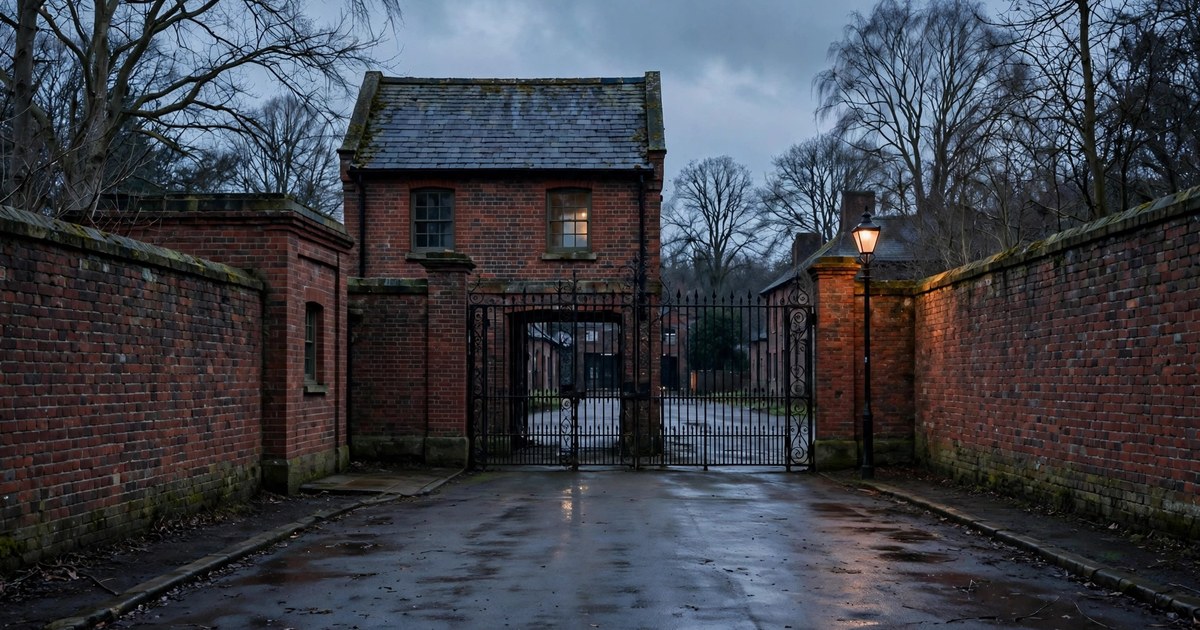
A US soldier arrested in the UK on suspicion of spying for Russia worked inside one of NATO's most important headquarters. The 41-year-old American was detained near Gloucester in England on Tuesday 10 November 2026 by British counterterrorism police working with the FBI and the US military, and the case immediately raised questions across the alliance — because the soldier was assigned to NATO's Allied Rapid Reaction Corps, the British-led command that would direct land forces in a crisis. The man has not been named. No charge has been announced. Here is what is actually known about the US soldier arrested in the UK, what the charges would mean, and what happens next.
What we know about the US soldier arrested in the UK
The arrest was announced by London's Metropolitan Police on Tuesday. A 41-year-old man was detained near Gloucester by Counter Terrorism Policing officers "working closely with US authorities, US Military and the FBI", according to the police statement reported by CNN. He was taken to a London police station, where he remained in custody on Wednesday, and officers searched two addresses in Gloucestershire.
What makes the case stand out is where the soldier worked. A senior NATO official told CNN the man "was assigned to the Allied Rapid Reaction Corps", and the Associated Press reported the same, citing a US official, a senior NATO official and a British government official. Brigadier General Sean Stinchon, commanding general of the US Army Counterintelligence Command, described him in the police release as a "senior soldier" who was "entrusted with sensitive information". His name, his rank and his exact duties have not been made public, and investigators have not said what information was allegedly involved.
The Metropolitan Police added one line that matters for everything that follows: the arrest is "not linked to any other ongoing Counter Terrorism Policing investigations". That rules out — for now — any connection to the other live cases around US bases in Britain.
The spying for Russia allegations and the charges
The soldier was arrested on suspicion of offences under Section 1 and Section 3 of the National Security Act 2023, the law Britain passed to replace the old Official Secrets Act framework for espionage cases. The police statement was blunt about the direction of the inquiry: "The country to which the allegations relate is Russia."
The two sections cover different things, and the difference matters. Section 1 covers obtaining or disclosing protected information — material whose disclosure could prejudice the safety or interests of the United Kingdom — and carries a maximum sentence of life imprisonment on conviction on indictment, according to the text of the Act on legislation.gov.uk. Section 3 covers assisting a foreign intelligence service, meaning conduct intended to materially assist such a service in carrying out UK-related activities, and carries up to 14 years. Being arrested on suspicion of both suggests investigators believe the case may involve both the handling of sensitive material and contact with Russian intelligence — but suspicion is not a charge, and a charge is not a conviction.
FBI Director Kash Patel underlined how seriously Washington is taking it. "This important arrest involves allegations of espionage, which is of the utmost concern to the United States and our allies," Patel said in the release, and he posted separately that a US Army soldier "has been arrested with our partners in the UK in a Russia-related espionage investigation". Moscow denied any involvement. Kremlin spokesman Dmitry Peskov told reporters on Wednesday that Russia has "no connection to this whatsoever".
Under the National Security Act, police can hold a suspect for up to 14 days without charge, The Times reported. As of Wednesday, no charge had been announced. That clock is now the first thing to watch.
What is the Allied Rapid Reaction Corps?
The Allied Rapid Reaction Corps, known as the ARRC, is a British-led NATO headquarters based at Imjin Barracks in Innsworth, on the outskirts of Gloucester. It is a multinational land unit designed to deploy rapidly and command land forces during major military operations, and it is staffed by servicemembers from the UK, the US and several other NATO countries, the Associated Press reported.
That is why the posting matters more than the rank alone would suggest. The ARRC is not a back-office unit. It is the command structure NATO would use to run a large land operation at short notice, which means its staff work with operational plans, readiness data and communications arrangements that foreign intelligence services would value. The BBC reported that the suspect's exact responsibilities at Imjin Barracks remain unknown, and there is no public evidence that the corps' operational capabilities have been compromised — but the investigation will have to establish exactly what, if anything, was accessed.
Why Gloucester and Imjin Barracks matter
Gloucester sits in a corridor of British and American military and intelligence infrastructure. Imjin Barracks houses the ARRC headquarters. Nearby RAF Fairford, about 25 miles away, is a US-run base used by American forces. The wider area is also home to GCHQ, Britain's intelligence and cybersecurity agency, in nearby Cheltenham, as The Wall Street Journal noted in its report on the arrest.
The arrest also lands against a backdrop of other cases. In September, three men were charged in connection with an alleged plot targeting RAF Fairford, in a case British authorities linked to Iran — and the Metropolitan Police were careful to say the soldier's arrest is not connected to that investigation. Separately, a 22-year-old Army soldier was earlier accused of trying to pass classified information about the M1A2 Abrams tank to someone he believed was a Russian intelligence officer. Neither case proves anything about this one. But together they explain why British and American counterintelligence are treating the Gloucester arrest as a priority, and why The Wall Street Journal framed it as part of "an escalating campaign of cyber and other hybrid attacks against Europe, which officials believe originate in Russia".
What happens next
The immediate question is whether the soldier is charged, and with what. Investigators have up to 14 days from the arrest to hold him without charge under the National Security Act. If they charge him, the case would go before a British court, and the choice between Section 1 and Section 3 — or both — would signal how prosecutors see the evidence. A Section 1 conviction can mean life imprisonment; a Section 3 conviction up to 14 years.
Several things are worth watching in the coming days. First, the charging decision and whether the man's name and rank are released. Second, any statement from the US Army or NATO about what access he held and whether any review of procedures follows. Third, whether investigators say anything about how the case came to light — through a tip, a counterintelligence operation, or an internal report. And fourth, the diplomatic handling: an American soldier accused of assisting Russian intelligence while serving inside a NATO headquarters is a sensitive matter for London and Washington alike, and both governments will want to show the alliance's own defences work.
Why this arrest matters beyond one soldier
Espionage cases are usually judged by what was taken. This one will also be judged by what it reveals about trust inside NATO. The alliance is built on the assumption that officers from member states can be trusted with each other's plans, and the ARRC exists precisely because Britain, the US and their partners pool that trust in a single headquarters. A case like this tests that assumption in public, at a moment when the alliance is already stretched by the war in Ukraine and by the hybrid campaign against Europe that Western officials attribute to Russia.
Espionage cases have also dominated headlines in the United States this year, where former FBI director James Comey was charged for a third time in 2026 in an espionage case.
It also tests the National Security Act itself. The 2023 law was written for exactly this kind of case — a foreign power's intelligence service allegedly reaching into Britain's defence establishment — and this arrest is one of its highest-profile uses so far. How the investigation proceeds, and whether it ends in charges, will say something about whether the law works as its authors intended. For now, the facts are narrow: one soldier, one arrest, two sections of the Act, and a fortnight for investigators to decide what comes next.
Sources: Metropolitan Police statement as reported by CNN and the Associated Press; The Wall Street Journal; The Times; legislation.gov.uk (National Security Act 2023).