
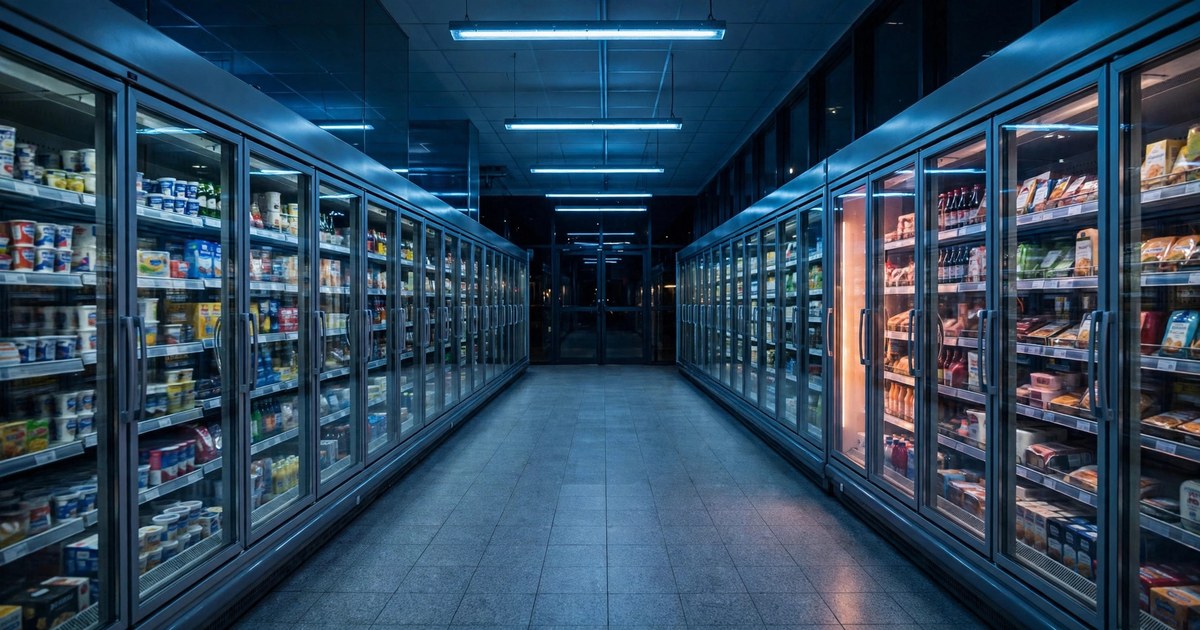
France has named the country it holds responsible for the supermarket fridge cyberattack that spoiled food across the country last month: Iran. On Monday 9 November 2026, Foreign Minister Jean-Noël Barrot said the attack was carried out by Iran's Islamic Revolutionary Guard Corps, calling it an assault of "unprecedented scale and unprecedented aggressiveness" and promising retaliation through European sanctions. Paris has summoned Iran's ambassador, and prosecutors are seeking international arrest warrants for three alleged members of the hacking unit behind the operation. What began as a strange crime story — hackers turning freezers into heaters — is now a diplomatic confrontation between France and Iran, unfolding in the middle of a war that began in February and has already drawn in American airstrikes.
France blames Iran: what Paris announced on Monday
Barrot made the accusation on the sidelines of a meeting of G7 foreign ministers in Paris, hours after Reuters reported that investigators privately suspected Iran. "I can confirm that this attack was carried out by the Islamic Revolutionary Guard Corps of the Islamic Republic of Iran," Barrot told reporters. He described the operation as the first large-scale cyberattack carried out purely for sabotage on French territory, and "a major assault on the nation's interests and on the security of the French people," CNN reported.
The French foreign ministry said France would push for sanctions "at a European level" against everyone responsible, and Barrot said the Iranian ambassador had been summoned to the ministry. A joint report from France's spy and cyber agencies, published the same day, named the unit behind the attack: Shahid Kaveh, described as an offensive cyber unit tied to the Revolutionary Guards. Paris prosecutor Laure Beccuau opened a judicial investigation into the unit's leader and two deputies, and is seeking international arrest warrants for all three, The Wall Street Journal reported.
How the France Iran fridge cyberattack unfolded in October
The attack struck overnight on 11-12 October 2026. Hackers broke into the remote temperature-management systems used by French supermarkets — software supplied by the Danish firm Danfoss and Italy's Dixell — and took control of refrigeration units at around 700 commercial sites, according to a joint report by French intelligence and cyber agencies cited by Reuters. Most were supermarkets owned by chains including Intermarché, Système U, E.Leclerc and Carrefour, but butcher shops, a slaughterhouse and food-processing factories were hit too.
Once inside, the attackers switched on defrost cycles and disabled the alarms that should have warned staff when temperatures rose. In about 150 Intermarché stores, refrigerator temperatures reached 50°C (122°F) and stayed there for around six hours overnight, according to Les Mousquetaires, the group that owns Intermarché. Fresh and frozen food worth tens of millions of euros was spoiled, and at least 15 fires broke out as overheated equipment caught light, the French report said. Some of the affected units were obsolete or running outdated firmware, Reuters reported, and according to Rafe Pilling, a senior director at the cybersecurity firm Sophos, the attackers relied on basic security weaknesses — reportedly including default passwords — rather than sophisticated techniques.
Who is Shahid Kaveh, the unit France blames?
Shahid Kaveh is an offensive cyber unit affiliated with the Electronic and Cyber Warfare Command of the Islamic Revolutionary Guard Corps, according to the French report. Investigators named three alleged associates: Hamid Reza Lashgarian, Mahdi Lashgarian and Reza Salarvand. The report said the hackers operated through front groups posing as vigilante hackers, including "CyberAveng3rs" and the "Cyber Isnaad Front".
The unit is not new to this kind of sabotage. French authorities said Shahid Kaveh previously ran large-scale campaigns against industrial equipment, mainly in Israel and the United States. It claimed responsibility for a November 2023 cyberattack on Unitronics, an Israeli company that makes industrial control systems used in the US and Europe, and said it was behind a sabotage campaign against Israeli refrigeration systems in March and April 2026, The Wall Street Journal reported. France's foreign ministry linked the supermarket attack to a longer Iranian campaign of destabilisation, citing the 2023 hacking of the satirical weekly Charlie Hebdo and attempts to disrupt the 2024 Paris Olympic Games, The Times reported.
The evidence France cited — and what it has not shown
Paris prosecutor Laure Beccuau said investigators tied the attack to Iran through the use of Farsi in the attack infrastructure and IP addresses pointing to devices located in Iran. The French report said the unit was identified by matching the operation's digital infrastructure to Shahid Kaveh's earlier campaigns. Microsoft had privately linked Iran to the October refrigerator hacks at least two weeks before the public announcement, according to three people familiar with the matter cited by CBC, and American spy agencies reached a "low-confidence" judgment that Iran was behind the attacks, The New York Times reported, quoted by The Times. US officials confirmed to The Wall Street Journal that investigations show the hallmarks of Iranian cyber methods, though the investigation is ongoing.
France has not published the full technical basis for its attribution, and Reuters noted that it could not independently establish how France reached its conclusion. Iran routinely denies carrying out malicious cyber operations, and its mission to the United Nations did not respond to requests for comment. Tehran had not publicly responded to the French allegations at the time of publication. The caution matters: an EU official told The Wall Street Journal on Monday that the bloc has no immediate plan to impose new sanctions on Iran over the allegations, even as Barrot pushes for them.
The second wave: fridge hacks spread across Europe
The French attack was not the only one. In early November, similar cyberattacks hit supermarkets in Sweden, Belgium and Ireland, among other European countries, and a small number of British meat suppliers were affected, The Times reported. It remains unclear whether those incidents are linked to the French attack, CNN noted. A separate wave of attacks also struck refrigeration used by French blood banks, though no culprit has been named for that incident. US military investigators are examining suspected refrigeration hacks at American military commissaries, with no established connection to the European incidents.
France has been hit before. In March 2026, the European Union adopted sanctions against the Iranian entity Emmenet Pasargad, which the French government accused of taking part in cyberattacks against France, The Wall Street Journal reported.
What happens next: EU sanctions, arrest warrants and Iran's reply
The immediate question is whether Barrot's push for European sanctions succeeds. France wants the measures aimed at the Iranian entities and individuals behind the attack, and the arrest warrants sought by the Paris prosecutor would test whether other countries are willing to act on them. The episode also lands at a delicate moment: The Wall Street Journal reported that the Trump administration is deciding whether to restart airstrikes on Iran or push for a negotiated deal to end the war, and Iran has warned it would expand its retaliation beyond the Middle East if American attacks resume.
That is why this attribution matters beyond the spoiled food. A cyberattack that turns a supermarket's own equipment against it — quietly, remotely, and at national scale — is a different kind of weapon from a data breach: it destroys physical goods, starts fires, and empties shelves without a single person crossing a border. France has now said publicly who it believes did it, and put its evidence on the record. The next moves — sanctions in Brussels, warrants in Paris, and whatever answer comes from Tehran — will show whether naming the attacker changes anything, or whether fridge hacks become just another front in a war that keeps finding new ones.
Sources: Reuters; CNN; The Wall Street Journal; The Times; BBC; statements from the French Foreign Ministry and the Paris prosecutor's office. This story is trending per news coverage.