
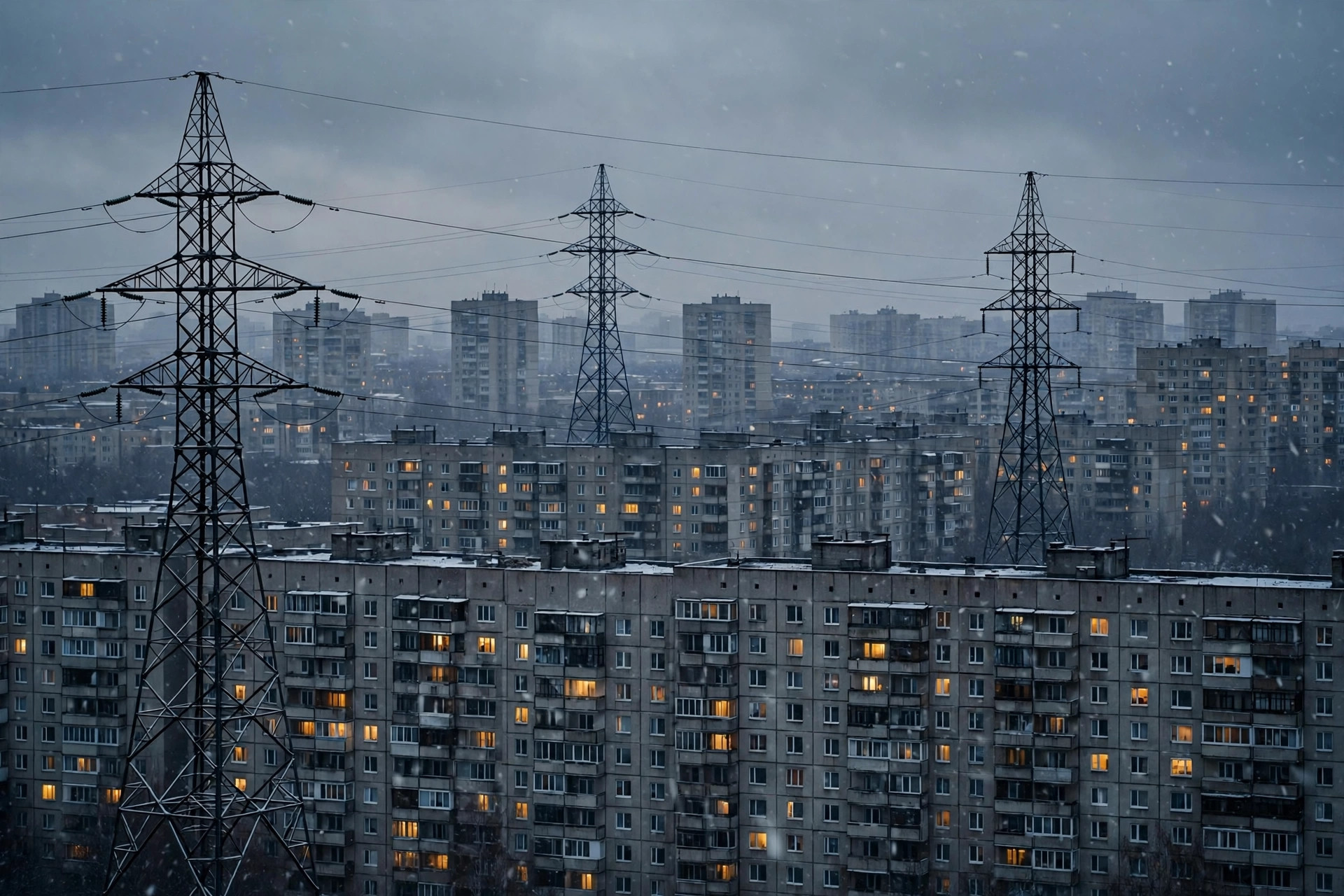
Russia committed war crimes and crimes against humanity in Ukraine by intentionally attacking energy infrastructure, leaving millions of people without electricity and heat in freezing temperatures, a UN report on Russia energy strikes in Ukraine concluded on Monday. The Independent International Commission of Inquiry on Ukraine presented its findings in a report submitted to the UN General Assembly's human rights committee, in its first report focusing on the impact of Russia's wide-ranging attacks on Ukraine's energy system.
The commission concluded that Russian authorities committed war crimes by intentionally directing attacks against civilian objects, and crimes against humanity through other inhumane acts. It also found compelling evidence that Russian authorities trafficked men from 29 countries into the Russian armed forces through deception or coercion, in violation of international law. Russia has denied targeting civilians and has previously rejected similar findings, a position the commission's report does not accept on the evidence it reviewed.
What the UN Report on Russia Energy Strikes in Ukraine Found
The report examines attacks on energy facilities since autumn 2022, with waves of hundreds of drones and missiles growing more frequent, intense and geographically broad over the years. It focuses in particular on the winter of 2025-2026, when temperatures fell to minus 21 degrees Celsius in some areas, and in some accounts as low as minus 30 degrees, as millions of people faced prolonged outages of heating, electricity, water and gas.
The commission's findings draw on accounts from 255 people in Dnipro, Kyiv, Kharkiv, Kherson, Mykolaiv, Odesa, Poltava, Zaporizhzhia and Zhytomyr oblasts, alongside information from Ukrainian authorities, doctors and non-governmental organisations. Older people and people with reduced mobility faced particular danger when power cuts left them trapped in elevators or unable to reach safe places during air raid alerts. Families described disrupted schooling during energy crises and children becoming ill in homes without heat. Hospital patients were left without critical devices, the Associated Press reported from the inquiry's findings.
The commission said the attacks followed a state policy to deprive civilians of essential services. It assessed that Russian commanders ordering the attacks knew that the heating facilities they targeted were indispensable to the civilian population, particularly in winter, and cited official Russian statements concerning further attacks on energy infrastructure as evidence relevant to its findings. Ukrainian authorities reported that large-scale strikes reduced thermal power-generation capacity by 70% in the hardest-hit areas during the previous winter.
Why the UN Calls the Energy Strikes War Crimes and Crimes Against Humanity
Under international humanitarian law, civilian objects, including infrastructure indispensable to civilian survival, are protected. Attacks intentionally directed against them can constitute war crimes. The commission concluded that the energy attacks met that test because they were intentionally directed against civilian facilities, not merely incidental to attacks on military targets, and because their cumulative effect was to inflict severe suffering on the civilian population.
The crimes-against-humanity finding goes further. It requires that inhumane acts be committed as part of a widespread or systematic attack on a civilian population, pursuant to a state policy. The commission found that the frequency, intensity and geographic range of the waves of attacks, and their deliberate timing during freezing weather, met that threshold. Commission chair Erik Mose warned that as the cold season approaches, attacks have intensified again, raising serious concerns about threats to civilians' lives and health.
It is important to be precise about what the report is and is not. These are findings by an independent UN-mandated investigative body, not a verdict by an international criminal court. They do not convict any individual or impose a sentence, but they establish an official international record that can inform accountability efforts, including future prosecutions and sanctions decisions.
What the Report Says About Trafficked Foreign Recruits
Alongside the energy findings, the commission found evidence that Russia recruited men from 29 countries into its armed forces through deception or coercion. The men, aged 18 to 60, came mostly from vulnerable and marginalised communities, with poor economic backgrounds and low education levels, the inquiry said. Recruits were forced to sign Russian-language military contracts before being deployed to frontline positions in Ukraine, according to the report. The commission called for an immediate end to attacks on civilian infrastructure and the discharge of all trafficked recruits from Russian forces.
What Happens Next After the UN Ukraine Energy Report
The report was issued as Russia has stepped up attacks on civilian energy targets, and as diplomatic efforts continue in parallel, including talks involving Ukraine, Russia and the United States in Abu Dhabi and localised ceasefires for humanitarian operations. The commission's findings will be debated in the UN General Assembly's human rights committee, and may inform further investigations by national prosecutors and the International Criminal Court, which has its own separate proceedings.
For civilians in Ukraine, the immediate question is the coming winter. If attacks on heating and power continue at the intensity the commission documented, millions face another season of outages in freezing conditions. The report's central warning is that the pattern it describes is not historical: it is continuing, and it is intensifying as temperatures fall.
How Energy Attacks Became a Winter Weapon in Ukraine
The pattern documented by the commission did not begin in the winter of 2025-2026. Since autumn 2022, Russian forces have repeatedly struck power stations, heating plants, gas facilities and electricity networks, with the tempo rising as cold weather approached each year. The logic, as the commission describes it, is to use the cold itself as a weapon: depriving civilians of heat, light and water in winter inflicts suffering far beyond the physical damage to any single facility, and puts pressure on the government by testing the population's endurance. Ukrainian engineers have become adept at repairs, often restoring power within hours or days, but repeated waves of hundreds of drones and missiles can overwhelm even rapid repair teams, and the cumulative damage to generation capacity has grown year by year. Civilians have adapted with generators, candles, power banks and community heating points, but those adaptations have limits, particularly for older people, hospital patients and families with young children. The commission's focus on the cumulative effect, rather than on any single strike, is central to its legal reasoning: it is the systematic, repeated character of the attacks, timed for winter, that supports the conclusion of a state policy.
Related reading: Ukraine Russia US Abu Dhabi talks, Finland and Norway call to Putin, Starlink Ukraine restored.