
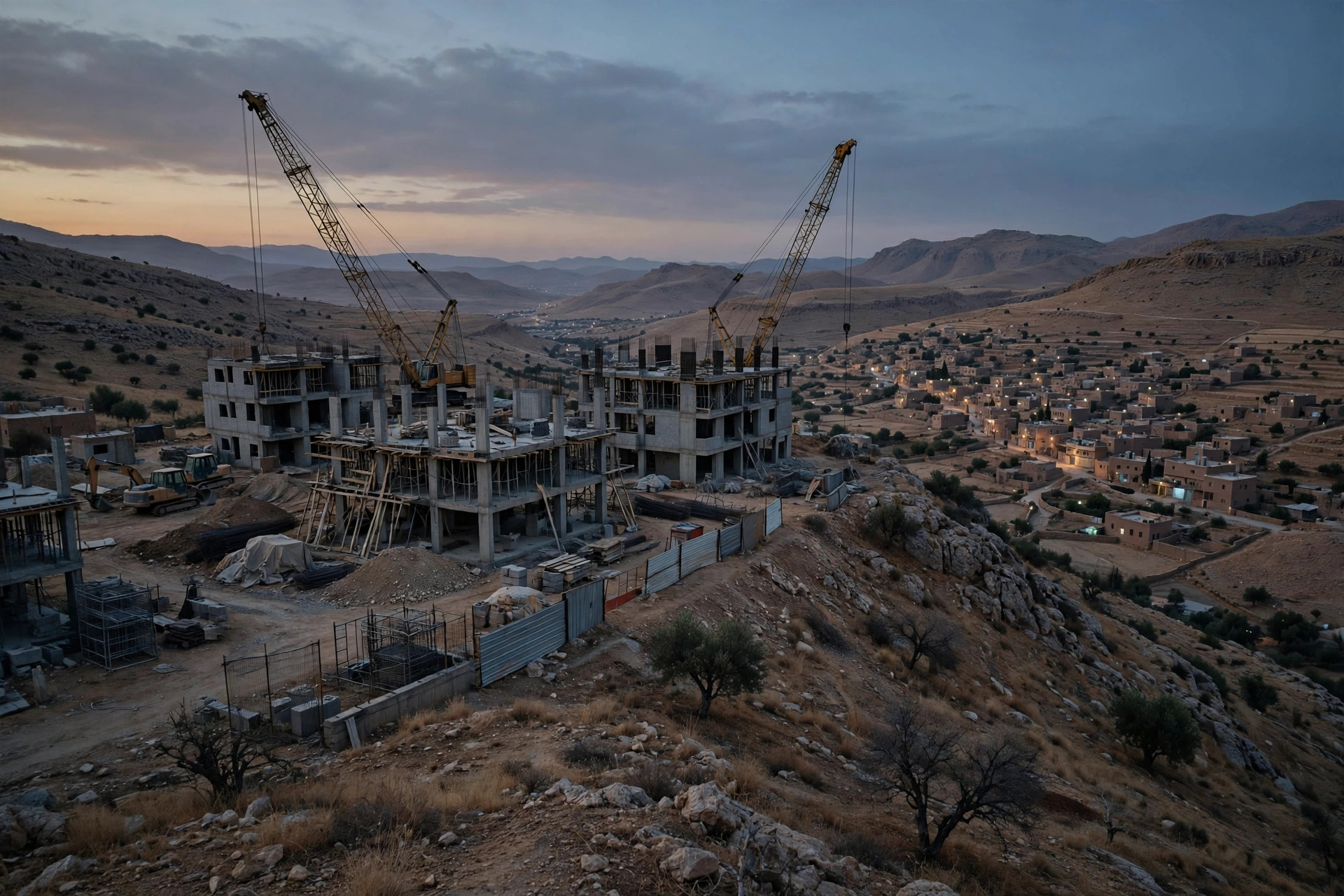
UK sanctions Israeli settlement companies November 2026 mark the sharpest British action yet against settlement building in the occupied West Bank. Britain is imposing sanctions on eight Israeli construction companies involved in building settlements there, Reuters reported on 17 November, with asset freezes and director disqualifications for the firms and the people who run them. The announcement came shortly before final deadlines for the tender on E1, a planned settlement area whose construction would cut across the West Bank and separate it from East Jerusalem. The measures are the first penalties of their kind since the British government changed its approach to the issue, and they land at a moment when the relationship between London and Jerusalem is at its lowest point in years.
UK Sanctions Israeli Settlement Companies November 2026: Who Was Named
The UK sanctions Israeli settlement companies November 2026 package targets eight construction firms, three of which have been named in reporting so far: Har Hevron Development Company Ltd, Hemdat Shomron Ltd, and S.A.G. (Velvel) Construction and Development Ltd. The sanctions take two forms. Asset freezes block the companies from accessing money and property held under British jurisdiction, and director disqualifications bar the individuals who run them from acting as company directors in the UK. These are targeted measures: they hit named companies and their directors rather than the Israeli state or the wider Israeli economy, which is the point of this kind of sanctions regime. It aims to raise the cost of a specific activity — building settlements in occupied territory — without cutting off trade or diplomacy with Israel as a whole. The designations were made under the UK's expanded Global Human Rights and International Humanitarian Law sanctions regime, with the relevant legislation laid before Parliament on 13 October. That timing matters because it shows the measures were prepared through a formal legal process rather than announced on impulse: the powers were put in place first, and the designations followed about a month later.
What Is E1 and Why Does It Matter?
To understand why the timing of the sanctions matters, it helps to understand E1. E1 is a planned settlement area adjacent to Ma'ale Adumim, a large Israeli settlement east of Jerusalem. Building there would fill one of the last stretches of open land between Jerusalem and Ma'ale Adumim, and critics of the plan say it would bisect the West Bank, cutting the northern half off from the southern half and cutting the whole territory off from East Jerusalem. That geography is why E1 has been so contested for so long: a contiguous Palestinian state needs the West Bank to connect, and a built-up E1 corridor would break that connection. The British sanctions were announced shortly before final deadlines for the E1 tender, the process through which construction contracts for the area are awarded. The timing is deliberate. Sanctions announced after the tender deadlines would arrive after the key decisions had been made; sanctions announced just before them are meant to raise the cost and the political pressure while the process is still open. Supporters of the plan in Israel argue that Ma'ale Adumim is a large, established community and that building east of Jerusalem is a natural extension of it. Critics, including the British government, argue that settlements in occupied territory breach international law and make a negotiated two-state outcome harder to reach. That legal disagreement sits at the heart of the whole dispute, and it is why the sanctions are framed in the language of international humanitarian law rather than as a general political protest.
Who Are Tzav 9, and Why Were They Sanctioned Too?
The sanctions package goes beyond construction companies. It also targets Tzav 9, an Israeli activist movement that has blocked humanitarian aid convoys heading to Gaza, most recently in October, according to the Press Association. Tzav 9's members have physically obstructed trucks carrying food and other supplies, arguing that aid should not reach Gaza while Israeli hostages remain held there. Aid agencies and governments that support the deliveries say blocking food convoys worsens a humanitarian crisis in which civilians are already short of basic supplies. Including Tzav 9 in the same package as the construction firms sends a wider message: the sanctions are aimed at two different kinds of activity — building settlements and obstructing aid — that the British government considers breaches of international humanitarian law. Tensions in the West Bank have been running high for months, and the olive harvest season has brought a series of violent incidents involving settlers, Palestinians and journalists. The sanctions do not address that violence directly, but they form part of the same British effort to use targeted penalties against individuals and groups it holds responsible for actions in the occupied territories.
UK Sanctions Israeli Settlement Companies November 2026: Why the UK Acted Now
The measures are the first penalties since the British government's policy shift on the issue, and they follow a promise made in public. Foreign Secretary Ed Miliband pledged action in September, and the legislation underpinning the new designations was laid on 13 October. The political context is a change of leadership in London: Prime Minister Andy Burnham changed the government's approach after taking office in July, and the sanctions are the clearest expression of that change so far. Previous British governments have criticised settlement building for decades, but they generally stopped at statements. Moving to asset freezes and director disqualifications is a step from words to consequences, and it puts Britain among the more assertive European governments on this question. European diplomats have themselves been caught up in settler-related incidents in the West Bank this year, which has hardened opinion in several European capitals. Britain is not acting alone in its criticism, but its use of its own sanctions regime makes the action concrete in a way that joint statements are not. The designations also fit a pattern of Britain using targeted sanctions as its main tool of pressure — the same kind of instrument it has used against commanders in other conflicts, including sanctions on Sudanese commanders earlier this year.
How Israel Responded and What Happens Next
Israel's government rejected the move. Foreign Minister Gideon Saar called the sanctions a hostile act targeting private, law-abiding companies, arguing that the firms are legitimate businesses and that Britain is punishing them for operating in areas Israel considers its own. That response captures the core disagreement: Israel disputes that the settlements are illegal and treats construction in the West Bank as a domestic matter, while Britain and most of the international community regard the settlements as a breach of international law. Neither side is likely to change its position because of this package, so the practical question is what happens next. The E1 tender deadlines will show whether the sanctions, and the pressure around them, change any company's willingness to bid. The British government will be watched for whether it adds further names, including more construction firms or individuals, if building proceeds. And the wider UK-Israel relationship, already strained, will be tested further: Britain still trades with Israel, cooperates on security and shares intelligence, and both sides have reasons to keep those channels open even while they clash publicly over the West Bank. The sanctions are narrow in their legal effect and broad in their political signal, and their real test will be whether anything on the ground changes as a result.