
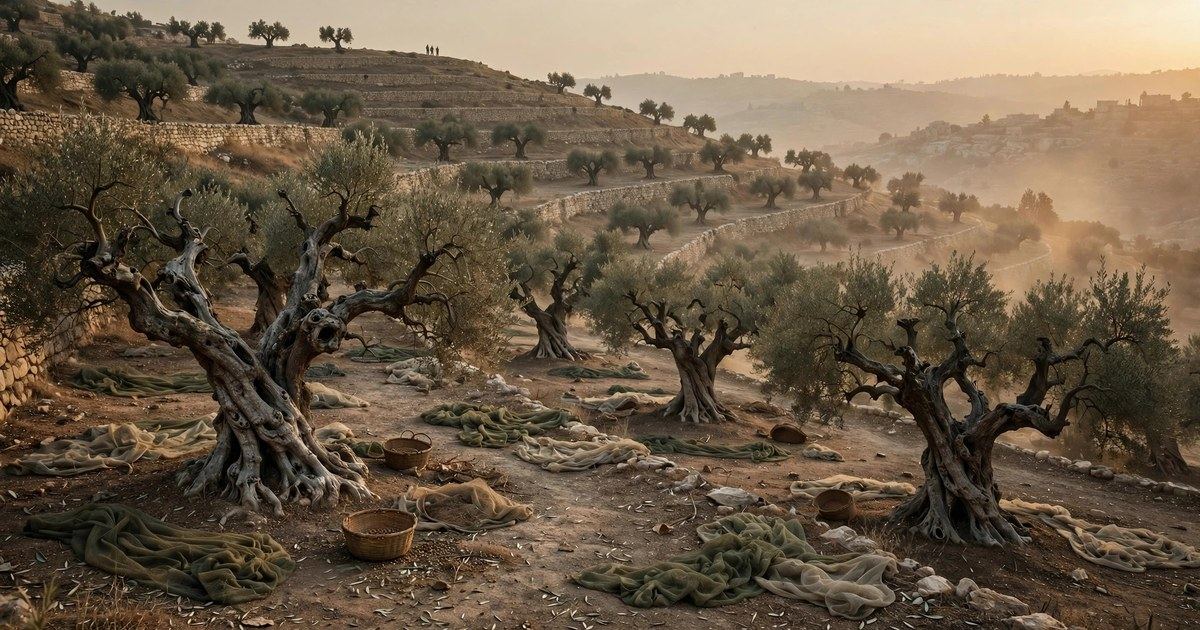
An American photojournalist on assignment for The Washington Post was hospitalised on Friday, October 16, 2026, after masked Israeli settlers attacked Palestinian olive harvesters — and her — in the occupied West Bank village of Abu Falah, near Ramallah. The assault, captured on video by other journalists at the scene, is trending per news coverage because it struck a clearly identified member of the press, it unfolded during the annual olive harvest that sustains many Palestinian families, and it fits a documented surge of settler violence in recent weeks.
Heidi Levine, a veteran photojournalist working as a freelancer for The Washington Post, was photographing Palestinian families picking olives when the attack began. She was wearing a helmet and a protective vest clearly marked "PRESS". In a video recorded later from her hospital bed, she said she saw a large group of masked men on a hilltop above the grove, and that they ran down toward the harvesters and attacked her, pushing her to the ground and kicking her repeatedly. She estimated the beating lasted about ten minutes. Her cameras, her bag, and her phone were torn off her or stolen during the assault. Palestinian colleagues pulled her out of the attack, and medics took her by ambulance to a clinic in Abu Falah and then to a hospital in Ramallah, where she received treatment including stitches to her hand and her back.
What happened in Abu Falah
According to Reuters witnesses, around 80 settlers, some carrying gas canisters, descended from a hill above a terraced olive grove where villagers from Abu Falah had gathered to pick ripe fruit. Some of the settlers set fire to fields and olive trees. Others used slingshots to launch stones at the Palestinian villagers, who retreated down the hill and then threw stones back in self-defence. The confrontation continued after at least two Israeli military jeeps arrived at the scene, with soldiers firing tear gas in the direction of the Palestinians, according to Reuters. The sound of live gunfire was also heard in the area, and a Reuters photographer saw at least one armed settler fire a gun. An Associated Press photograph showed Israeli soldiers approaching a wounded Palestinian man lying on a road after the attack.
Palestinian medics said at least two people were injured and taken to hospitals in the Ramallah area, one of them Levine. Video filmed by independent journalist Jasper Nathaniel showed masked settlers, some armed with clubs, hurling stones at Palestinians, and a group of settlers surrounding Levine on the ground, beating her as she covered her face with her hands and pulling away her bag.
Levine told the Committee to Protect Journalists from her hospital bed that she had identified herself to the attackers as an American journalist. She said she did not personally see Israeli soldiers at the scene, but saw tear gas and stun grenades fired, which suggested to her that soldiers must have been present. She added that her bag, camera, and phone were stolen. "Luckily I had my flak jacket and my helmet, otherwise I probably wouldn't even be here," she said in a video statement, "because they just kept kicking me and kicking me."
Who is Heidi Levine
Levine is a veteran American photojournalist who has spent decades covering conflict and its aftermath across the Middle East and Ukraine. She has documented the lives of civilians caught in war, including in Gaza and Ukraine, and her work has appeared in major international outlets. On Friday she was on assignment for The Washington Post, covering the olive harvest — a story about livelihood and tradition that turned, in minutes, into a story about violence against the very people documenting it.
Her experience is part of why the attack drew such swift condemnation. Journalists covering conflict zones accept risk, but international press-freedom norms hold that reporters wearing clear identification should not be targeted, and that authorities must investigate attacks on them. Levine was wearing visible markings identifying her as a journalist, The Washington Post said — a fact the newspaper underlined in its public statement.
Reactions: newspaper, police, and the US Embassy
The Washington Post's executive editor, Matt Murray, said in a statement on Friday: "This morning, a Washington Post photographer, Heidi Levine, was attacked by Israeli settlers while reporting in the West Bank. She was wearing visible markings clearly identifying her as a journalist. While we are relieved that Heidi has received medical care and is safe, we are outraged by this unwarranted attack on a journalist doing her job and urge a thorough investigation and follow-through from authorities."
Israeli police issued a statement acknowledging reports that a foreign journalist was injured and said they would investigate the incident and "bring those involved to justice." The Israeli military did not immediately respond to requests for comment, according to Reuters.
The US Embassy in Jerusalem said it was aware of the situation and monitoring it. Without naming Levine's attack specifically, it said in a statement: "We are in regular dialogue with partners about improving stability and security in the West Bank. We condemn criminal violence by any party in the West Bank and call for investigations, arrests, and convictions, of those responsible."
The Committee to Protect Journalists said it was alarmed by the attack and documented it as part of a wave of similar incidents against Palestinian and foreign journalists in the West Bank, including those covering the olive harvest.
Why the olive harvest is a flashpoint
The olive harvest, which runs roughly from late September through November, is one of the most important events of the year in Palestinian life. Olives and olive oil are a major source of income for tens of thousands of families, and the harvest is a communal tradition — grandparents, parents, and children picking fruit from trees that in many cases have stood on the same terraces for generations. Because harvesters must reach groves that often lie near settlements or in areas where access is contested, the season has repeatedly become a flashpoint for confrontations.
According to Yesh Din, an Israeli settlements monitoring group, settler violence against Palestinians in the occupied West Bank has surged, with at least 170 attacks recorded since September 27, around the start of this year's harvest. Friday's attack in Abu Falah was among the most serious of them, both because of its scale — dozens of attackers, according to witnesses — and because it injured an international journalist whose beating was filmed.
A pattern of attacks on journalists
Levine's beating was not an isolated incident. Ten days earlier, on October 6, armed Israeli settlers attacked Agence France-Presse photographer Jaafar Ashtiyeh, beating him with the butts of their rifles while Israeli soldiers watched without intervening, according to AFP. Ashtiyeh suffered bruises to his head and torso and was taken to hospital by ambulance. On October 8, Ricardo Esteves Ribeiro, a Portuguese correspondent for the independent outlet Fumaça, was arrested in Rantis, northwest of Ramallah, and deported the following day. Two days later, near Ramallah, Israeli troops fired rubber bullets during clashes involving settlers, striking Palestinian photojournalist Issam al-Rimawi, who told the Committee to Protect Journalists he was wearing an identifiable press vest when he was hit. An NBC News team was also attacked in the West Bank in August, according to press-freedom monitors.
That pattern is why press-freedom groups treat Friday's attack as more than a single assault. When journalists are beaten, arrested, or shot at while visibly identified, the effect extends beyond the individual: it discourages coverage of contested areas, leaving violence there less documented. Attacks on the press in one country are not the same as journalists detained during protests in Delhi, but the underlying question is the same everywhere — whether reporters can do their jobs without fear of being targeted for witnessing events those in power would rather keep unseen.
What remains unclear
Several questions remain unanswered. No arrests had been publicly reported in the hours after the attack, and it is not yet known whether Israeli police have identified any of the masked attackers, some of whose faces were covered and whose actions were partly filmed. It is also unclear what role, if any, Israeli forces played during the assault: Levine said she did not see soldiers herself, while Reuters witnesses described military jeeps arriving and tear gas being fired toward Palestinians as the attack continued. The full number of Palestinian casualties is also still unclear — medics confirmed at least two people hospitalised, while other reports described additional injuries, including a man shot, and the circumstances of the gunfire remain disputed.
What is established is the sequence that multiple independent outlets have now corroborated: a large group of masked settlers descended on a harvest in Abu Falah, set fires and threw stones, beat an identified American photojournalist for minutes, stole her equipment, and left her hospitalised — and the attack was filmed. The incident comes amid a wider period in which civilians far from any front line have been caught in escalating violence, from sailors killed in Black Sea drone strikes to families harvesting olives under threat.
Whether the Israeli police investigation produces arrests and prosecutions will be the next test. The Washington Post, the Committee to Protect Journalists, and the US Embassy have all publicly called for exactly that: an investigation, arrests, and convictions. For Levine, the immediate concern is recovery. For the villagers of Abu Falah, the harvest continues — under the same risks that made Friday's picking turn violent. Foreign observers have repeatedly been targeted during this year's harvest — a European diplomatic delegation was also attacked by settlers near Taybeh.
Foreign visitors joining the harvest have repeatedly been caught up in the confrontations, including US candidate Brad Lander, who was detained by the IDF during the olive harvest.