
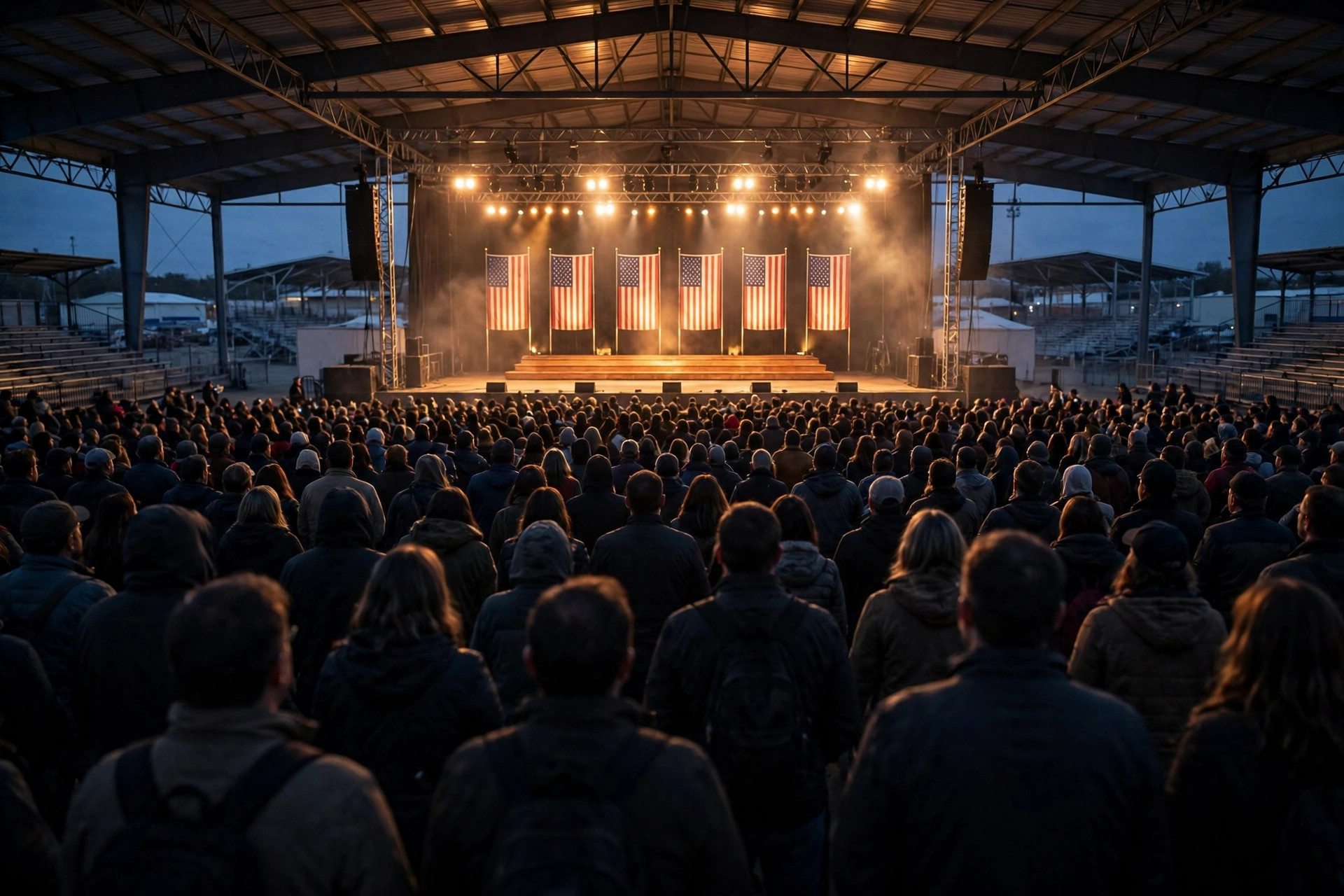
The Trump rallies Kansas Iowa November 2026 schedule is back on. After being cancelled on Thursday 29 October 2026, President Donald Trump's rallies in Salina, Kansas, and Dubuque, Iowa, were reinstated and reported back on on Friday 30 October 2026, and both are now set for Sunday 1 November 2026. The change came in the final days of the midterm campaign, with Election Day — the midterms — falling on Tuesday 3 November 2026. The rallies were originally planned for the weekend before the election, and the revised plan puts both of them on the Sunday, two days before voters go to the polls. The Salina, Kansas, event was moved from Saturday 31 October to Sunday 1 November, while the Dubuque, Iowa, event stays on 1 November, the date on which it had already been planned.
For readers following the campaign, the story is a useful reminder of how quickly a candidate's travel plans can change in the last week of an election. A rally is not only a speech. It is a visible signal to supporters, volunteers and local candidates that the national campaign is paying attention to their state. It draws local news coverage, gives the candidates standing beside the president a photograph and a soundbite, and gives volunteers a reason to turn out for the final weekend of door-knocking and phone calls. When a rally is cancelled, the local campaign loses that moment. When it is reinstated a day later, the campaign has to rebuild it quickly, telling supporters where and when to gather and making sure the message about the change reaches people who had already made plans for the original date.
Trump Rallies Kansas Iowa November 2026: What Changed in 48 Hours
The sequence of events is short but important. The rallies were cancelled on Thursday 29 October 2026. On Friday 30 October 2026, they were reported back on, with both events now scheduled for Sunday 1 November 2026. The Kansas rally in Salina moved from Saturday 31 October to Sunday 1 November. The Iowa rally in Dubuque stays on 1 November. No new Kansas location or timing has been announced beyond the change of day, and it is unclear whether Dubuque is still the venue. The venues as originally planned were Salina Regional Airport (Hangar 509) in Salina, Kansas, and the Five Flags Center in Dubuque, Iowa, but readers should not treat those venues as confirmed for 1 November, because that confirmation has not been given.
The cancellation and the reinstatement happened against a wider change in how the Republican National Committee was campaigning in the final days. The RNC replaced the in-person rallies with tele-rallies — telephone rallies in which the president speaks to supporters by phone rather than appearing in person. The tele-rallies were described as a "72-hour sprint" reaching nearly 20 states, with 19 or more tele-rallies held. That is a very different kind of campaigning from a rally in a hangar or an arena. A tele-rally can reach many states quickly and cheaply, and it can be organised at short notice. An in-person rally reaches fewer people in one place, but it creates pictures, local coverage and energy that a phone call cannot. The decision to bring back the two in-person rallies, while keeping the tele-rally programme running, suggests that the campaign wanted both: the wide reach of the tele-rallies and the visible presence of two in-person events in states where the Senate races matter.
President Trump has campaigned heavily in person during October. According to Associated Press data, he has held 25 rallies in October. That is a demanding schedule for any candidate, and it underlines how central rallies are to his style of campaigning. He speaks directly to supporters, often at length, and the events are covered live and clipped for social media. Asked about the Kansas race, Trump said: "I don't feel I have to go to Kansas." The remark was made before the rallies were reinstated, and it captures the tension in the story: the president's own sense of where his time is needed, set against the wishes of local candidates and the party organisation, which wanted him in Kansas and Iowa in the final weekend.
Why Trump Rallies Kansas Iowa November 2026 Matter
The Kansas Senate race is the reason the Salina rally attracted so much attention. Senator Roger Marshall, a Republican, is seeking re-election. His opponent is Democrat Adam Hamilton. Kansas last elected a Democratic senator in 1932, which is why the race has drawn national attention: a Democratic win in Kansas would be a historic result, and a close race in a state that has not sent a Democrat to the Senate for more than ninety years is itself a story. Two polls released around the time of the rally announcement point in the same direction, though they do not agree on the size of the gap. A Washington Post poll released on Friday 30 October put Hamilton ahead by 52 percent to 43 percent among likely voters. A CNN poll put Hamilton ahead by 4 points, within the margin of error. The difference between the two polls matters. The Washington Post poll suggests a clear lead. The CNN poll suggests a closer race in which the lead could be smaller than the poll's margin of error. Taken together, they show a race that is competitive, which is not what most observers would have expected in Kansas, and they help explain why the rally was reinstated: a competitive race is exactly the kind of race in which a presidential visit can matter.
Polls need to be read carefully. A poll is a snapshot of the people who answered it, weighted to look like the people who are expected to vote. "Likely voters" means the pollster has tried to identify the people most likely to turn out. The margin of error is the range within which the true result could fall, given the size of the sample. When a lead is within the margin of error, the poll cannot settle who is ahead. That is the position in the CNN poll. When a lead is larger than the margin of error, the poll gives more confidence that the candidate is genuinely ahead, though even then a poll can be wrong. Readers should treat both polls as evidence that the race is close and that Hamilton is competitive, rather than as a prediction of the result on 3 November.
The Iowa Senate Race: Hinson Against Turek
The Iowa rally is tied to a different kind of Senate race. In Iowa, Representative Ashley Hinson, a Republican, is running against Democratic state Representative Josh Turek. The seat is open because Senator Joni Ernst is retiring. Open seats — seats where the sitting senator is not running again — are often more competitive than seats where an incumbent is defending them, because neither candidate has the advantage of already holding the office. The RealClearPolitics average of polls has Hinson leading by less than 1 percentage point. A lead of less than 1 point is, for practical purposes, a tie. It means the race could go either way, and it means that small differences in turnout on Election Day could decide it.
Iowa and Kansas are both states where the Republican Party would normally expect to win a Senate race, and that is why the two rallies matter together. If both races are close, the party needs its supporters to turn out in both states. A rally in each state, two days before the election, is a way of speaking directly to those supporters and reminding them to vote. The rallies also matter for the candidates themselves. Standing beside the president at a rally gives a candidate visibility and a clear association with the national party. For Hinson and Marshall, the visit is a public show of support. For Hamilton and Turek, it is a sign that the other side thinks the race is close enough to need it.
Tele-Rallies, In-Person Rallies and the Final Weekend
The contrast between tele-rallies and in-person rallies is worth understanding, because it explains why the campaign changed its plans twice in two days. A tele-rally is a conference call on a large scale. Supporters dial in or are called, and they listen to the candidate speak. It is efficient: one call can reach voters in many states, and it does not require travel, a venue or security arrangements. The RNC's "72-hour sprint" of 19 or more tele-rallies reaching nearly 20 states is an example of that efficiency in action. It lets the president speak to voters in states he cannot visit in person in the final three days of a campaign.
An in-person rally does something different. It brings supporters together in one place, creates a crowd, and gives the campaign photographs and video that can be used in advertising and on social media. It also gives local news organisations a reason to cover the race in their state, which matters because many voters get their news from local television and newspapers. The drawback is that it takes time and planning, and it can only happen in one place at a time. When the in-person rallies in Kansas and Iowa were cancelled, the campaign leaned on the tele-rallies instead. When they were reinstated, the campaign chose to do both: keep the tele-rally sprint going and add two in-person events on the Sunday before the election.
That choice also reflects the calendar. Sunday 1 November is the last Sunday before Election Day on Tuesday 3 November 2026. It is the last full day of weekend campaigning, when volunteers are free and supporters can travel to an event. A rally on that day is a final push: it energises volunteers for the last two days of canvassing and reminds supporters that voting is imminent. Moving the Salina rally from Saturday 31 October to Sunday 1 November keeps it in that final weekend, and keeping the Dubuque rally on 1 November does the same for Iowa. Readers planning to attend should check the latest announcements from the campaign before travelling, because no new Kansas location or timing has been announced and it is unclear whether Dubuque is still the venue.
What Happens Next
The next steps are straightforward. Both rallies are now scheduled for Sunday 1 November 2026. The campaigns in Kansas and Iowa will use the weekend to contact supporters, confirm attendance and prepare for the events. Local news coverage will show whether the rallies go ahead as planned and whether the venues are the ones originally announced. The polls will continue to be watched, but the result will be decided on Tuesday 3 November 2026, when voters in Kansas and Iowa cast their ballots in the midterm elections. In Kansas, the question is whether Adam Hamilton can turn a polling lead into a historic win in a state that last elected a Democratic senator in 1932. In Iowa, the question is whether Ashley Hinson can hold a lead of less than 1 percentage point in an open race against Josh Turek.
For readers, the lesson of this story is not only about two rallies. It is about how a campaign makes decisions in its final days, balancing the efficiency of tele-rallies against the visibility of in-person events, and responding to polls that show races are closer than expected. The cancellation on Thursday 29 October and the reinstatement on Friday 30 October show a campaign changing its mind quickly as new information arrived. The rallies on Sunday 1 November will show whether that change of mind was worth it. If you want to understand how to take part, read our guide to voting in the 2026 midterms, and for the wider campaign picture see our coverage of the Trump Florida rally in the midterms, the Trump Michigan rally in Port Huron and the election war room for the 2026 midterms.
Sources: USA Today, Reuters, Associated Press, NY Post, October 2026..