
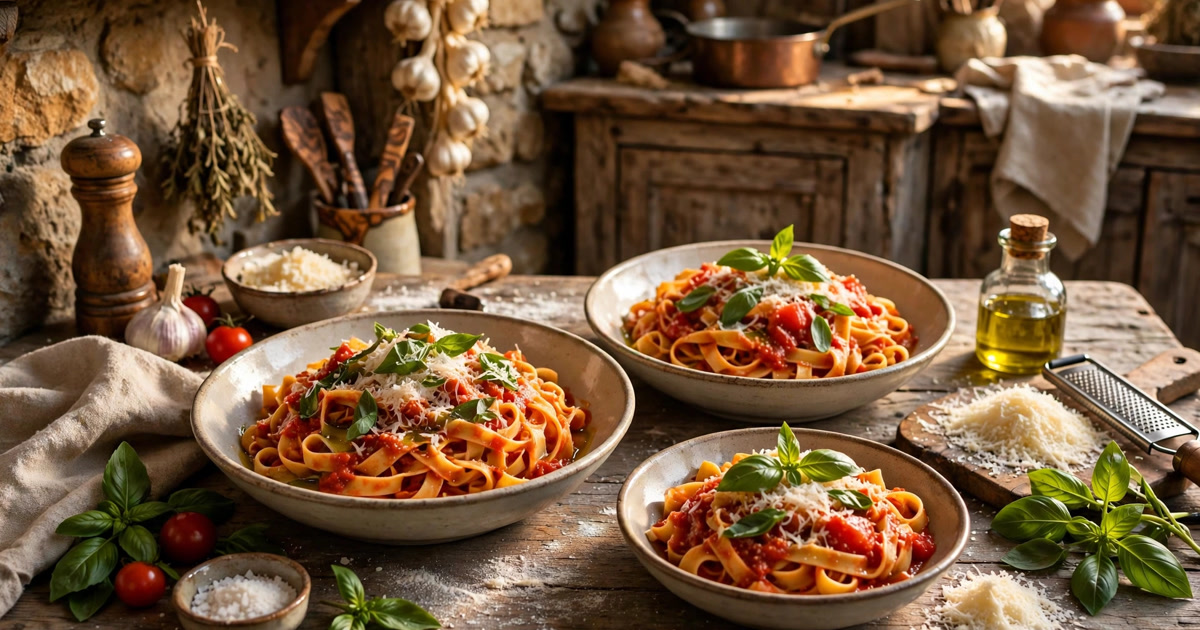
Few dishes travel as well as pasta, yet traditional Italian pasta recipes are rooted in very specific places, ingredients and habits. A Roman carbonara, a Bolognese ragù and a Sicilian pasta alla Norma may all start with dried or fresh pasta, but each one follows rules shaped by local farms, seasons and family kitchens over generations.
This guide to traditional Italian pasta recipes walks through seven classics, explains which pasta shape belongs with which sauce, and shows how to cook each dish the way Italian cooks do. You do not need specialist equipment to begin, just good ingredients, patience and respect for a few simple principles.
Why Traditional Italian Pasta Recipes Follow Regional Rules
In Italy, pasta is not one cuisine but twenty regional ones, and traditional Italian pasta recipes reflect that diversity. Egg pasta dominates in Emilia-Romagna, where fresh tagliatelle and tortellini suit rich meat sauces, while durum wheat dried pasta rules the south, where olive oil, tomatoes and seafood shape the cooking.
The shape matters as much as the sauce in traditional Italian pasta recipes. Ridged tubes trap thick ragù, long strands suit glossy oil-based sauces, and small shapes belong in soups and baked dishes. Choosing the right pairing is the fastest way to make a home-cooked dish taste convincingly Italian.
Carbonara, Amatriciana and Cacio e Pepe: The Roman Trio
Rome gives traditional Italian pasta recipes three of their most famous dishes. Carbonara combines guanciale, egg yolks, Pecorino Romano and black pepper into a silky sauce with no cream at all, while amatriciana adds tomato to a similar pork-and-cheese base for a sharper, richer result.
Cacio e pepe is the simplest and the most unforgiving of the Roman trio. Pasta water, finely grated Pecorino and cracked pepper must be whisked into a smooth cream, and the pasta should be finished in the pan so the starch binds everything together. Master these three and you understand the Roman approach to pasta.
Ragù, Pesto and Norma: Emilia, Liguria and Sicily
Bologna's ragù, the slow-cooked meat sauce behind tagliatelle al ragù, is a lesson in patience. Beef, pork, soffritto, wine and milk simmer for hours until the meat is tender and the sauce coats rather than drowns the pasta, a world away from fast tomato-heavy imitations.
Genoa contributes pesto, basil pounded with pine nuts, garlic, Parmesan, Pecorino and olive oil, while Sicily offers pasta alla Norma, with fried aubergine, tomato, basil and salted ricotta. Together these dishes show how traditional Italian pasta recipes turn a handful of local ingredients into complete meals.
Fresh Versus Dried Pasta in Traditional Italian Pasta Recipes
Fresh egg pasta suits delicate fillings and butter-based sauces, and it cooks in minutes, while dried pasta made from durum wheat holds its bite and stands up to robust sauces. Neither is better in general; the recipe decides which one belongs on the plate.
If you make fresh pasta, rest the dough, roll it thin and dry the sheets briefly before cutting. If you buy dried pasta, check that it is bronze-die extruded, which gives a rougher surface that grips sauce. In both cases, salt the water generously and never rinse the pasta after draining.
Common Mistakes in Traditional Italian Pasta Recipes
The most common error is overcooking. Italian cooks aim for al dente, pasta with a firm centre, and they finish cooking it in the sauce with a ladle of starchy pasta water. Adding oil to the cooking water is pointless, and it stops sauce clinging to the strands.
Another mistake is drowning pasta in sauce or cheese. Traditional Italian pasta recipes use just enough sauce to coat each piece, and cheese is added where the recipe calls for it, not automatically. Taste as you go, keep the pan moving, and serve immediately in warmed bowls.
Pasta in Everyday Italian Life
In Italy, pasta is usually the first course, the primo, rather than the main event, and it is served in modest portions before meat, fish or vegetables. This structure explains why Italian meals feel balanced despite their reputation for richness: the pasta course is satisfying but not enormous, and it is followed by lighter proteins and salads.
Families often eat pasta at lunch, the main meal of the day, and the choice of dish follows the season. Light lemon or vegetable pastas suit summer, hearty ragù and baked pasta suit winter, and seafood pasta appears on Fridays and feast days. Learning this rhythm helps home cooks plan menus that feel Italian rather than just tasting Italian.
Wine, Bread and Sides with Pasta
Wine with pasta follows a simple rule: match the weight of the sauce, not the shape of the pasta. Light white wines suit seafood and vegetable sauces, while medium reds suit tomato and meat sauces, and sparkling water is always welcome on the table. Bread is for mopping sauce at the end, not for eating alongside the pasta course.
Sides stay simple, because the pasta already carries the meal's richness. A bitter-leaf salad with lemon and olive oil, steamed greens with garlic, or roasted vegetables all work well. Keeping sides light also supports a balanced diet built around vegetables, grains and olive oil rather than heavy extras.
Storing, Reheating and Leftover Pasta
Leftover pasta keeps best when the sauce and pasta are stored separately, since combined pasta continues absorbing liquid and turns soft. Refrigerate within two hours, eat within two days, and reheat gently in a pan with a splash of water or stock rather than in the microwave.
Some dishes improve as leftovers: baked pasta and timballi reheat beautifully, and cold pasta salads work for summer lunches. A little understanding of fermentation in food also helps with the pickled vegetables and preserved condiments that often accompany Italian meals, from giardiniera to marinated artichokes.
A Regional Pasta Calendar for Home Cooks
A useful way to explore Italian pasta is to cook by region through the year. Start with Rome in winter, move to Liguria's pesto in spring when basil is at its best, try Sicilian Norma in summer when aubergines peak, and finish with Emilia's ragù in autumn when slow cooking feels right.
Shopping by season also helps you save money on groceries, since tomatoes, basil and aubergines cost less at their peak and taste far better. Buy dried pasta in bulk from brands you trust, keep eggs and hard cheeses on hand, and the regional map becomes a practical weekly menu rather than a distant ambition.
Start with one recipe, cook it twice, and only then move on. Traditional pasta cooking rewards repetition, and once the Roman trio and a slow ragù feel natural, the rest of Italy's pasta map opens up one region at a time.
Sources: Accademia Italiana della Cucina; Italian regional culinary traditions; Pasta Grannies project documentation.