
What Makes Norwegian Everyday Recipes Distinctive
Norwegian everyday recipes are shaped by geography: a long coastline, cold waters, short growing seasons, and a tradition of preserving food for winter. Fish, especially salmon, cod, mackerel and herring, sits at the centre, alongside potatoes, root vegetables, cabbage, dairy, and preserved foods such as cured and smoked fish. That pantry produces food that is fresh in summer, hearty in winter, and practical year-round, with simple techniques that let good ingredients speak.
Norwegian home cooking is also seasonal in a strong sense: spring brings fresh fish and new potatoes, summer brings berries, salads and grilled fish, autumn brings game, mushrooms and root vegetables, and winter brings slow-cooked stews, preserved fish and baked goods. Following that rhythm keeps cooking cheaper, tastier and more varied, and it is the easiest way to cook Norwegian food well without special ingredients or equipment.
Fish in Norwegian Everyday Recipes: Salmon, Cod and Fish Soup
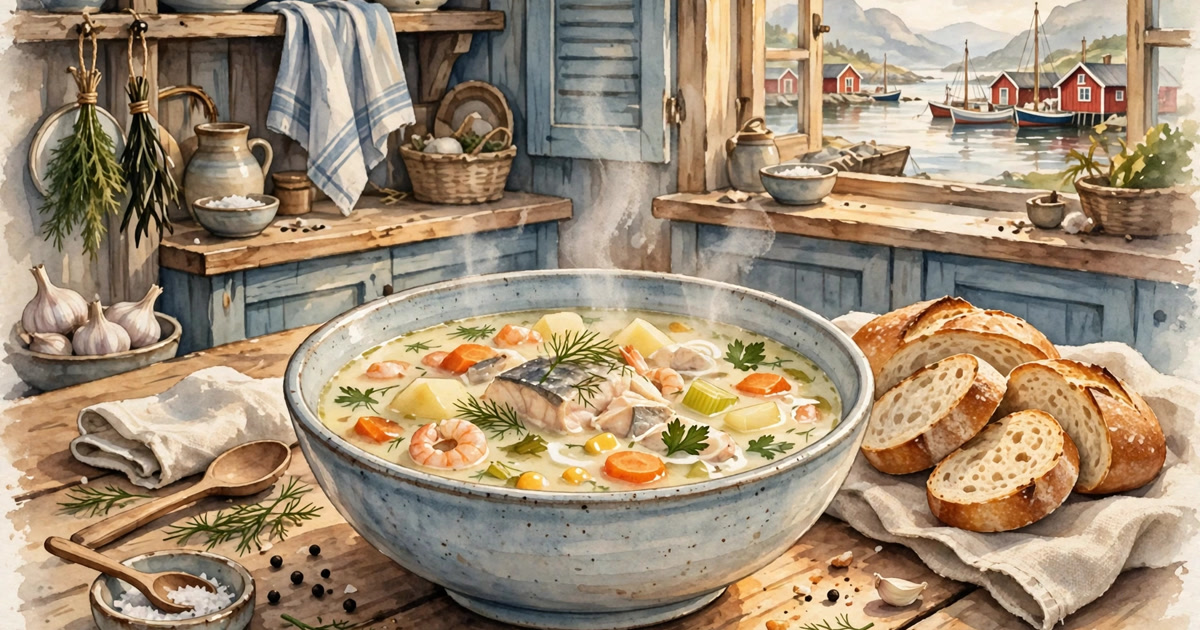
Fish soup, fiskesuppe, is the foundation of Norwegian everyday recipes, and it is simpler than it looks: simmer fish stock with onions, carrots and potatoes, add chunks of salmon, cod or other white fish plus prawns if available, finish with cream and fresh dill or chives, and serve with bread. The soup should be rich but not heavy, with fish added last so it stays tender rather than overcooked.
For weeknights, pan-fried salmon with boiled potatoes and a simple vegetable, baked cod with root vegetables, or open sandwiches with smoked salmon, pickled herring or mackerel are all classic Norwegian dinners that take under half an hour. Season fish simply, with salt, pepper, lemon and dill, and let freshness carry the dish. Frozen fish is perfectly acceptable for everyday cooking, especially outside coastal towns, and our guide to starting to run safely pairs well with Norway's fish-rich, active lifestyle.
Hearty Dishes: Lapskaus, Meatballs and Root Vegetables
Lapskaus, a thick stew of meat, potatoes and root vegetables mashed together, is Norway's great comfort dish, traditionally made with salted meat or fresh beef, lamb or pork, and vegetables such as carrots, swede and celery root. Cook meat and vegetables together until tender, mash coarsely, season well, and serve with flatbread and pickled beetroot. It is forgiving, filling, and tastes better the next day, which makes it ideal for busy weeks and cold weather.
Norwegian meatballs, kjottkaker, smaller and softer than Swedish meatballs, are served with brown gravy, boiled potatoes, lingonberry jam and vegetables, and are a staple of family dinners and school canteens. Root vegetables, roasted, mashed or in soups, appear constantly in Norwegian everyday recipes, since they store well through winter and sweeten with cold. Keep potatoes, carrots, swede and onions always on hand, and a hearty Norwegian dinner is never far away.
Baking and Sweets in Norwegian Everyday Recipes
Norwegian baking centres on simple, comforting cakes and breads: kanelboller cinnamon buns, skillingsboller, cardamom buns, and everyday sponge cakes with berries or chocolate, plus hearty rye and wheat breads for open sandwiches. Cinnamon and cardamom are the signature spices, used generously in buns and cakes, and baking is a social activity, with coffee and cake, kaffekos, as a ritual of hospitality in Norwegian homes.
For everyday baking, start with cinnamon buns: a soft yeast dough, butter, sugar and cinnamon filling, rolled, sliced and baked until golden, best eaten warm. Waffles, heart-shaped and served with jam, sour cream or brown cheese, brunost, are another Norwegian staple, cooked in a waffle iron for weekend breakfasts and children's parties. Brown cheese itself, sweet, caramel-like and uniquely Norwegian, is an acquired taste that rewards trying, sliced thinly on bread or waffles.
Seasonal Norwegian Cooking Through the Year
Seasonal Norwegian everyday recipes follow the year closely. Spring means new potatoes, spring onions, lamb, and the first fresh fish after winter, with lighter soups and salads. Summer means grilled fish, new potatoes with dill, salads, and berries, strawberries, raspberries and cloudberries, with cream or in cakes. Autumn means game, mushrooms, apples, root vegetables and hearty stews as days shorten, and winter means lapskaus, preserved fish, baked goods and Christmas dishes such as ribbe pork ribs and lutefisk for those who love tradition.
Cook seasonally by buying what is plentiful, freezing berries and soups for winter, and preserving fish and vegetables when in season. Serve family-style where possible, with bread, pickles and simple sides, and keep leftovers for next-day lunches, since Norwegian cooking values thrift alongside flavour. With fish, root vegetables and baking as foundations, and travel insurance for a trip to taste Norway at source, Norwegian everyday recipes offer practical, seasonal home cooking.
Making the Most of Norwegian everyday recipes
The practical lesson of this guide is simple: use the official Norwegian everyday recipes sources first, note what applies to your own circumstances in Norway, and double-check dates, eligibility and costs before you commit to anything connected with food: everyday and seasonal recipes. Small checks at the start prevent the most common problems, from missed deadlines to wrong assumptions about what a service covers.
Save this guide, set reminders for any deadlines it mentions, and return to Norwegian everyday recipes whenever your situation changes, since a new job, move, or family change can alter what applies to you. Shared with family or colleagues who face the same questions, Norwegian everyday recipes advice becomes easier to follow, and you will find that the system, once understood, is far more navigable than it first appears.
It also helps to keep a short personal note alongside this guide: the dates you applied, the offices you contacted, the reference numbers you were given, and the outcomes, since that record answers most follow-up questions without a fresh search. Official guidance on Norwegian everyday recipes changes over time, so a dated note of what applied when you acted protects you if a rule later changes or a decision is questioned.
In the end, the goal is not to memorise every detail of food: everyday and seasonal recipes in Norway, but to know where to look, whom to ask, and what to check before deciding. With official sources bookmarked, documents organised, and Norwegian everyday recipes revisited at the right moments, you can handle this topic with confidence, and help others do the same.