
Spanish cooking has a reputation for long lunches and elaborate paellas, but everyday eating in Spain is much simpler. Easy Spanish recipes rely on olive oil, garlic, tomatoes, eggs and pantry staples, cooked quickly and shared at the table, which makes them ideal for busy weeknights.
This collection of easy Spanish recipes covers ten dishes you can genuinely cook after work, from tortilla española to gazpacho, with honest techniques and sensible swaps. None of them needs specialist equipment, and each one teaches a small skill that transfers to the rest of Spanish cooking.
What Makes Easy Spanish Recipes Work
Easy Spanish recipes work because they respect ingredients. Good olive oil, ripe tomatoes, proper stock and patience with onions matter more than long ingredient lists, and most dishes use one pan and a handful of steps.
Another secret of easy Spanish recipes is sofrito, the slow-fried base of onion, garlic and tomato that underpins countless stews, rice dishes and sauces. Cook it gently until sweet and dark, and the rest of the dish almost takes care of itself.
Tortilla, Gazpacho and Patatas Bravas
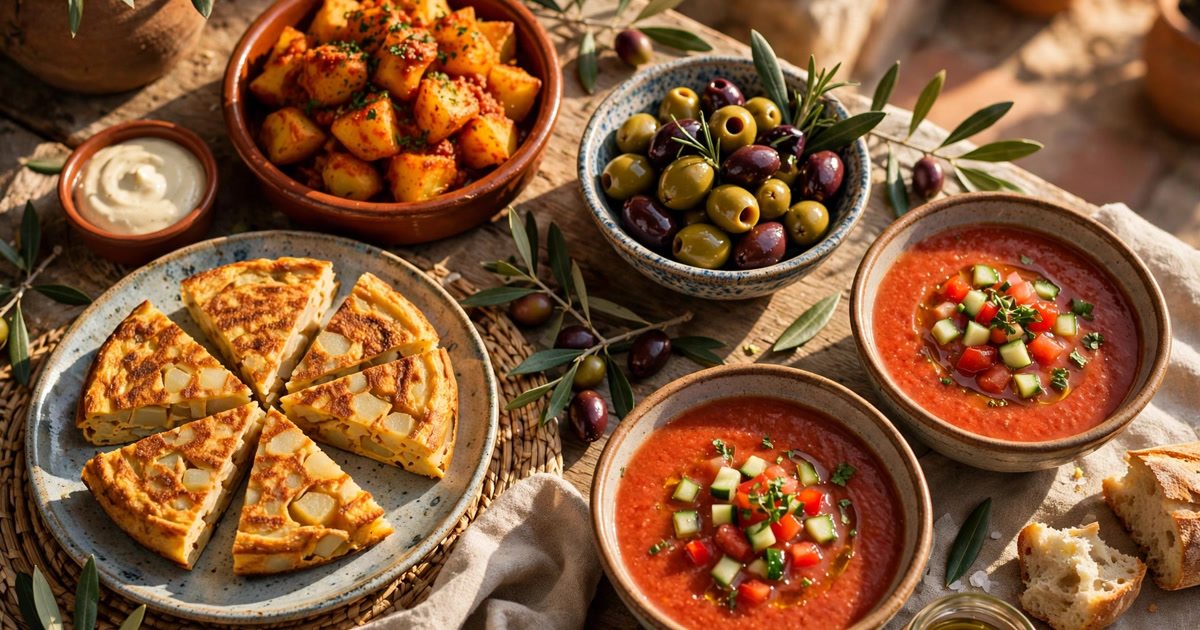
Tortilla española, the potato and egg omelette, is the first of the easy Spanish recipes every cook should learn. Fry sliced potatoes slowly in olive oil, mix with beaten eggs, cook gently, and flip with a plate. A slightly runny centre is traditional, though you can cook it fully if you prefer.
Gazpacho needs no cooking at all: blend ripe tomatoes, pepper, cucumber, garlic, olive oil and sherry vinegar until smooth, then chill. Patatas bravas pairs crisp fried potatoes with a smoky tomato sauce and garlicky alioli, and together these three dishes cover a complete summer tapas spread.
Rice, Stews and Seafood in Easy Spanish Recipes
A weeknight paella-style rice uses the same pan logic as the classic dish without the pressure of perfection. Toast short-grain rice in sofrito, add hot stock, scatter seafood or chicken, and leave it undisturbed so a light crust forms on the base.
For colder evenings, easy Spanish recipes include fabada-style bean stews, chickpeas with spinach, and garlic prawns cooked in minutes. These dishes show how Spanish home cooking stretches cheap ingredients into generous, satisfying meals.
Pantry Staples for Easy Spanish Recipes
Keep olive oil, tinned tomatoes, chickpeas, short-grain rice, smoked paprika, garlic, onions, eggs and potatoes on hand, and easy Spanish recipes become a matter of assembly rather than shopping. Add chorizo, tinned tuna and jarred peppers for instant tapas.
A well-stocked Spanish pantry also supports a balanced diet built around vegetables, legumes, fish and olive oil, which is one reason Spanish home cooking is often praised by nutritionists. Buy the best olive oil you can afford, since it is the flavour base of almost everything.
Mistakes to Avoid in Easy Spanish Recipes
The most common mistake in easy Spanish recipes is rushing the sofrito or the potato frying, which leaves dishes tasting raw and sharp. Spanish cooking rewards low heat and patience, even in quick dishes, so give onions and potatoes the time they need.
Another error is overloading paella pans or stirring rice constantly, which prevents the crust forming and turns the dish to porridge. Use the right pan size, add stock once, and trust the heat. With those habits fixed, easy Spanish recipes become reliably good.
Breakfast and Light Meals
Spanish breakfasts are light: toast with tomato and olive oil, known as pan con tomate, coffee, and perhaps fruit or yoghurt. It is a refreshing change from heavy cooked breakfasts, and it showcases how Spanish cooking lets a few excellent ingredients speak for themselves.
Light lunches follow the same logic, with salads, tortilla slices, gazpacho and bread. Keeping breakfast and lunch simple leaves room for a generous evening meal, which is the traditional pattern in Spain, though modern work schedules have shifted many families towards larger lunches.
Seasonal Spanish Cooking
Spanish home cooking follows the seasons closely. Spring brings asparagus, artichokes and peas; summer brings tomatoes, peppers and gazpacho weather; autumn brings mushrooms, pumpkins and stews; winter brings beans, root vegetables and slow-cooked dishes.
Cooking seasonally also helps you save money on groceries, since produce at its peak costs less and tastes better. Visit markets when you can, buy what looks fresh rather than following a rigid list, and let the season shape the dish.
Preserving and Fermentation in Spanish Kitchens
Spanish kitchens have a long preserving tradition, from pickled vegetables and marinated olives to cured meats and salted fish. These pantry foods add instant flavour to simple dishes, turning plain rice, eggs or salads into something distinctly Spanish.
A basic understanding of fermentation in food helps here, whether you are making pickled peppers, curtidos or simply storing olives in brine. Start with simple vinegar pickles, keep everything clean and refrigerated, and taste as you go.
Feeding a Crowd the Spanish Way
Spanish cooking scales beautifully for groups, because many dishes are made in large pans or pots and served family-style. A big tortilla, a pot of chickpea stew, a tray of patatas bravas and a bowl of salad can feed ten people without stress.
For gatherings, prepare what can be made ahead, such as gazpacho, salads and sauces, and cook the hot dishes last. Serve everything in the middle of the table, encourage sharing, and remember that Spanish meals are as much about conversation as about food.
Building Confidence in Spanish Cooking
Confidence in Spanish cooking comes from repetition, not from collecting recipes. Cook the same dish three times, adjusting seasoning and timing each time, and you will learn more than from cooking ten different dishes once. Keep notes on what worked, including pan size, heat level and cooking times.
Cook with others when you can, since Spanish food is social by nature. A friend chopping vegetables, a family member flipping the tortilla, and a shared table at the end all mirror how these dishes are cooked in Spain, where the kitchen is a gathering place as much as a workspace.
Cook one dish a week for two months and you will have a Spanish repertoire that covers breakfast, tapas, rice and stews. Start with tortilla, then gazpacho, then rice, and let confidence build dish by dish.
Sources: Spanish regional culinary traditions; Fundació Alícia; Spanish home-cooking guides.