
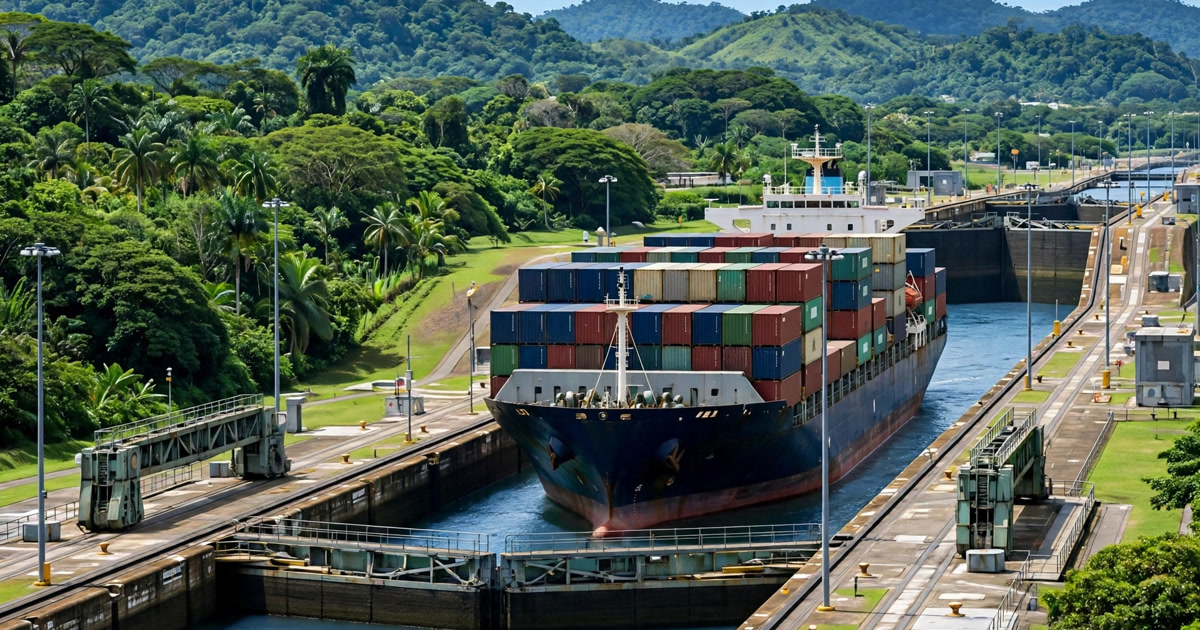
A Panama Canal visit is one of the great engineering experiences in the world. Watching a huge container ship or cruise ship rise and fall through the locks, guided by locomotives and tugs, makes abstract ideas about global trade suddenly concrete and thrilling. This guide explains how to plan a Panama Canal visit, how the locks work, which viewing points and boat tours to choose, and the remarkable history behind a waterway that links the Atlantic and Pacific oceans.
The Panama Canal is about eighty kilometres long, running from Panama City on the Pacific side to Colón on the Caribbean side. A Panama Canal visit therefore involves choices: you can watch ships from a visitor centre near Panama City, take a boat through part of the canal yourself, or cross the entire canal on a cruise. Each option shows a different side of the canal, and understanding the differences before you book will make your Panama Canal visit far more rewarding.
How the canal works: what you see on a Panama Canal visit
The key to any Panama Canal visit is understanding the locks. Ships do not sail at sea level through Panama. Instead, locks act as water lifts, raising vessels about twenty-six metres to Gatun Lake, an artificial lake created by damming the Chagres River, and then lowering them again on the other side. A full transit takes roughly eight to ten hours, and a Panama Canal visit that includes watching a lockage lets you see this slow, precise process up close.
The original locks, opened in 1914, are at Miraflores and Pedro Miguel on the Pacific side and at Gatun on the Atlantic side. The expanded locks, opened in 2016, are at Cocolí on the Pacific side and Agua Clara on the Atlantic side, and they allow much larger Neopanamax ships to pass. On a Panama Canal visit you may see either the original or the expanded locks, depending on the ship and route, and both are impressive: the original locks use small locomotives to guide ships, while the expanded locks use tugs.
Water for the locks comes by gravity from Gatun Lake and its surrounding watershed, which is why rainfall, forest protection and water management matter so much to the canal's operation. Guides on a Panama Canal visit often explain this environmental side, including how drought can restrict transits and why protecting the watershed is essential to world trade. That ecological story adds depth to the engineering spectacle.
Planning a Panama Canal visit: Miraflores, Agua Clara and boat tours
The easiest Panama Canal visit is to the Miraflores Locks Visitor Center, just outside Panama City on the Pacific side. Viewing terraces overlook the locks, exhibits explain the canal's history and ecology, and a film tells the construction story. Ship movements follow operational needs rather than a tourist timetable, so transits are not guaranteed at any particular hour; ask on arrival when vessels are expected, and allow flexible time so your Panama Canal visit is not rushed.
A second option for a the canal is a partial transit boat tour, typically lasting five to six hours through the Pacific-side locks into Gatun Lake, or a full transit of eight to ten hours from one ocean to the other. Boat tours show the canal from water level, pass through the narrow Culebra Cut, and offer close views of rainforest, wildlife and working ships. Book in advance in peak season, bring sun protection and water, and expect a long but memorable day.
The third way to experience a the canal is on a cruise that includes a full transit as part of a longer voyage. Cruise transits offer commentary, comfortable viewing and the satisfaction of crossing from one ocean to another, but they are less flexible than a land-based the canal and should be booked as part of a wider itinerary. Whichever option you choose, combine it with time in Panama City's Casco Antiguo old town and, if you have time, a rainforest excursion near Gatun Lake.
Panama Canal visit and history: from French failure to Panamanian pride
The history you learn on a the canal is dramatic. A French attempt in the 1880s, led by Ferdinand de Lesseps, collapsed amid disease, engineering difficulties and financial failure. The United States then took over the project, overcame yellow fever and malaria through sanitation and mosquito control, and completed the canal in 1914 after one of the largest engineering efforts of its era. The Culebra Cut, blasted through rock, was the most challenging section.
Control of the canal passed fully to Panama at the end of 1999 under the Torrijos-Carter Treaties, and the canal remains a deep source of national pride as well as a major economic asset. A the canal today is therefore also a lesson in Panamanian sovereignty and identity, not only in engineering. Museums and visitor centres present this history from a Panamanian perspective, and guides often discuss the workers, many from the Caribbean, whose labour built the canal.
Practical planning for a the canal is straightforward. Panama City is hot and humid year-round, with a drier season roughly from December to April and a wetter season for the rest of the year, although the canal operates in all seasons. Light clothing, sun protection, insect repellent and comfortable shoes are essential, and our guides on how to travel on a budget and what travel insurance covers will help with the wider trip planning around your the canal.
Tips for the best Panama Canal visit
To get the most from a the canal, arrive early, check expected ship movements, and stay for at least one full lockage rather than a quick photo stop. A lockage takes time as chambers fill or drain and gates open, and the slow scale of the operation is part of its fascination. Bring binoculars if you have them, listen to the narration where available, and note each vessel's name, flag and cargo when guides announce them.
Photography on a the canal is best from the viewing terraces in morning or late-afternoon light, when the sun is lower and the locks are less harshly lit. Boat tours offer closer water-level photographs but require protection for cameras against spray and rain. Whatever you photograph, remember that the canal is a working waterway: follow safety barriers, stay with your group, and respect crew instructions at all times.
Finally, a the canal rewards curiosity beyond the locks themselves. Ask about the watershed, the expansion, the pilots who guide ships through the canal, and the communities that live alongside it. The canal is not a museum: it is a living piece of infrastructure that shapes Panama's economy and the world's shipping every day, and understanding that living role is what turns a good the canal into an unforgettable one.