
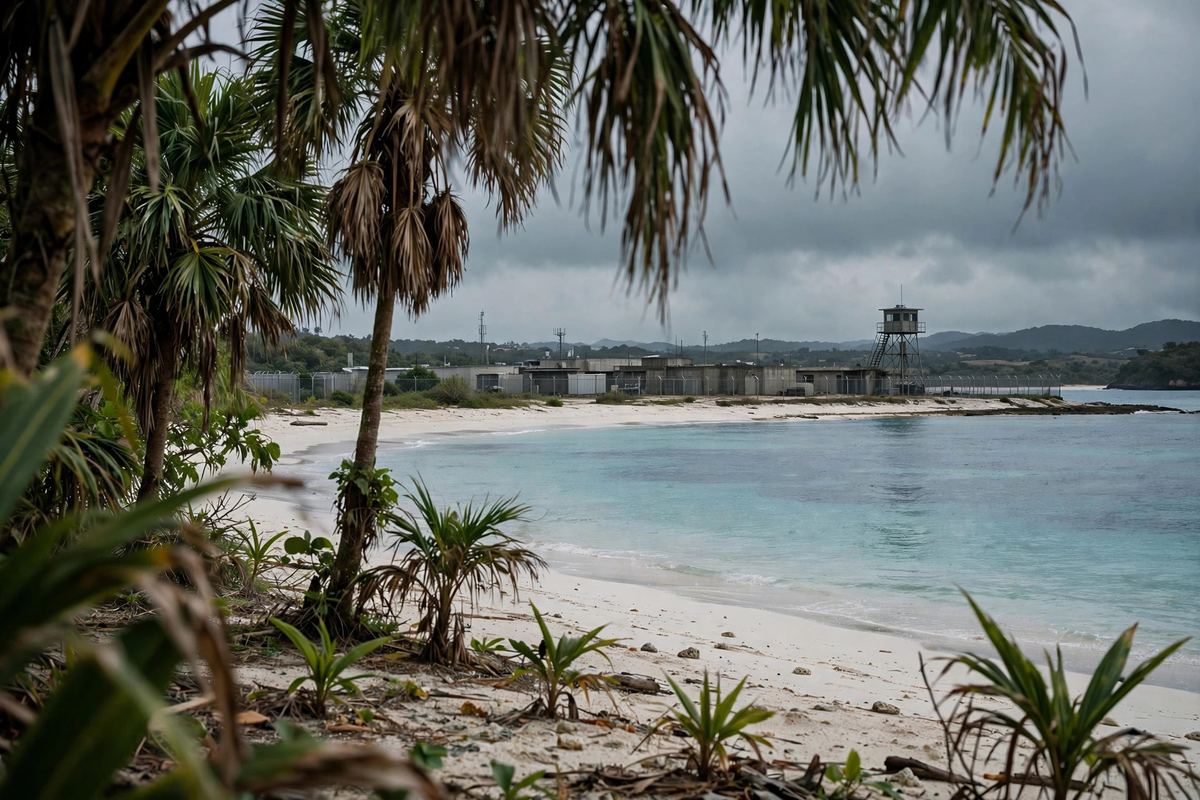
The arrest of a United States Marine in Okinawa on suspicion of robbing and murdering a Japanese woman has become a full-blown diplomatic incident. Japan has formally protested to the United States, Prime Minister Sanae Takaichi has condemned the alleged act in the strongest terms, and the US military has imposed sweeping conduct restrictions — including a curfew and an alcohol ban — on its personnel in Okinawa. The Marine has denied the allegations, which remain unproven, and he is entitled to due process under the law.
The case, reported by Reuters on 11 October 2026, touches one of the most sensitive nerves in the US-Japan alliance: the heavy concentration of American military bases on the small southern island of Okinawa, where crime, noise, accidents and the sheer burden of hosting foreign forces have fuelled local resentment for decades.
Background: why Okinawa matters so much
Japan hosts the largest overseas contingent of United States forces anywhere in the world, and the sharp end of that presence is on Okinawa. Around 18,000 Japan-based Marines are stationed there — most of them on an island that makes up less than one per cent of Japan's land area but hosts the bulk of US military facilities in the country. Marine Corps Air Station Futenma, where the arrested Marine was stationed, sits in the middle of the densely populated city of Ginowan — a fact that has made it a symbol of the base burden for a generation.
The legal framework governing US personnel is the Status of Forces Agreement (SOFA), the bilateral pact that sets out which country has jurisdiction when American service members are accused of crimes in Japan. In serious off-base cases like this one, Japanese authorities typically take the lead in investigation and prosecution — which is why the Marine is in Japanese custody and why the case is unfolding in the Japanese justice system.
Tensions over the US presence are not new. Okinawa has seen a long history of incidents — crimes committed by service members, aircraft accidents, noise complaints and environmental concerns — alongside a grinding, decades-long dispute over relocating Futenma's functions to a new facility at Henoko. Each serious incident reopens the same debate: supporters of the alliance argue the bases are essential to deterring aggression in the region, while many Okinawans ask why their small island must shoulder a burden the rest of Japan largely avoids.
What happened
According to the reports, Lance Corporal Devin Jacob Ballard, a US Marine stationed at Marine Corps Air Station Futenma, was arrested on 4 October 2026 on suspicion of robbing and murdering Anna Yagi, 39, in a hotel in Naha, the prefectural capital. He has denied the allegations. At this stage they are allegations only — no conviction has been secured, and the presumption of innocence applies.
The Japanese government's response was swift and unusually blunt. Prime Minister Sanae Takaichi described the alleged act as "extremely brutal and heinous" and Tokyo lodged a formal protest with Washington — the diplomatic equivalent of putting the alliance's most painful issue back on the table in the starkest terms. Protesters gathered in Tokyo to voice anger over the case.
Washington moved quickly to contain the fallout. The US military imposed a 48-hour pause in some activities, an alcohol ban, a month-long curfew and mandatory conduct and discipline training for Okinawa-based personnel — measures designed to signal seriousness to both the Japanese public and the chain of command. On Saturday, US Secretary of State Marco Rubio spoke by telephone with Foreign Minister Motegi Toshimitsu, expressed condolences and vowed full American cooperation with the investigation.
The week also underlined how crowded Japan's diplomatic in-tray has become: Tokyo separately criticised Russia over moves related to International Criminal Court arrest warrants, a reminder that the Okinawa case is unfolding against a backdrop of wider security tensions in which the US-Japan alliance is central. Takaichi's government has been assertive across multiple fronts since taking office, and the firmness of the protest fits that pattern.
Why it matters
Incidents involving US personnel in Okinawa have a well-documented political afterlife. The most serious cases have historically triggered alliance reviews, new preventive measures and waves of protest — and each one makes the already difficult politics of base realignment harder. The Futenma relocation plan has been stalled and contested for decades; fresh outrage gives opponents of the bases new momentum and puts Tokyo in the uncomfortable position of managing both an ally and an angry prefecture.
For Washington, the stakes are strategic as well as moral. The United States is simultaneously trying to stabilise its rivalry with China while deepening security cooperation with allies — and projecting force in other theatres, including against Iran. The credibility of the US presence in Japan depends not only on hardware and treaties but on the conduct of the people in uniform and on Japanese public consent. A murder allegation strikes at both.
There is also a human dimension that should not be lost in the geopolitics. A 39-year-old woman is dead, a family is grieving, and a young Marine faces the most serious accusations a justice system can bring — accusations he denies. Whatever the investigation concludes, the case is a tragedy first and a diplomatic incident second.
Key facts
- Arrest: US Marine Lance Corporal Devin Jacob Ballard, stationed at Marine Corps Air Station Futenma, was arrested on 4 October 2026 on suspicion of robbing and murdering Anna Yagi, 39, in a hotel in Naha, Okinawa, and was indicted on 25 October on robbery and murder charges. He has denied the allegations; they remain unproven, and no conviction has been secured.
- Japan's response: Formal protest to the United States; Prime Minister Sanae Takaichi called the alleged act "extremely brutal and heinous"; protesters gathered in Tokyo.
- US response: 48-hour pause in some activities, alcohol ban, month-long curfew and mandatory conduct/discipline training for Okinawa-based personnel; Secretary of State Marco Rubio spoke with Foreign Minister Motegi Toshimitsu, expressed condolences and vowed full cooperation.
- Context: Japan hosts the largest overseas US force contingent (~18,000 Japan-based Marines, most on Okinawa); long-standing local tensions over crime, noise, accidents and base burden.
- Also this week: Japan criticised Russia over ICC arrest-warrant moves.
What happens next
Prosecutors have now decided. On 25 October, the Naha District Public Prosecutors Office indicted Lance Corporal Devin Jacob Ballard on robbery and murder charges. Prosecutors allege he strangled Anna Yagi, 39, with a telephone cord in a Naha hotel on 3 October and took her backpack, which contained her wallet and other belongings. Ballard, 20, has denied the allegations. An indictment is a formal charge, not a finding of guilt, and the case will now move through the Japanese court system, where the presumption of innocence and the rights of the accused apply fully. Given the profile of the case, every stage is likely to be closely watched in both countries.
Diplomatically, expect a period of careful management: further expressions of regret from Washington, possible additional preventive measures, and close coordination to ensure the investigation is seen as thorough and transparent. The deeper political questions — the future of Futenma, the distribution of the base burden, the durability of local consent — will not be resolved by this case, but they will be sharpened by it. For an alliance that both governments describe as the cornerstone of regional security, moments like this are the true stress test.
Tensions around US bases in Japan extend beyond the protests: the US has banned Chinese-made BYD vehicles from Kadena Air Base over security fears.
Sources
Reporting drawn from Reuters (October 2026).