
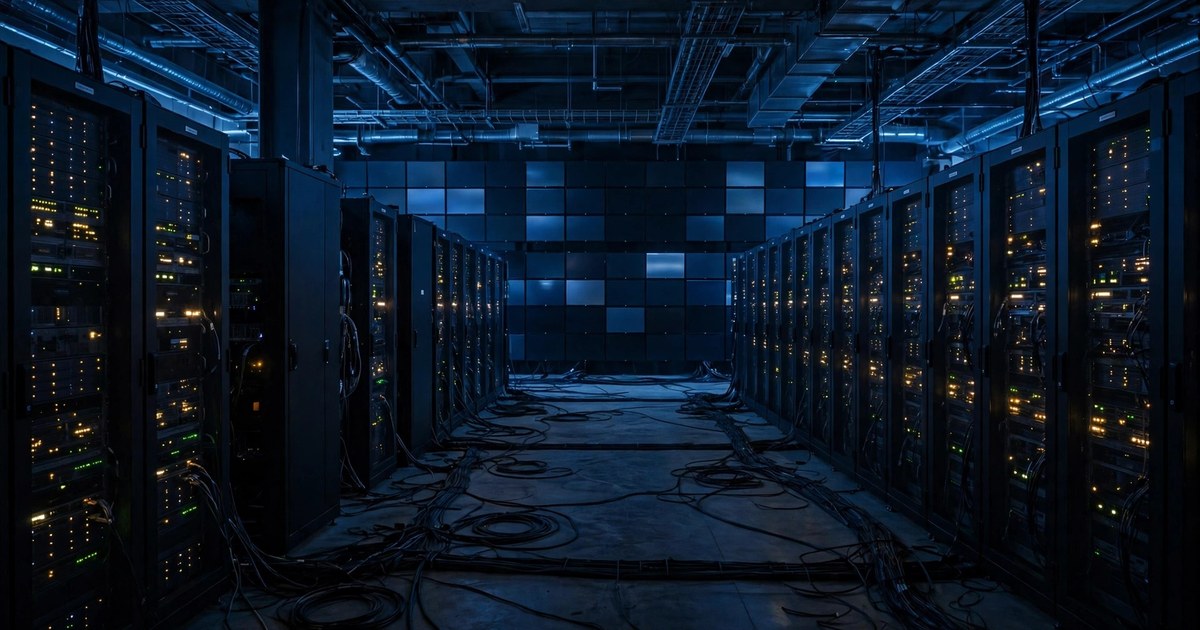
The NSA network outage that struck the United States' spy agency on Tuesday 17 November 2026 took its classified internal communications system offline, CNN first reported, citing six people familiar with the matter. The network, known as NSA Net, is the channel National Security Agency employees use to exchange classified information inside the organisation, and its failure slowed analysts' work and forced staff to stagger their arrivals at the agency's campus in Fort Meade, Maryland. There is, at this stage, no evidence that a cyberattack caused the outage — but nobody has said what did, and the NSA itself has not commented publicly.
NSA Network Outage: What Happened on Tuesday 17 November
CNN broke the story at 10:31 AM Eastern Time on Tuesday, in a report by Natasha Bertrand, Katie Bo Lillis, Sean Lyngaas, Davis Winkie and Zachary Cohen, and updated it at 11:20 AM. All six sources spoke on condition of anonymity. Nextgov/FCW confirmed the outage in its own report the same day, published at 12:17 PM Eastern, also citing people familiar with the matter.
What is known so far about the NSA network outage is narrow but consistent across the reporting. NSA Net went down on Tuesday morning. Analysts' workflows slowed. Employees were told to rearrange their arrivals at the Fort Meade campus while the agency worked out the scope of the problem. One person familiar with the situation said the system was not completely shut down but was providing only intermittent service — a detail that matters, because it suggests a degraded network rather than a single clean break, though that has not been confirmed by the agency.
One reassurance did come with the reporting: urgent intelligence could still reach President Donald Trump, who is travelling in Asia on a three-day trip, because of backup networks. A current and a former US official told CNN that the outage would not stop urgent material reaching the president. The trip includes expected talks with China's President Xi Jinping and Russia's President Vladimir Putin.
What Is NSA Net?
NSA Net is the National Security Agency's classified internal communications network. Nextgov/FCW describes it as central to the spy agency's operations and the primary platform for transmitting top-secret data. It is the system through which NSA employees communicate classified information internally — sharing reporting, tasking and technical data across the agency's facilities.
It is not part of the public internet, and its failure has not disrupted ordinary communications services. That distinction matters: nothing in the reporting suggests anyone outside the agency lost service. What stopped, or slowed, was the internal movement of classified material inside one of the most secretive organisations in the US government.
The agency behind the network is the signals-intelligence arm of the United States. Headquartered on a sprawling campus in Fort Meade, Maryland, the NSA monitors foreign adversaries' and terrorist communications and ingests troves of data every day that feed its intelligence assessments, according to Nextgov/FCW. The NSA network outage slowed the machinery that turns that collection into assessments.
No Evidence of a Cyberattack — But No Cause Either
The most repeated line in the reporting is a negative one: there is no evidence, at this stage, that a cyberattack caused the outage. CNN's six sources said so, and Nextgov/FCW's sources said the same. Four people told Nextgov/FCW that the NSA network outage may be linked to a series of software upgrades on the network — a routine explanation, and one that fits a pattern of recent failures elsewhere, but still only a possibility rather than a finding.
What is missing is as striking as what is known. The cause has not been established publicly. Nobody has said when the disruption began, how many employees or facilities are affected, or when the network is expected to be restored. An NSA spokesperson did not immediately respond to a request for comment from Nextgov/FCW, and the agency had issued no public statement at the time of writing.
That silence is normal for the NSA, which rarely discusses its internal systems. But it leaves the central question open, and it means the "no cyberattack" line should be read exactly as stated: no evidence has emerged so far, which is not the same as a completed investigation ruling an attack out.
NSA Network Outage Follows a Week of Major Tech Failures
The outage lands at the end of a week in which large technology systems kept failing in public. On Friday, a nationwide ground stop halted US flight departures. Microsoft service outages followed, and on Monday banking disruptions hit customers at major banks. A separate attack planted card-skimming code on the websites of 178 organisations — including Zoom, the BBC, CNN, HSBC, IKEA, Salesforce and Equifax — after attackers exploited a flaw in Optimizely, a service companies use to test versions of their web pages. That finding was reported by Help Net Security.
Nextgov/FCW noted that routine technical issues have been linked as the cause of the earlier failures. There is, so far, no indication that the NSA outage is connected to any of them. The events share a week, not a cause — and treating them as one story would be a mistake the reporting so far does not support.
Why the NSA Network Outage Matters
There is an irony here that explains why the story travelled so fast. The NSA is the agency that collects foreign signals intelligence and helps protect US national security communications. Its own communications network going dark — even briefly, even without an attack — is the kind of failure that invites questions about resilience at the exact moment the United States is managing a war in the Gulf, with Iranian attacks on US targets in Bahrain and three American aircraft carriers in the region, and a president travelling in Asia for talks with Xi and Putin.
Public attention followed the same logic. Google Trends showed searches for "NSA" surging past 100,000 on Tuesday, alongside a parallel surge for "cyber attacks". The first question most people asked was whether this was an attack — which is precisely the question officials say there is no evidence for. The gap between the question and the answer is the story: a classified system failed, the cause is unknown, and the agency that knows the answer is not talking.
The practical impact of the NSA network outage, on the evidence available, is limited but real. Analysts' work slowed. Staff movements were rearranged. Urgent intelligence still moved through backup channels. Nothing suggests a loss of collected intelligence or a breach of classified material — but nothing in the public record confirms the full scope either.
What Happens Next
Three things will settle this story. First, whether the NSA says anything: a public statement, a restoration confirmation, or even a brief acknowledgement would replace anonymous sourcing with an official account. Second, the cause: if the software-upgrade explanation is confirmed, the NSA network outage joins the week's run of routine failures; if something else emerges, the assessment changes entirely. Third, the restoration time: how long a classified network at the heart of American signals intelligence can stay degraded before the disruption becomes a problem in itself.
Until then, the facts of the NSA network outage are these: NSA Net went down on Tuesday 17 November 2026; six people familiar with the matter say there is no evidence of a cyberattack; four say software upgrades may be involved; the NSA has not commented; and nobody has said when the system will be fully back. Those are the facts as reported on Tuesday 17 November 2026 — and the gaps in them are the reason the story is still developing.
Sources: CNN, 17 November 2026 (Natasha Bertrand, Katie Bo Lillis, Sean Lyngaas, Davis Winkie and Zachary Cohen); Nextgov/FCW, 17 November 2026 (David DiMolfetta); Help Net Security; Google Trends. Reuters and The Record also reported the outage.