
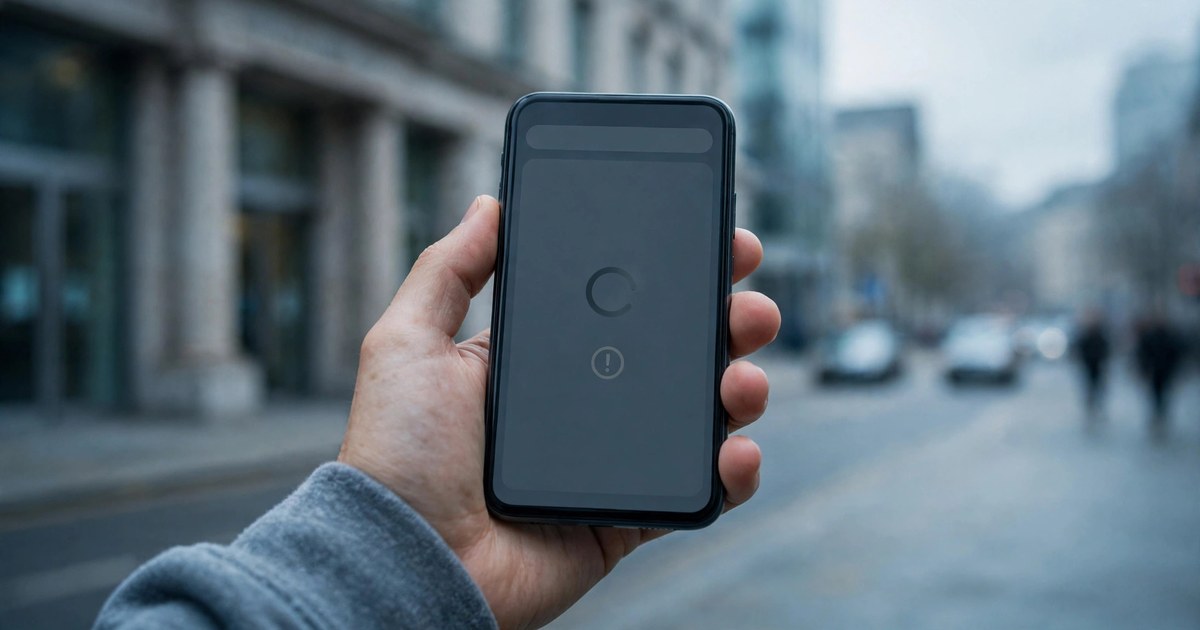
Customers at some of the largest banks in the United States opened their banking apps on Monday, November 16, 2026, and found they could not get in. A bank outage disrupted online banking at JPMorgan Chase, Bank of America and Wells Fargo, and customers at U.S. Bank reported problems too, leaving people unable to sign in, check balances or move money for hours. Chase confirmed the problem was a technical fault, not a cyberattack, and said customers still had access to their accounts and funds. But by Monday afternoon in the US, neither Chase nor Wells Fargo had announced a fix, and the complaints kept coming. The term "bank outage" surged on Google Trends in the US on Monday, passing 500,000 searches, as customers looked for answers.
Which Banks Were Hit by the Bank Outage?
The heaviest complaints were about Chase. Downdetector, the outage-tracking site that collects user reports, logged thousands of Chase reports through Monday morning and into the afternoon, with Bank of America and Wells Fargo next. Customers also reported problems at U.S. Bank and with Zelle, the payment network owned by several large banks. User reports also named Truist and Capital One, but neither bank confirmed an outage, and those reports remain unverified.
Not every customer at every bank was affected, and the problems were not the same everywhere. Wells Fargo's own status page told customers that online banking was temporarily unavailable, while ATMs, branches and phone bankers stayed open. U.S. Bank said its own systems were not directly impacted, but warned that customers sending or receiving Zelle payments with another bank might see delays. Zelle said its network was operating normally and put the problems down to the participating banks. The picture, in short, was a cluster of online banking failures at the biggest US banks on the same morning, not a shutdown of the banking system.
What Chase, Wells Fargo and the Other Banks Said
Chase was the first bank to confirm a problem, and its message stayed consistent through the day. A Chase spokesperson told the Associated Press and other outlets that a technical issue was slowing some transactions, that customers still had access to their accounts and funds, and that the bank was working to resolve it as quickly as possible. Chase also told CBS News that the problem was a technical bug, not a cyber issue. On X, Chase Support told a customer it was "working to resolve an issue with online banking" and asked users to try again later. Some Chase customers saw a message in the app reading: "Some services aren't available. We're working on them. Please try back later."
Wells Fargo confirmed it had a problem too. Its website carried the message "Online Banking is temporarily unavailable" through the afternoon, and told customers they could still reach their accounts through ATMs, banking locations and customer service. Bank of America declined to comment, according to NBC Chicago. No bank gave a cause for the bank outage or a time for full restoration on Monday.
Two other pieces of the picture stayed normal, which matters. Plaid, the company many financial apps use to connect to bank accounts, listed a partial outage affecting its Chase connections, first posted at 9:11 a.m. Central time, and still listed it in the afternoon. The Federal Reserve's service-status page, meanwhile, showed normal operations for Fedwire, FedACH and FedNow, with no notifications. And as of Monday afternoon, neither the FDIC, the Cybersecurity and Infrastructure Security Agency nor the Treasury Department had issued a statement about the outages.
How Big Was the Bank Outage? What the Numbers Actually Mean
The numbers most quoted on Monday came from Downdetector, and they need careful reading. Downdetector counts user-submitted complaints, not verified affected customers, and its totals move by the hour and differ between outlets. NBC Chicago reported more than 4,000 Chase reports as of 12:19 p.m. Central time. Forbes reported more than 5,000 Chase reports around 2 p.m. Eastern, with roughly 1,500 complaints about Bank of America. The New York Post put the Chase figure at more than 3,300 earlier in the day. Bank of America had about 1,244 reports at 1:30 p.m. Eastern, and Wells Fargo roughly 511 at 1:45 p.m., according to outage data cited in local coverage.
What those counts establish is scale and timing, not a headcount of people locked out. Reports began climbing on Monday morning, spiked around midday, and were still coming in during the afternoon. As of a check at 2:18 p.m. Central time, Wells Fargo's outage page still said online banking was unavailable, Plaid still listed its Chase disruption, and neither Chase nor Wells Fargo had posted a resolution. The precise cause of the problems at Bank of America, Wells Fargo and U.S. Bank had not been established, and no common cause across the banks had been found.
Is Your Money Safe During the Bank Outage?
On the evidence available on Monday, yes. The bank outage did not put deposits at risk: Chase said repeatedly that customers still had access to their accounts and funds, even while some transactions ran slowly. Wells Fargo pointed customers to ATMs, branches and phone banking, all of which stayed available. Nothing in the reports reviewed on Monday described depositors pulling money out of banks, and there was no sign of a bank run. No bank reported money missing from accounts, and no regulator reported a threat to deposits.
For customers caught in the bank outage, the practical steps were simple. Use an ATM, a branch or phone banking instead of the app. If a Zelle payment to another bank is delayed, wait before sending it again, so the same money does not go out twice. Check the bank's own status page rather than relying on social media posts. And treat any text or email claiming to be the bank and asking for a password or a one-time code with suspicion: outages are a busy time for phishing scams, and banks do not ask customers to hand over login details to fix an outage.
The November 17 Rumor: What Is True and What Is Not
Within hours of the outages, a separate story started spreading online: that bank balances would be wiped and the internet shut down for three months on November 17. The phrase "blackout november 17" itself became a trending search in the US, with more than 20,000 searches, alongside searches asking what is happening on November 17, 2026. A claim that Iran caused the outages also circulated.
None of that is supported by the evidence. The outages on November 16 were real, and Chase and Wells Fargo confirmed them. But Chase said its problem was a technical fault, not a cyber incident. The Federal Reserve's payment systems were operating normally. No US agency linked the outages to Iran or to any attack, and no bank or regulator said balances were at risk. The viral November 17 claims are a rumor built on top of a real event, and the real event does not support them.
Why Do Bank Outages Keep Happening?
The bank outage was the third high-profile technology failure since Friday. On Friday, November 13, a Microsoft outage disrupted Outlook, Teams and its Copilot assistant for hours. In October, a Google Cloud outage knocked UK banks offline, including Revolut. And the FAA ground stop that halted US flights on Friday, November 13 was traced to a router flood, a technical fault rather than an attack. Each failure hit a different system, but the pattern is the same: banks, airlines and workplaces all run on a small number of shared pipes, so one fault can lock thousands of people out at once.
That is also why the details of this outage matter more than the headlines. A technical fault at one bank is a bad day. The same morning's failures at four banks, with no shared cause named, is a question the banks and their regulators will have to answer with a root cause, not a slogan.
What Happens Next
Banks usually restore service before they explain a fault, and that is the most likely sequence here. The things to watch are an all-clear from Chase and Wells Fargo, a root-cause statement from any of the banks, any comment from Bank of America, and any word from US regulators. If a bank names a cause for the bank outage, this article's account will need updating; until then, what is confirmed is that online banking failed at several major US banks on November 16, Chase called it a technical issue rather than a cyberattack, and customers kept access to their money through ATMs, branches and phone banking.
Sources
- Associated Press, 16 November 2026 — Chase spokesperson: a technical bug, not a cyber issue; customers retain access to their accounts and funds.
- CBS News, 16 November 2026 — Chase statement on the technical issue; Downdetector complaint counts.
- NBC Chicago, 16 November 2026 — more than 4,000 Chase reports on Downdetector as of 12:19 p.m. Central time; Wells Fargo confirmed issues; Bank of America declined to comment.
- Forbes, 16 November 2026 — more than 5,000 Chase reports around 2 p.m. Eastern; about 1,500 Bank of America reports.
- New York Post, 16 November 2026 — more than 3,300 Chase reports earlier in the day.
- Wells Fargo, 16 November 2026 — "Online Banking is temporarily unavailable" (bank status page); ATMs, branches and phone bankers available.
- Plaid status page, 16 November 2026 — partial outage affecting Chase connections, first posted 9:11 a.m. Central time.
- Federal Reserve service status, 16 November 2026 — Fedwire, FedACH and FedNow operating normally, no notifications.
- Zelle / Early Warning Services, 16 November 2026 — Zelle network operating normally; problems attributed to participating banks.
- U.S. Bank statement, 16 November 2026 — systems not directly impacted; Zelle payments with other institutions may be delayed.