
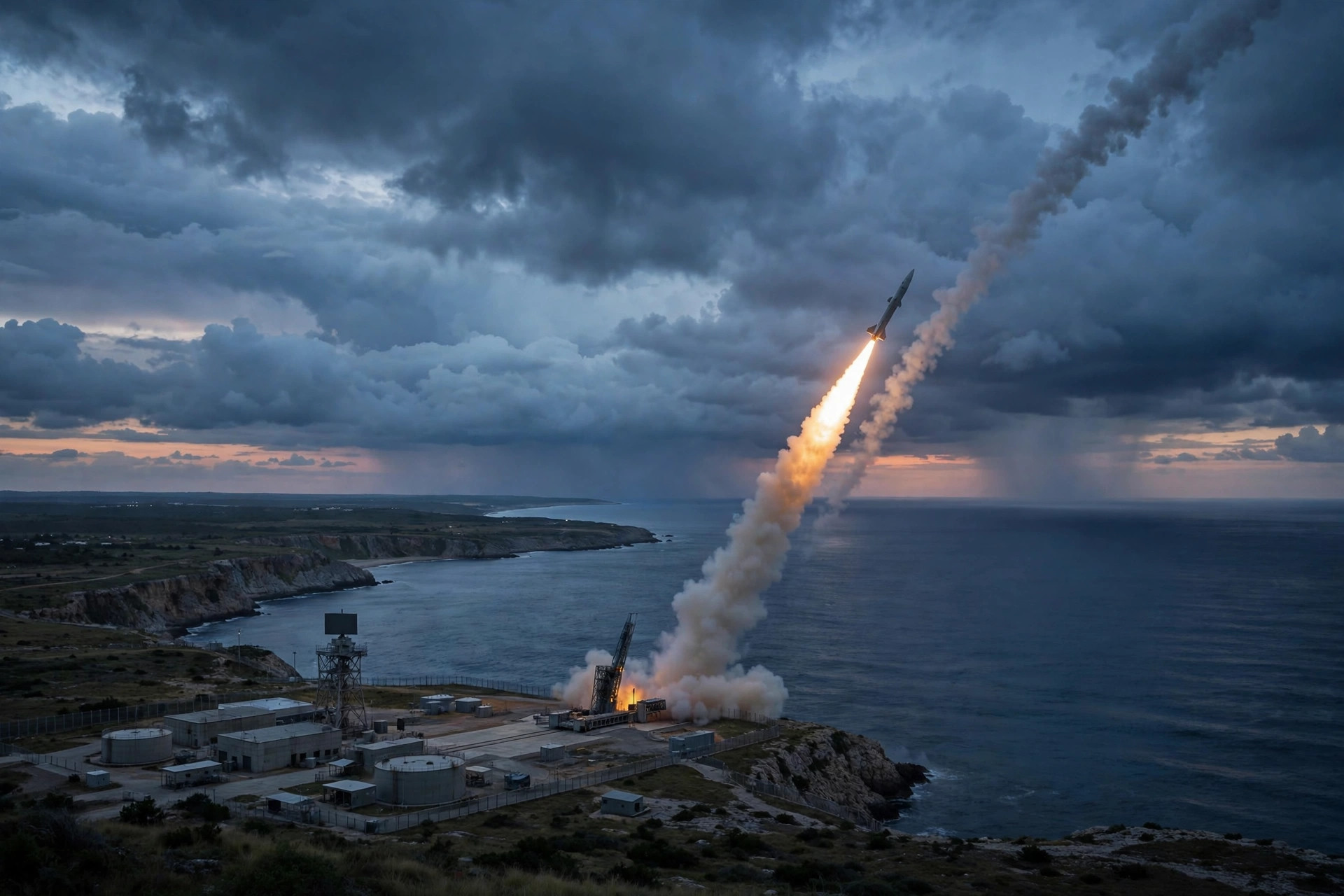
The North Korea missile test November 2026 has put the Korean Peninsula back at the centre of regional security debate. On Wednesday 4 November, North Korea test-fired a newly designed air-defence missile system and staged a cruise missile strike drill, according to state media KCNA, in a display that South Korea said involved multiple missiles fired towards the sea from the country's east coast. The North Korea missile test November 2026 was the fourth North Korean weapons launch in a month, and it arrived only two days after Pyongyang announced a separate cruise missile warhead test, underlining how frequent these demonstrations have become.
For readers trying to make sense of the headlines, the details matter. This was not a single launch of one missile type. KCNA described two distinct activities on the same day: a test of a new air-defence system, designed to shoot down incoming aircraft and missiles, and a drill in which a long-range strategic cruise missile unit practised striking a target. Understanding the difference between those two activities is the key to understanding what North Korea was demonstrating, and why neighbouring countries watch each test so closely.
What Happened in the North Korea Missile Test November 2026
According to KCNA, North Korea test-fired a newly designed air-defence missile system on Wednesday 4 November. The report said the test confirmed the technical specifications and reliability of the new materials and multiple guidance modes used by the missile, as well as the system's ability to identify and track targets. In plain terms, Pyongyang says it has built a new system for defending its airspace, and that this test showed the system works as designed.
On the same day, a sub-unit of North Korea's long-range strategic cruise missile unit in the east also struck a virtual airport target in a drill, KCNA said. A virtual target means the unit practised the strike against a simulated airport rather than a real one, rehearsing the flight path, timing and coordination that a real strike would require. Cruise missiles fly at low altitude and can follow a programmed route to a target, which makes them different from ballistic missiles, which arc high into the sky before descending.
The KCNA report appeared to confirm a statement from South Korea's Defence Ministry on Wednesday that Pyongyang had fired multiple missiles towards the sea from the Sondok area on the east coast. South Korean and United States officials were conducting a detailed analysis of the launches, as they do after every North Korean test, working out the types of missiles involved, how far they flew and what the test was designed to prove.
What Is an Air-Defence Missile System?
An air-defence missile system is a weapon designed to destroy incoming aircraft, drones and missiles before they can reach their targets. Unlike the offensive missiles that North Korea is better known for testing, an air-defence system is defensive in purpose: it protects a country's skies, military bases and cities from attack. Countries around the world operate such systems, and testing a new one is a normal part of military development, although in North Korea's case every test is watched closely because of the country's nuclear weapons programme and its history of confrontation with South Korea and the United States.
KCNA said the new system uses new materials and multiple guidance modes. Guidance modes are the methods a missile uses to find and follow its target, such as radar or heat-seeking sensors. Using more than one mode can make a missile harder to evade or jam. The report also said the test confirmed the system's ability to identify and track targets, which is the first step in any interception: the system must spot an incoming threat and follow it before it can shoot it down.
The Cruise Missile Drill: A Virtual Airport Target
The second part of the day's activity was a cruise missile strike drill. A sub-unit of North Korea's long-range strategic cruise missile unit in the east struck a virtual airport target, according to KCNA. The choice of an airport as the simulated target is significant. Airports are among the most important military targets in any conflict: destroying runways and aircraft on the ground can cripple an opponent's air power. By rehearsing a strike on a virtual airport, the unit was practising a mission that would matter in a real war.
Cruise missiles are a particular concern for defence planners because they fly low, following the shape of the land, which can make them harder for radar to detect than ballistic missiles. North Korea has been developing its cruise missile forces for years, and this drill showed that the long-range strategic cruise missile unit in the east is training as an organised force, not simply testing individual weapons. The drill also followed the announcement only two days earlier, on 3 November, that North Korea had tested a cruise missile carrying a cluster warhead, a weapon designed to spread smaller explosives across a wide area.
Why the North Korea Missile Test November 2026 Matters
The North Korea missile test November 2026 matters for several reasons. First, it was the fourth North Korean weapons launch in a month, which shows that the pace of testing has not slowed. Frequent tests allow North Korea's engineers to refine their weapons, give its military units practice, and send a signal to other countries that its arsenal is growing. Each test also gives South Korea, the United States and Japan more data about North Korean capabilities, which feeds into their own defence planning.
Second, the combination of a defensive system and an offensive drill in a single day shows the breadth of North Korea's military development. Pyongyang is not only building weapons to attack; it is also building systems to defend itself against attack. That combination can make military planners in Seoul and Washington more cautious, because it suggests North Korea is thinking about how a conflict would actually unfold, not just about demonstrating a single weapon.
Third, the timing matters. The test came in a month when the region was already watching North Korea closely after the earlier tests, and it arrived in the same week as major political events elsewhere, including the United States midterm elections. North Korea has often timed its tests to coincide with moments when the world's attention is elsewhere, or when it wants to remind other governments that it cannot be ignored.
Fourth Launch in a Month: The Pattern
The South Korean Defence Ministry's statement that this was the fourth North Korean weapons launch in a month places the test in a clear pattern. North Korea has carried out a series of weapons tests this year, including the launch of a missile that flew more than 900 kilometres, as well as testing hypersonic missiles. The frequency of the tests suggests that Pyongyang may be nearing completion of preparations for mass production of some weapons, potentially including weapons for export, according to missile experts quoted in regional coverage.
The pattern also matters because each test builds on the last. The 2 November cruise missile test examined a cluster warhead and a missile's ability to strike from above. The 4 November test examined a new air-defence system and a cruise missile strike drill. Taken together, the tests show a programme that is working on several different capabilities at once: warheads, guidance, air defence and operational training. That is a broader effort than a single dramatic launch, and it is harder for outside observers to assess, because the details of each test are reported only by North Korea itself and must be checked against radar and satellite data.
What Happens Next
After the North Korea missile test November 2026, the immediate next step is analysis. South Korean and United States officials will study the flight data, photographs released by KCNA and any other intelligence to work out exactly what was tested and how well it performed. North Korea's own claims about its weapons have not always been independently verified, and outside analysts treat KCNA's descriptions with caution until they can be checked against other evidence.
Diplomatically, the test is likely to draw condemnation from South Korea, Japan and the United States, and to be raised at the United Nations, where North Korea is already subject to sanctions over its missile and nuclear programmes. Whether it leads to any new measures depends on how other governments judge the test and on the wider state of relations on the peninsula. For now, the most important thing for readers to remember is what the test actually was: a new air-defence system and a cruise missile drill, reported by KCNA and confirmed in outline by Seoul, and the fourth North Korean weapons launch in a month. The details that follow from the analysis will tell us how much it really changes the security picture. Readers following the wider security picture can also read our earlier coverage of North Korea's missile launch on 29 October 2026 and Canada's national security strategy for 2026 for context on how governments are responding to a more uncertain world.