
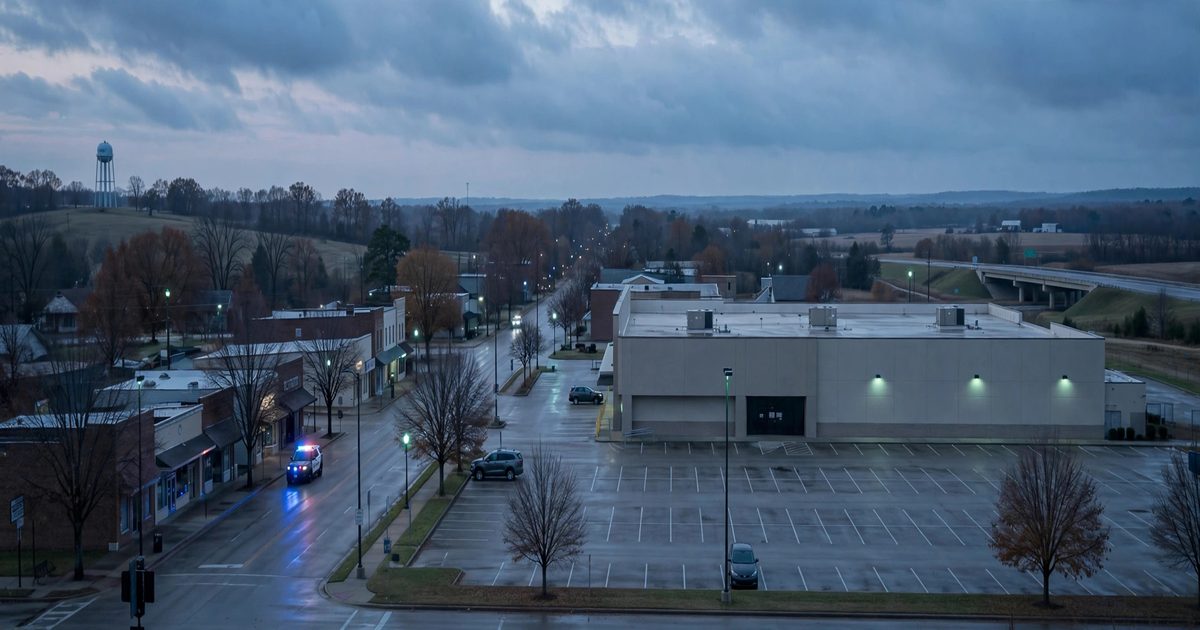
A Mississippi police officer who fired the shots that killed a 1-year-old boy during a shoplifting pursuit has resigned — along with his interim police chief — turning a small-town tragedy that drew national outrage into a full-blown crisis of confidence for the Senatobia Police Department.
Hunter Foster, the Senatobia police officer who opened fire into a fleeing car on June 14, turned in his resignation letter on Friday, city officials confirmed. On the same day, interim police chief Angelica Maze also resigned, though she is staying with the department in a different capacity. The resignations landed just days after Mississippi Attorney General Lynn Fitch announced that the officer's use of deadly force was "justified" and that no criminal charges would be filed.
The developments are the latest turn in the case of Kohen Wiley, the toddler killed in a Walmart parking lot in Senatobia, a town of about 8,000 people in Tate County, northern Mississippi. Trending per news coverage across the United States this week, the story has reignited the national debate over police use of force, officer accountability, and what the law requires when a split-second decision goes tragically wrong.
What happened on June 14
On the morning of June 14, Senatobia police officers and Tate County deputies responded to a shoplifting call at the Walmart on the edge of town. Two women — Vellesiya Wiley and Latoya Ferrell — were suspected of stealing diapers and baby clothes. When officers arrived, the women headed for their gray sedan in the parking lot, with Wiley's 1-year-old son, Kohen, in the car.
Body camera footage released this week shows at least five officers rushing into the parking lot with guns drawn, shouting orders for the driver to stop. The car backs out, collides with a parked SUV, then accelerates forward — appearing to move toward at least one officer. Hunter Foster, standing in front of the vehicle toward the passenger's side, opens fire into the car. One-year-old Kohen, who family members say was sitting in his mother's lap, was struck by the gunfire and killed. Driver Latoya Ferrell was also shot and critically injured.
In bodycam audio recorded after the shooting, an officer is heard saying he never saw a baby in the car — a statement that appears to contradict the mother's earlier account that she lifted Kohen up to show officers he was inside. "I didn't even see a f***ing baby in her lap," the officer says, with another responding, "Nobody knew the baby was there."
The bodycam footage and the AG's ruling
The newly released video — a compilation of body camera recordings and Walmart surveillance footage first published by local outlet Darkhorse Press, and later officially released by the Mississippi Department of Public Safety — provides the first detailed view of the encounter that sparked weeks of protests and demands for transparency in the small Mississippi city.
A video analysis by The New York Times, Mississippi Today and Verite News found that the footage matched portions of a recording made by a bystander during the shooting. The recordings show the gray sedan reversing into a parked vehicle as officers run toward it and order the driver to stop, then moving forward as shots are fired. A law enforcement official confirmed the video's authenticity, though it remains unclear from the footage exactly which officers fired.
The family's independent autopsy, requested in July after the family's attorneys pushed for one, ruled Kohen's death a homicide. Attorneys Ben Crump and Van Turner — lawyers with a long record of representing families in high-profile police-violence cases — renewed calls for the release of all surveillance video from the scene. The Mississippi Bureau of Investigation continues its case review.
Then on Monday, Attorney General Lynn Fitch's office announced its finding: the officer's use of deadly force was justified, and no criminal charges would be filed against him. The ruling, which concluded the state-level criminal inquiry, did not include any comment on the newly released footage.
Why the resignations matter
Foster's resignation on Friday is striking precisely because of the attorney general's ruling days earlier. The "justified" finding might have been expected to end the matter; instead, the officer left the force, and the interim chief followed him out — though Maze is remaining with the department in a different role, according to City Clerk Katie Harbin. Senatobia Mayor Greg Graves confirmed Foster's resignation to CNN.
The resignations deepen a leadership crisis that was already underway. Last month, former Senatobia Police Chief Harold Vanderford was fired following reports alleging he used racist slurs in private text messages, according to The Associated Press. The department has now cycled through a fired chief, a resigned interim chief, and the resignation of the officer at the center of the town's most painful recent chapter — all within weeks.
The killing had already drawn weeks of protests in Senatobia and national attention, becoming what CNN described as "the latest in a string of incidents that have eroded trust in police in the small town." The resignations raise obvious questions about whether the departures were personal decisions, the result of internal pressure, or an acknowledgment that the department needs a fresh start.
The legal picture: justified, but not over
It is important to understand what the attorney general's "justified" ruling does and does not mean. In the United States, police officers are generally permitted to use deadly force when they reasonably believe their lives are in imminent danger — for example, when a vehicle is moving toward them. The state attorney general's finding closes the criminal case at the state level, meaning no state prosecution of the officer.
But a justified ruling does not bar other forms of accountability. The family's attorneys can still pursue a civil lawsuit for wrongful death, which uses a different legal standard. Federal civil-rights investigations are also possible, and local police departments can discipline or dismiss officers even when no criminal charges are filed. The resignations of Foster and Maze fall into this second category of consequences — institutional and reputational, not criminal.
The case also highlights a painful fact pattern that has recurred in American policing debates: the underlying offense was suspected shoplifting of diapers and baby clothes. The family's lawyer has argued that a shoplifting allegation does not warrant the death of a child — a framing that has resonated nationally, particularly after the footage showed officers firing into a vehicle with a toddler inside.
What comes next
Several questions remain unresolved. The Mississippi Bureau of Investigation's case review continues. The family, represented by Crump and Turner, is pushing for the release of all remaining surveillance footage. And Senatobia must now rebuild its police leadership: an interim chief has stepped aside, the officer at the center of the shooting has left, and trust between the department and parts of the community is at a low point.
For now, the town of Senatobia — and a country watching — is left with the same questions the protests have asked for weeks: how did a shoplifting call end with a dead 1-year-old, and what changes will prevent the next one? The resignations do not answer those questions. But they signal that even when the law says an officer's actions were justified, the consequences can still be profound.
Worldlession will continue to follow this story as the investigation and any civil proceedings develop.
Related coverage
Read more of our coverage of policing and public accountability: an entire Georgia town's police force resigned after a feud with city leaders, a police officer was shot in Nottingham with four arrests made, and in another American tragedy, a school shooting in Bend, Oregon killed three children and a teacher.
Sources: CNN; The Associated Press; The New York Times / Mississippi Today / Verite News video analysis; Mississippi Department of Public Safety bodycam release; Darkhorse Press; New York Post; Commercial Appeal; TMZ.