
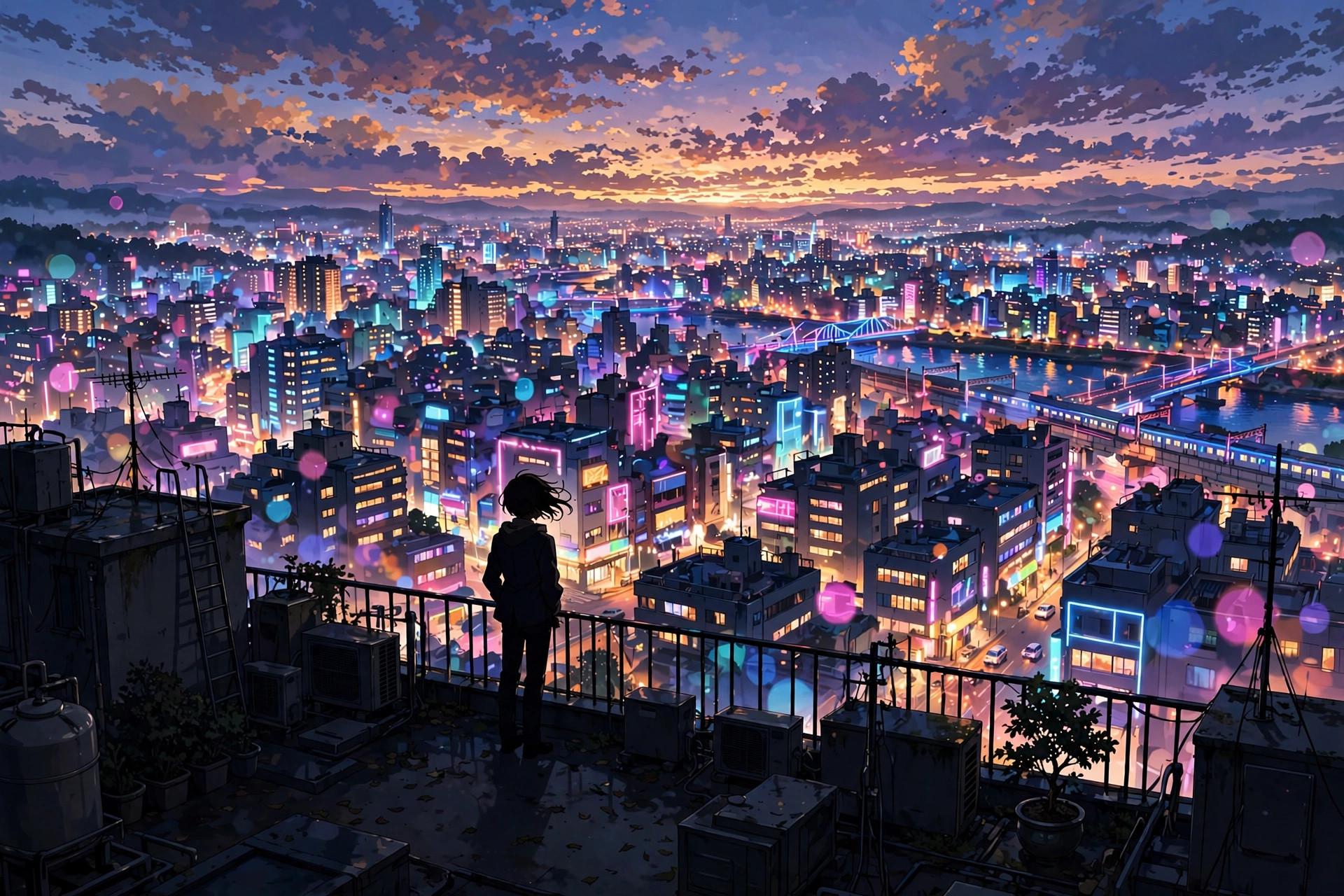
Anime — Japanese animation — has grown from a niche interest into one of the world's most influential entertainment forms. Demon Slayer outgrossed Hollywood blockbusters, anime dominates global streaming charts, and its visual language now shapes everything from music videos to fashion. Yet newcomers often don't know where to begin.
This guide explains what anime is, how it differs from Western animation, its major genres, and exactly where to start watching.
What Is Anime?
In Japan, "anime" simply means all animation. Outside Japan, it refers specifically to animation produced in Japan (or in a Japanese style). What distinguishes anime is not one look but a set of storytelling traditions: serialized narratives, cinematic framing, expressive character design with large emotive eyes, and a willingness to tackle any genre — from children's comedy to adult psychological horror.
Crucially, anime is a medium, not a genre. Saying "I don't like anime" makes as much sense as saying "I don't like live-action" — the form contains multitudes.
A Brief History of Anime
The Early Years (1917–1960s)
Japanese animation began in 1917 with short films. The modern industry was essentially created by one man: Osamu Tezuka, the "God of Manga," whose Astro Boy (1963) established the limited-animation techniques and serialized storytelling that made TV anime economically viable.
The Golden Age (1980s–1990s)
Studio Ghibli's founding in 1985 brought My Neighbor Totoro and later the Oscar-winning Spirited Away (2001). Meanwhile, Akira (1988) stunned Western audiences with unprecedented animation quality, and Neon Genesis Evangelion (1995) proved TV anime could be psychologically devastating art.
Global Explosion (2000s–Today)
Naruto, One Piece, and Dragon Ball Z built massive international fanbases through TV syndication. Then streaming removed the last barriers: Crunchyroll, Netflix, and others now simulcast episodes within hours of Japanese broadcast. Demon Slayer: Mugen Train (2020) became Japan's highest-grossing film ever and a global phenomenon.
Anime vs. Western Animation: Key Differences
- Target audience: Western animation historically targets children (with adult exceptions); anime routinely targets teens and adults, with late-night broadcast slots for mature series.
- Serialization: anime favors long continuous story arcs over episodic reset-button storytelling.
- Visual language: anime uses cinematic techniques — dramatic lighting, detailed backgrounds, varied "camera" angles — more akin to live-action film than Saturday-morning cartoons.
- Source material: most anime adapts manga (Japanese comics) or light novels, giving it deep literary roots.
- Production model: tight budgets and schedules led to stylistic innovations — held frames, speed lines, limited motion — that became aesthetic signatures.
Major Anime Genres
Shonen: Action for Young Audiences
Aimed at teen boys but beloved by all: One Piece, Naruto, My Hero Academia, Demon Slayer. Themes of friendship, perseverance, and spectacular battles.
Shojo: Romance and Relationships
Aimed at teen girls: Fruits Basket, Sailor Moon, Ouran High School Host Club. Emphasis on emotion, relationships, and character growth.
Seinen and Josei: Adult Stories
For adult men and women respectively: Berserk, Monster, March Comes in Like a Lion. Complex themes, moral ambiguity, sophisticated storytelling.
Isekai: "Another World" Fantasy
Protagonists transported to fantasy worlds: Sword Art Online, Re:Zero, Mushoku Tensei. The dominant trend of the 2010s–2020s.
Slice of Life and Iyashikei
Gentle, healing stories about everyday life: Mushishi, Barakamon, Laid-Back Camp. Hugely popular with viewers seeking calm.
Mecha, Sports, Horror, and More
From giant robots (Evangelion, Gurren Lagann) to sports dramas (Haikyuu!!) to horror (Junji Ito adaptations) — there is genuinely an anime for every taste.
Iconic Studios to Know
- Studio Ghibli — hand-crafted masterpieces; start with Spirited Away or My Neighbor Totoro.
- Kyoto Animation — renowned for beautiful slice-of-life and drama (Violet Evergarden).
- MAPPA — current powerhouse behind Jujutsu Kaisen, Attack on Titan's final season, Chainsaw Man.
- Ufotable — famous for blending 2D and 3D in Demon Slayer's breathtaking action.
- Trigger — stylish, high-energy originals like Cyberpunk: Edgerunners.
Where to Start: Beginner Recommendations
If You Want a Masterpiece Film
Spirited Away (2001) — a girl wanders into a spirit world; Miyazaki's Oscar winner is the perfect first anime.
If You Want Action
Demon Slayer — stunning animation, clear emotional stakes, 26-episode first season. Or Fullmetal Alchemist: Brotherhood, widely considered the best-plotted anime ever made.
If You Want Something Thoughtful
Mushishi — episodic, meditative stories about nature spirits. March Comes in Like a Lion — a moving drama about depression and recovery.
If You Want Comedy
Spy x Family — a spy, an assassin, and a telepath form a fake family. Warm, hilarious, and accessible.
Common Beginner Questions
Sub or dub? Subtitles preserve the original performances; modern English dubs are dramatically better than they used to be. Try both — there's no wrong answer.
Do I need to watch in order? Most anime are self-contained series; start at episode one. Long-runners like One Piece (1,000+ episodes) can be intimidating — begin with shorter complete series.
Is anime just for kids? Some of the medium's greatest works — Monster, Vinland Saga, Psycho-Pass — are unambiguously adult.
How Anime Gets Made: Inside the Industry
Understanding anime's production explains much of its look and feel. A typical TV episode is produced in about three to four weeks by teams of animators — many freelance, many underpaid — working under intense deadlines. Key animators draw the crucial frames; in-betweeners fill the gaps. Backgrounds are often painted separately in lush detail, which is why anime scenery can look photorealistic while characters move simply.
A production committee (seisaku iinkai) of companies — publisher, broadcaster, merchandise makers — funds each series and shares the risk. This model explains why so much anime adapts existing manga: a proven audience reduces financial risk. The industry's grueling schedules are also driving change, with studios like MAPPA and Ufotable investing in better working conditions and digital pipelines to sustain quality.
Why Anime Matters Now
Anime's global rise reflects something deeper than entertainment trends. Its long-form storytelling, emotional sincerity, and visual ambition offer an alternative to Hollywood formulas. As streaming makes the world's media libraries mutually accessible, anime stands as proof that great stories translate across every border. Dive deeper in our entertainment collection, or explore the history of cinema for context on how film evolved worldwide.