
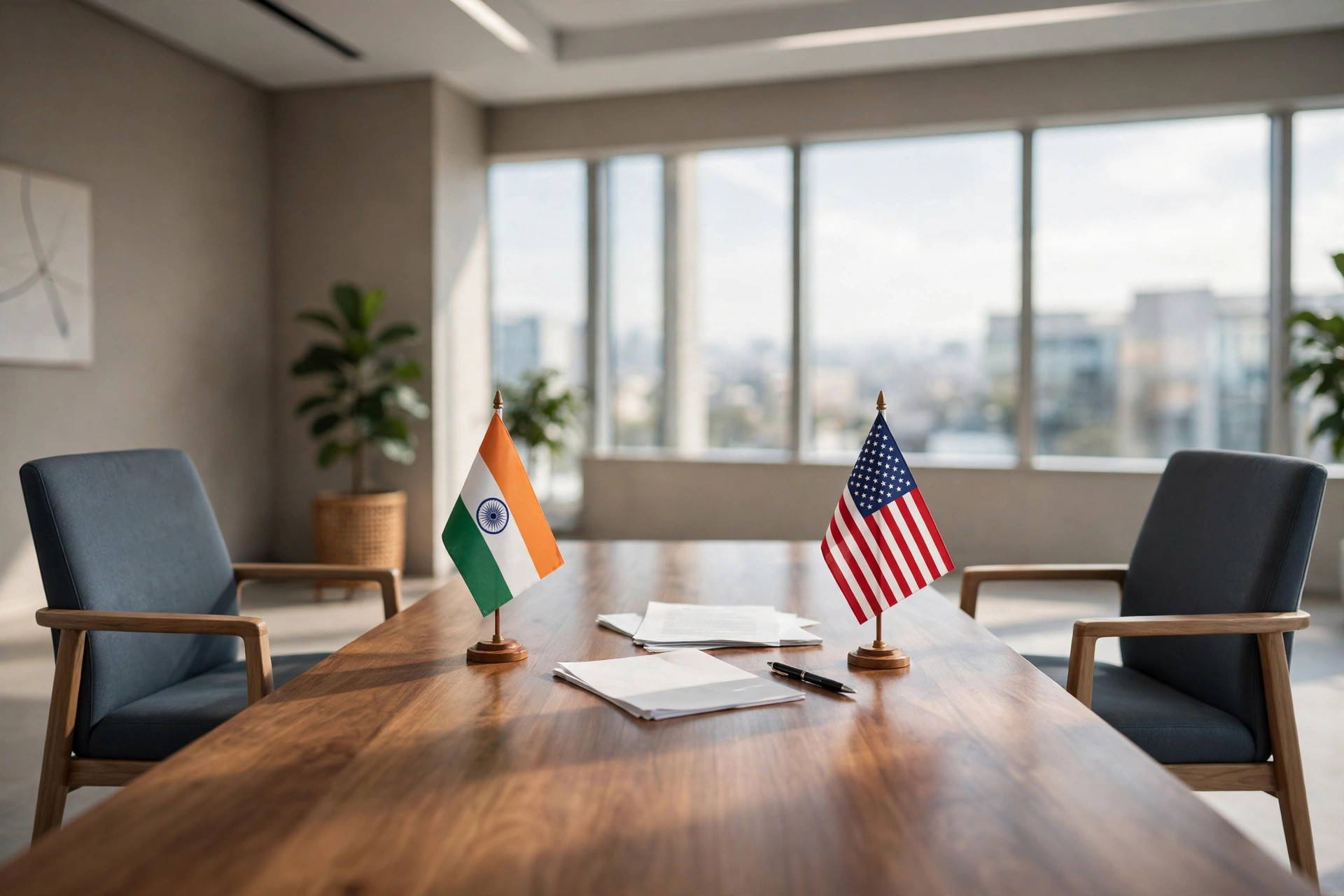
India US preferential market access moved back to the centre of trade headlines on 15 November, when Commerce Minister Piyush Goyal said India and the United States have already agreed that Indian goods will receive preferential access to the American market at lower duties than competitor countries. Goyal was speaking in Cairo, and his words were reported the same day by The Hindu BusinessLine. The statement matters because it describes an agreed direction of travel, not a finished document. A framework for the first phase of the bilateral trade agreement was finalised in February 2026, according to Goyal, but the deal itself has not been signed. The signing was delayed by changes in the US tariff landscape, and the size of the advantage Indian goods will actually receive will depend on the tariff framework that is eventually agreed. That distinction — between an agreed principle and a signed, usable tariff schedule — runs through every part of this story, and it is the reason the latest statements need to be read with care rather than as an announcement that a deal is done.
One day earlier, External Affairs Minister S. Jaishankar gave the other half of the picture. Speaking at the HT Leadership Summit on 14 November, Jaishankar said most issues in the talks have been resolved, that a deal could be sealed "soon", and that the negotiations are at the "finishing line". He also raised the possibility of a meeting between Prime Minister Narendra Modi and US President Donald Trump at the G20 Summit in Miami on 14–15 December. Officials have said the first tranche is targeted for completion by the end of the current financial year, which ends in March 2027. None of that changes the central fact in Goyal's own account: the agreement on preferential access has been reached in principle, the framework for the first phase was finalised in February 2026, and the signing itself is still to come.
What India US preferential market access would mean in practice
Preferential market access, in the sense Goyal used the phrase, means that Indian goods entering the United States would pay lower duties than the goods of competitor countries. The comparison is the point. A lower duty does not only reduce the tax paid at the border; it changes the price at which an Indian product can be offered to an American buyer when a rival product from another country faces a higher duty on the same kind of good. Goyal's formulation, as reported by The Hindu BusinessLine, was that India will get preferential trade access in the US "with lower duties than our competitor countries". That is a relative promise, not an absolute number. Until a tariff framework is agreed and published, nobody outside the negotiations can say how many percentage points lower the Indian duty would be, which goods it would cover, or how long the advantage would last. The principle has been agreed, according to Goyal; the arithmetic has not.
The same logic applies in the other direction in any negotiation of this kind, but the reporting of Goyal's Cairo remarks focused on the Indian side of the bargain: Indian goods, the American market, and duties lower than those faced by competitors. Readers should therefore treat the phrase "preferential access" as a description of a ranking — India ahead of its competitors on duty — rather than as a promise of duty-free entry or of a single fixed rate. The extent of the advantage, Goyal said, will depend on the tariff framework eventually agreed upon. That sentence is the most important qualifier in the whole story, because it tells exporters, buyers and readers alike that the headline cannot yet be turned into a price.
The February 2026 framework: what was finalised and what was not
The framework for the first phase of the bilateral trade agreement was finalised in February 2026, Goyal said in Cairo. A framework is a shared outline of what the first phase will contain and how the two sides intend to proceed. It is not the same as a signed trade agreement, and it is not the same as a published tariff schedule. The distinction is visible in the sequence Goyal himself described: the framework was finalised in February 2026, the deal was to be signed earlier, and then changes in the US tariff landscape led to further negotiations on the agreement. In other words, the outline was settled, the signature did not follow on the expected timetable, and the two sides went back to negotiating because the tariff ground under the deal had shifted.
That sequence also explains why an earlier article on this site covered the finalisation of the framework, while this article leads with the ministers' new statements rather than repeating "deal finalised" as if it were fresh news. The new development on 15 November is Goyal's public restatement, in Cairo, that the preferential-access understanding has already been agreed between the two sides, and his confirmation that the delay sits with the tariff landscape rather than with a collapse of the talks. The framework from February 2026 remains the starting point; the work since then has been about fitting that framework to a tariff picture that changed after it was agreed.
Why India US preferential market access is still not a signed deal
Three facts in Goyal's account, taken together, explain why the deal remains unsigned. First, the framework for the first phase was finalised in February 2026. Second, the deal was to be signed earlier. Third, changes in the US tariff landscape have led to further negotiations. A tariff landscape is the set of duties, rules and legal bases under which a country charges tax on imported goods, and when that landscape changes, the numbers and legal wording inside a draft agreement have to be reworked. Goyal did not, in the remarks reported on 15 November, put a new signing date on the record. What he did put on the record was the continued commitment: the two sides have already agreed, in his words, that Indian goods will get preferential access with lower duties than competitor countries, and the extent of that advantage will depend on the tariff framework eventually agreed upon.
That is why any report that presents the Cairo remarks as a completed deal would mislead its readers. A completed deal would have a signed text and a tariff schedule that exporters could read. What exists now, on Goyal's own account, is an agreed understanding about preferential access, a framework finalised in February 2026, and continuing negotiations about the tariff framework. The talks have not been described by either minister as broken or abandoned. They have been described as continuing, with most issues resolved, and with a target of closing the first tranche by the end of the current financial year. The honest summary is therefore a narrow one: agreement on the principle, framework in place since February 2026, signature still pending.
What Jaishankar said on 14 November
Jaishankar's remarks at the HT Leadership Summit on 14 November supplied the political framing that Goyal's Cairo remarks did not. Jaishankar said most issues in the talks have been resolved, that a deal could be sealed "soon", and that the negotiations are at the "finishing line". The phrase "finishing line" is his characterisation of how close the talks are, and it should be read as his assessment rather than as a date. "Soon" is likewise a judgement about timing, not a timetable. Together, the two phrases tell readers that the Indian government believes the remaining work is limited, while leaving open exactly how long that remaining work will take.
Jaishankar also raised the possibility of a meeting between Prime Minister Narendra Modi and President Donald Trump at the G20 Summit in Miami on 14–15 December. The G20 Summit dates are 14–15 December, and the location is Miami. A meeting between the two leaders at that summit is a possibility Jaishankar raised; it is not, on the reporting available, a confirmed meeting, and it is not a confirmed occasion for announcing a deal. Any suggestion that a deal will be announced at the G20 in December is speculation, not a confirmed fact, and this article does not present it as one. The distinction matters because a leaders' meeting and a trade announcement are two different events, and neither has been confirmed as the setting for the other.
The Supreme Court decision and the new tariff question
The reason the tariff landscape changed, and the reason the signing was delayed, sits outside the negotiating room. The US Supreme Court struck down Trump's reciprocal tariffs, forcing a new tariff architecture under the Trade Act. That is a legal fact with a direct practical consequence: when the legal basis for a set of tariffs is struck down, the duties that were charged under that basis cannot simply be carried forward as if nothing had happened, and a new architecture has to be built under a different legal authority. A bilateral trade agreement whose tariff numbers were drafted against the old landscape has to be re-examined against the new one. That is the change Goyal pointed to when he said changes in the US tariff landscape led to further negotiations.
The Supreme Court decision therefore does not, by itself, tell readers whether Indian goods will end up better or worse off. It tells them why the timetable slipped and why the extent of the advantage remains undecided. The advantage Goyal described — lower duties than competitor countries — can only be measured once the new tariff architecture under the Trade Act takes shape and the two sides agree a tariff framework within it. Until then, the promise is real in the sense that both sides have agreed it, and undecided in the sense that its size is still to be fixed. Readers who follow this story should watch for the tariff framework itself, not for further restatements of the principle, because the framework is the document that will turn the principle into numbers.
What happens next: March 2027 and the G20 dates
Officials have said the first tranche is targeted for completion by the end of the current financial year, which ends in March 2027. A target is not a deadline in the legal sense, and it is not a guarantee. It is the date the Indian side is working towards for closing the first tranche, and it gives readers a clear marker: if the first tranche is to be closed by March 2027, the tariff framework that determines the extent of the advantage must be agreed before then. The G20 Summit in Miami on 14–15 December sits inside that window, and a possible Modi–Trump meeting there is one of the moments watchers will look to, but a December announcement remains speculation rather than a confirmed plan.
For exporters, the practical question is the same one Goyal left open: how large will the duty advantage be, and for which goods? For readers, the practical question is how to tell progress from repetition. Progress would look like a signed first tranche, a published tariff framework, or a confirmed leaders' meeting with a trade announcement attached. Repetition would look like another restatement that preferential access has been agreed, without any of those three things. Goyal's Cairo remarks and Jaishankar's summit remarks are significant because two senior ministers spoke within a day of each other, in the same direction, and with the same qualifier — the advantage depends on the tariff framework eventually agreed. The next step that would change the story is not another statement. It is a signature, a schedule, or a confirmed date. Until one of those arrives, the accurate headline is the one Goyal himself gave: agreed in principle, framework finalised in February 2026, signing delayed by a changed tariff landscape, and the size of the advantage still to be settled. Trade watchers can follow that thread through related coverage, including India's record October 2026 export figures and the Canada–Philippines free trade agreement concluded in Manila, while the ASEAN summit in Manila shows how the same region's governments are weighing trade decisions in the same month.
The story will be updated when the first tranche is signed, when a tariff framework is published, or when a Modi–Trump meeting at the G20 is confirmed. Until then, the record stands as the two ministers left it on 14 and 15 November: most issues resolved, talks at the finishing line, preferential access agreed, and the final numbers still to come.