
The Chery Omoda 5 recall has gone global. Australia published its official recall notice on 13 November 2026, covering 7,285 Omoda 5 SUVs from 2023 whose rear-axle assemblies may have been insufficiently welded and could crack, leading to a loss of vehicle control. It is the latest in a chain of recalls across China, South Africa and Malaysia, all tracing back to the same fault: a weak weld where the rear axle's trailing arm meets its sleeve. No cases have been reported in Australia, and the recall is precautionary, but the scale of it, more than 90,000 vehicles across the four markets, shows how a single supplier defect can travel through a global carmaker's range.
The Omoda 5, now badged in Australia as the Chery C5, is a small SUV that has sold in large numbers as Chery expanded outside China. The recall does not mean every car is defective. It means a defined batch of axle assemblies, made by one supplier in a defined production window, may have welds that are not strong enough, and the only way to know is to inspect each car. Owners will be contacted, inspections are free, and any axle from the affected batch will be replaced free of charge.
Chery Omoda 5 Recall: What Australia Announced
The Australian notice, REC-006776, was published on the federal government's Vehicle Recalls website on 13 November 2026, with campaign number RCB-2606. It covers 7,285 Chery Omoda 5 vehicles from model year 2023. The defect, as the notice states it, is that "due to a manufacturing defect, the rear axle assembly may have been insufficiently welded and could crack. If this occurs, it could lead to a loss of vehicle control." Chery Motor Australia will contact owners in writing and ask them to book an appointment with a local dealer for inspection and repair work if required, free of charge.
Chery Australia confirmed the recall in a statement reported by CarExpert, the Australian motoring site. "Chery Motor Australia can confirm that a precautionary recall has been initiated for certain Omoda 5 vehicles in Australia," the company said. "The recall relates to a potential issue involving a rear axle component manufactured for the Australian market between 11 January 2023 and 31 December 2023 inclusive." The dates refer to when the axle component was manufactured, not necessarily when the vehicle was built or registered, a distinction that matters for owners checking whether their car is covered. Chery said the investigation had identified a potential issue in an overseas market involving certain rear axle assemblies from a particular supplier, "where the weld may have insufficient strength and, in certain circumstances, may crack or tear."
The company stressed the precautionary nature of the exercise. "The recall is precautionary. Inclusion in the recall does not mean that an issue has been identified with an individual vehicle, and there have been no reported cases of this issue in Australia," Chery said. If the axle assembly was produced by the relevant supplier and its serial number falls within the identified production range, it will be replaced free of charge. Owners can call Chery Australia on 1800 424 379 or speak with an authorised dealer to check whether their vehicle is affected.
The Fault: A Weld That May Crack
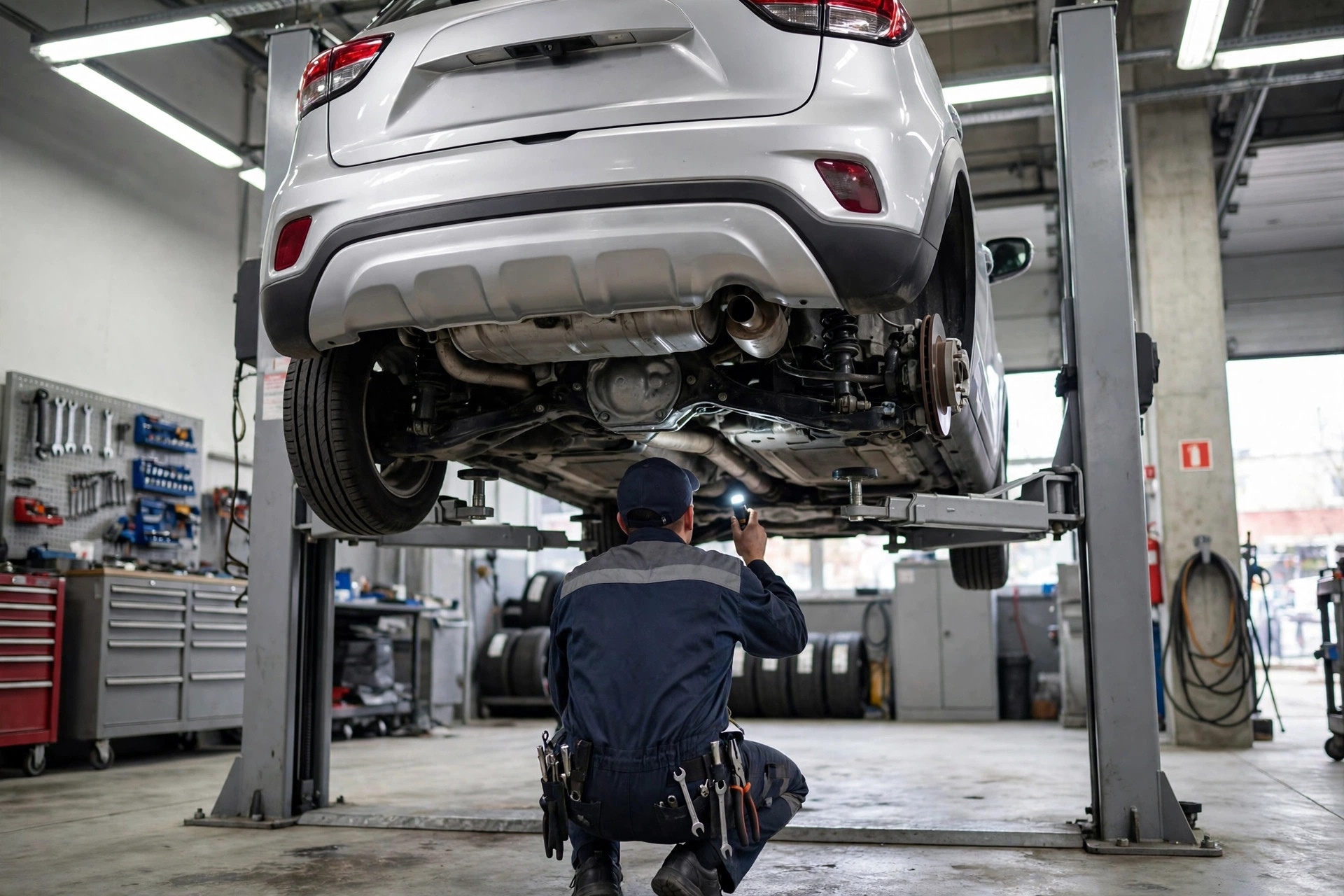
All of the vehicles in these recalls use a torsion beam rear suspension, in which the rear axle assembly, including its attached wheels, is held by a beam whose trailing arms are welded to a sleeve. If the weld at that joint is too weak, it can crack or tear under load. In the worst case, the rear axle assembly can separate from the vehicle while it is being driven, which is what happened in Malaysia in October. That is the failure the Chery Omoda 5 recall is designed to prevent: a structural part that should last the life of the car failing without warning at speed.
The more powerful GT variant, with a 1.6-litre turbo engine, and the electric Omoda E5, as well as all versions sold in Europe, use a different multi-link rear suspension, and are not part of these recalls, according to Paul Tan's reporting. That detail matters, because it narrows the risk to a specific engineering layout and a specific supplier's production run, rather than to the Omoda 5 name as a whole. A recall population is also not a count of confirmed failures. Most of the tens of thousands of vehicles covered will, on inspection, turn out to have sound axles. The recall exists because the only way to find the weak ones is to look.
How One Malaysian Incident Triggered a Global Recall
The chain began on 6 October 2026, when a Chery Omoda 5's rear suspension assembly detached from the vehicle while it was being driven in Johor Bahru, Malaysia. Images and video of the car with its rear axle separated circulated on social media. Malaysia's Road Transport Department (JPJ) temporarily suspended the model's Vehicle Type Approval on 11 October, halting new registrations while it investigated, and opened a technical audit covering production and assembly processes, quality-control systems, weld inspections and the axle supplier. Chery Auto Malaysia then launched a recall covering 8,878 Omoda 5 vehicles in the C and H variants, announced on 14 October.
The fallout reached the top of the company. Chery chairman and president Yin Tongyue publicly apologised for the quality problems in Malaysia, speaking at the World Intelligent Connected Vehicles Conference on 21 October 2026. According to Tencent Auto's report of his remarks, carried by CarNewsChina and Malaysian outlets, Yin said he had met the Malaysian minister responsible for industry earlier that day and offered a personal apology, and said Chery had taken immediate responsibility towards affected customers. The Omoda 5 has since been replaced in Malaysia by the newer Chery O5, which uses a different rear suspension layout.
This is not the first time the Omoda 5 has faced a rear-axle recall in Malaysia. In 2024, Chery recalled 600 vehicles over a similar concern, which the company attributed to a miscalibrated welding tip at its production facility. Chery has not publicly explained whether the 2026 failure is directly tied to the earlier issue, and JPJ's final technical findings have not been publicly confirmed. The Omoda 5 was also last recalled in Australia in February 2024, for a braking issue affecting 5,901 vehicles.
Chery Omoda 5 Recall Around the World
China acted first among the large markets. The official recall notice there covers 53,882 vehicles across two model ranges, the Chery Tiggo 5x, an updated version of which is sold in Australia as the Chery Tiggo 4, and the Chery Omoda, previously sold in Australia as the Omoda 5. The vehicles were manufactured between 6 June 2022 and 31 December 2023, and the campaign takes effect on 27 November 2026, according to China's State Administration for Market Regulation, which cited poor welding on the rear axle's trailing arm and sleeve.
South Africa followed on 10 November, when the National Consumer Commission announced a recall of 23,667 Chery and Omoda vehicles. The recall covers 17,508 Tiggo 4 vehicles and 2,685 Omoda C5 vehicles, with the Tiggo 8 Pro Max 2.0 also covered, and involves both the rear-axle welding defect and a brake-pipe fault. As at 9 November 2026, no Tiggo 4 or Omoda C5 vehicles had been repaired. The commission said its investigation into Chery's earlier recalls had reached an advanced stage after an anonymous tip-off in October 2026 raised safety concerns, and it has received no reports or complaints linked to the reported defects. Indonesia has also begun a preventative recall for the Omoda 5, although no fresh Indonesian vehicle count has been publicly confirmed for November 2026. The figure of 420 vehicles sometimes quoted for Indonesia comes from a May 2024 campaign, not from a new recall, and should not be presented as one.
What Owners Should Do, and What Happens Next
Under the Chery Omoda 5 recall, owners of a 2023 Omoda 5 in Australia should wait for Chery's letter, or check with a dealer now, and book the free inspection when asked. The check is a serial-number check on the axle assembly first: if the axle came from the affected supplier and production range, it will be replaced free of charge. Owners should not assume their car is safe or unsafe from the model year alone, because the recall turns on the component's manufacture date and supplier, not the registration date. The same logic applies in China, South Africa and Malaysia, where owners can check their vehicle identification number on the local Chery product-update pages.
What happens next depends on the inspections. If the failure rate in the inspected batch is low, the recall will close as a precaution that caught a small number of weak welds. If inspectors find more, the scope could widen, as it already has once, from Malaysia to three more markets in a month. The questions that remain open are JPJ's final technical findings in Malaysia, the outcome of South Africa's consumer-commission investigation, and whether any other market where the torsion-beam Omoda 5 was sold follows with its own notice. Recalls work the same way in every industry: a defined batch, a defined fault, a free fix, and the burden on owners to respond. For a car, the stakes are higher than for most products, because the part that might fail is the one that keeps the wheels attached. That is why the inspection, free and quick as it is, is worth doing the moment the letter arrives. Transport safety stories this month have shown the same pattern: a precaution taken early costs far less than the incident it prevents.