
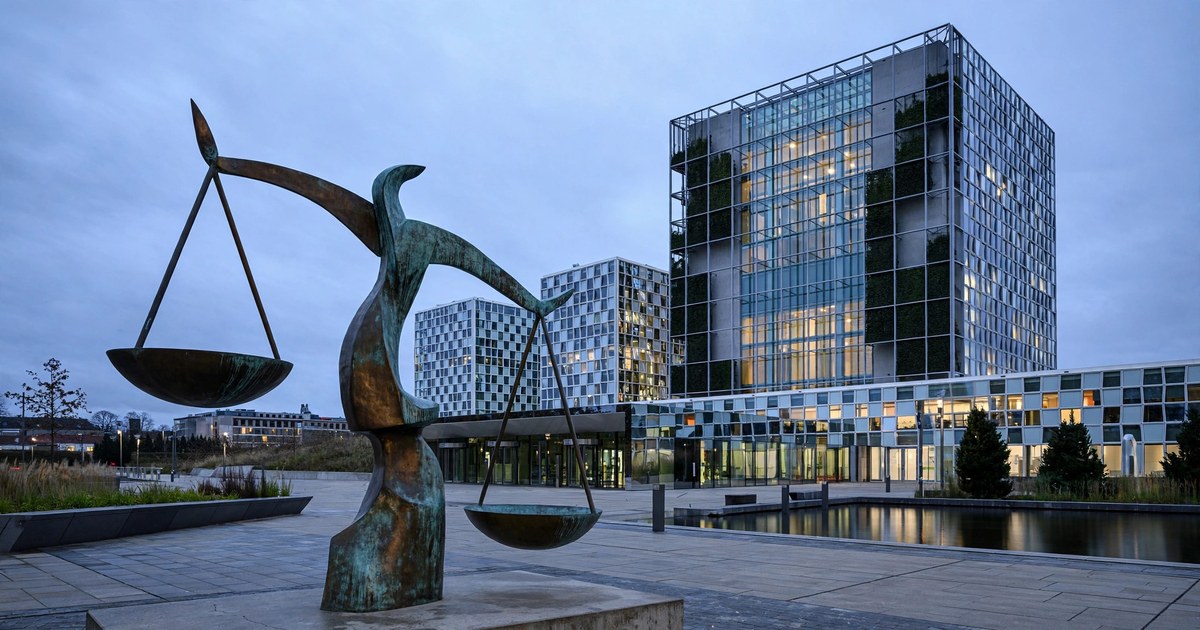
Judges at the International Criminal Court have formally closed the part of the ICC Afghanistan probe that could have examined alleged crimes by American troops — and ordered prosecutors to focus only on the Taliban's actions since 2021. The decision, issued on 12 November 2026 and made public on Friday 13 November, ends a line of inquiry that had already lain dormant for five years, and it also closes a separate probe into the Islamic State Khorasan (ISIS-K) militia. The prosecutor's office told Reuters on Friday that it has appealed the ruling, but gave no further details.
What the ICC Afghanistan probe covered — and what judges closed
The ruling, set out in court documents seen by Reuters, formally closes the part of the original Afghanistan inquiry that previously looked at alleged crimes by US troops. It also closes the probe into ISIS-K. What survives is a separate, narrower inquiry into alleged crimes committed by the Taliban since their return to power in August 2021. Earlier this year, judges had ordered prosecutors to split their Afghanistan work into two probes — one on the Taliban since 2021, and the other the original inquiry, which by then had shifted towards looking at ISIS-K. The split also means the arrest warrants issued against four Taliban leaders remain in effect.
The original ICC Afghanistan probe was wide. Authorised in March 2020, it covered alleged war crimes and crimes against humanity in the armed conflict in Afghanistan since 1 May 2003, including allegations against the Taliban and other armed groups, Afghan government forces — and US armed forces and the CIA, whose alleged crimes in Afghanistan, Poland, Romania and Lithuania were within its scope. The closure touches only the part of that inquiry that could have reached American personnel; the court has not ended its Afghanistan work altogether.
Why the ICC Afghanistan probe stalled after 2021
The judges' reason for closing the ICC Afghanistan probe was practical, not a judgement on the merits. They said prosecutors had not shown they would be able to effectively investigate allegations in Afghanistan apart from the Taliban probe. The American line of inquiry had barely moved for years: in 2021, the prosecutor's office said it would focus the court's resources on the Taliban and ISIS-K and deprioritise allegations against US and allied forces, citing the difficulty of obtaining evidence and making progress. The line had lain dormant ever since.
The investigation's history explains the caution. The prosecutor first asked judges to authorise it in November 2017. In 2019, pre-trial judges refused, saying a successful prosecution was unlikely after so much time had passed and with Afghan and US authorities uncooperative. The Appeals Chamber reversed that refusal in March 2020 and authorised the investigation. It was then deferred at the Afghan government's request, and authorised to resume in October 2022. In November 2024, six states — Chile, Costa Rica, Spain, France, Luxembourg and Mexico — formally referred the situation in Afghanistan to the court.
The four Taliban arrest warrants that stay in force
The most concrete part of the court's Afghanistan work is untouched: the arrest warrants against four senior Taliban leaders, issued for the crime against humanity of gender persecution. The warrants name the Taliban's supreme leader, Haibatullah Akhundzada, and its chief justice, Abdul Hakim Haqqani — warrants issued on 8 July 2025, after Prosecutor Karim Khan sought them in January 2025 — along with education minister Habibullah Agha and higher education minister Neda Mohammad Nadim, whose warrants were issued on 9 September 2025. All four warrants were unsealed on 5 October 2026. The alleged crimes cover the period from the Taliban's seizure of power on 15 August 2021 until at least 20 January 2025.
None of the four men is in custody, and none is likely to be arrested soon. The Taliban rejects the court's authority, the men are expected to avoid travel to countries that would enforce ICC warrants, and the court has no police force of its own. Life under Taliban rule remains severe — the United Nations has warned that 19 million Afghans face acute hunger this winter.
US sanctions and the politics around the court
The ruling lands while the court itself is under pressure. The United States has imposed institutional sanctions on the court, citing American opposition to arrest warrants issued for Israeli officials and to the investigation into actions of US soldiers in Afghanistan. Reuters described the closure as the latest step in a legal tussle between the court's prosecutors and its judges over the Afghanistan case — a dispute that has run for years over how far the investigation could go and who it could reach.
Sanctions have become a familiar tool in war-crimes cases — Britain sanctioned Sudanese commanders this year over the El Fasher atrocities. But the American sanctions strike at the court itself, and they form the backdrop against which the judges weighed whether the Afghanistan inquiry could still be run effectively.
What the closure does not mean
The ruling closing the ICC Afghanistan probe is narrow, and three things it does not do matter. First, it does not exonerate American personnel: it establishes nothing about whether any alleged crimes occurred. Second, it does not change the court's jurisdiction over Afghanistan. Third, it does not end the court's Afghanistan work — the Taliban inquiry continues, and the four warrants stand. The original investigation also covered alleged wrongdoing by Afghan government forces, the Taliban and other armed groups, and the judges' decision turns on whether prosecutors could effectively investigate, not on who did what. A separate UN report found that Russia's energy strikes in Ukraine were war crimes — a reminder that war-crimes findings still come from other routes even when one ICC track closes.
What happens next: the appeal and the Taliban case
The prosecutor's office has appealed, telling Reuters on Friday that it had done so but giving no further details. An appeal asks a higher chamber to revisit the decision — whether the judges were right to close the non-Taliban lines, and whether the split between the two probes was handled correctly. There is no timetable in public yet, and the office has not said what grounds it is arguing.
Meanwhile the live track of the ICC Afghanistan probe is the Taliban case. The four warrants are in force, and the court's prosecutors are continuing the inquiry into alleged Taliban crimes since 2021. What to watch: whether the appeal succeeds, whether any of the four wanted men travels somewhere they can be arrested, and whether Washington's sanctions on the court change. None of those turns quickly.
Why it matters
This is the decision that settles — for now — the most politically charged question the court has ever faced: can it investigate Americans? The judges answered on practical grounds, not on the merits. They did not say no crime occurred, and they did not say the court lacks the power. They said the prosecutors could not show they could run this investigation effectively, five years after the American line went quiet. That is a narrower answer than either side wanted, and it is the one that will shape the court's reputation: a court that can only pursue cases it can actually investigate, in a country it cannot enter, while under sanctions from the world's most powerful state.
For Afghans, the practical effect is simpler. The only live ICC track is now the one about the Taliban's treatment of women and girls since 2021 — the persecution case behind the four warrants. The alleged crimes of the war years, by every side, will not be examined by this court. That is the trade the judges have made: a smaller case the court can pursue over a bigger one it could not. The ICC Afghanistan probe will be remembered as much for what it did not do as for what it did.
Sources: Reuters; International Criminal Court (icc-cpi.int); Associated Press; Military Times.