
Clutter is more than an eyesore — research links it to higher cortisol levels, poorer sleep, and reduced focus. Yet most decluttering advice fails because it treats the symptom (too much stuff) rather than the system that created it. This guide takes a different approach: a room-by-room method that removes clutter permanently by changing how things enter and leave your home.
Why Clutter Accumulates
Clutter follows a simple equation: inflow exceeds outflow. Things enter your home constantly — purchases, gifts, mail, packaging, "just in case" items — while almost nothing leaves. The average American home contains around 300,000 items, according to the Los Angeles Times. You don't need minimalist extremes, but you do need outflow to match inflow.
There are also psychological drivers: the endowment effect (we overvalue what we own), loss aversion (giving away feels like losing), and decision fatigue (it's easier to keep than to decide). Understanding these biases is the first step to beating them.
Before You Start: The Ground Rules
- One room at a time. Whole-house decluttering leads to burnout. Finish one space completely before moving on.
- Three boxes always: Keep, Donate/Sell, Trash/Recycle. Everything you touch goes in one.
- Set a timer: 60–90 minute sessions beat marathon weekends. Momentum matters more than speed.
- Don't organize first. Organizing clutter just rearranges it. Remove first, then organize what remains.
- Photograph, then let go of sentimental items you don't use — the memory lives in the photo, not the object.
The Bedroom: Start Where You Sleep
Begin with the nightstand: old chargers, dead batteries, unread magazines, and mystery cables. Then the closet — the average person wears 20% of their clothes 80% of the time. Use the hanger trick: turn all hangers backward; after six months, donate anything still backward-facing.
Under the bed, be ruthless: storage there should be intentional (seasonal bedding), not a graveyard of "I'll deal with it later." Dresser drawers get the file-fold method — clothes stored upright so you can see everything at a glance.
The Kitchen: The Clutter Magnet
Kitchens accumulate duplicates: three spatulas, two blenders, gadgets used once. Keep the best version of each tool and release the rest. Decant pantry staples into clear containers — you'll waste less food when you can see what you have.
Countertops should hold only daily-use items (coffee maker, knife block). Everything else earns its space in a cabinet. The "one in, one out" rule works brilliantly here: a new mug means an old one leaves.
The Junk Drawer
Every home has one. Empty it completely, discard dried-out pens, dead batteries, and expired coupons, then use small trays or dividers so it can't devolve again.
The Living Room
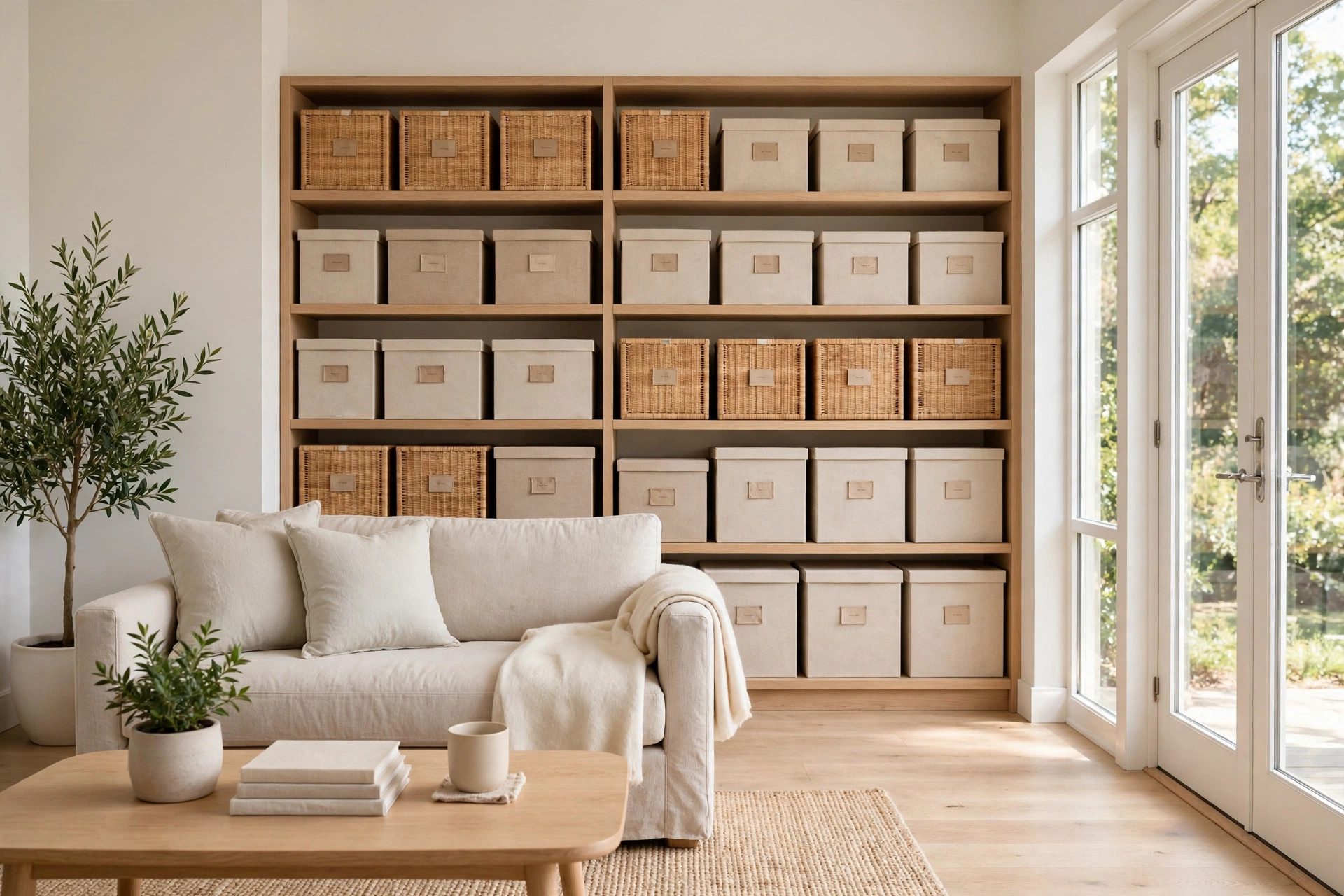
Living rooms collect books, remotes, throw blankets, and kids' or pets' gear. Corral remotes in one caddy. Limit decorative objects to what you genuinely love — surfaces should be mostly clear. Media collections (DVDs, games) can be digitized or donated; the shelf space they free is transformative.
The Bathroom
Expired medications, half-used products, and hotel toiletries multiply silently. Check expiration dates (sunscreen and mascara expire faster than you think). Keep only current products; decant or discard the "backup" graveyard under the sink.
The Home Office
Paper is the office's clutter currency. Go digital: scan important documents, switch bills to paperless, and keep a single inbox tray for the stragglers. Cables get labeled and velcro-tied; drawers get dividers. If you haven't referenced a file in two years, archive or shred it.
Kids' Rooms and Play Areas
Rotate toys rather than displaying all at once — kids play more deeply with fewer options, and rotation makes old toys feel new. Involve children in donating outgrown toys; it teaches generosity and gives them agency. One bin per category (blocks, art, dolls) with labels keeps cleanup fast.
The Garage, Attic, and Storage Areas
Save these for last — they're where deferred decisions hide. Apply the 12-month rule strictly: unused in a year (outside true seasonal/sentimental items), it goes. Broken items awaiting repair get a 30-day deadline or they're discarded. Hazardous materials (old paint, chemicals) go to municipal collection days, not the trash.
The Psychology of Letting Go
Knowing what to discard is easy; actually doing it is hard because our brains fight us. The endowment effect makes us value things more simply because we own them — that $20 gadget feels worth $50 once it's ours. Sunk-cost thinking whispers that discarding something expensive "wastes" the money, when in fact the money is gone either way; keeping a useless item just adds clutter to the loss.
Then there's aspirational clutter: the guitar you'll learn "someday," the clothes for a smaller size, the craft supplies for a hobby you abandoned. These items don't represent your life — they represent guilt about a life you're not living. Release them, and the guilt often lifts with them. If an item's only function is making you feel bad, it has negative value.
For genuinely sentimental items, use the container rule: choose one box for keepsakes. Anything that fits stays; the box's finite size forces real prioritization without demanding you discard everything. And remember the photo trick — for most sentimental objects, a photograph preserves 95% of the emotional value in 0% of the space.
Keeping It Clutter-Free: The Maintenance System
Decluttering without a maintenance system is like dieting without changing eating habits. Build these into your routine:
- The 10-minute nightly reset: the whole household returns things to their homes before bed.
- One in, one out: every new purchase displaces something old.
- The donation station: a permanent bag or box by the door; when full, it goes to charity.
- Seasonal sweeps: 30 minutes per room, four times a year, catches drift before it compounds.
- The 24-hour rule: non-essential purchases wait a day — most urges evaporate.
What to Do With It All
- Donate: charities, shelters, and thrift stores welcome usable goods; many offer pickup.
- Sell: high-value items on marketplace apps; price to move, not to maximize.
- Recycle properly: electronics, batteries, and textiles have dedicated streams — don't landfill them.
- Shred sensitive paper before recycling.
A decluttered home isn't about owning nothing — it's about owning only what serves your life. Start with one drawer today; the momentum will carry you further than you expect. For more ideas, explore our home & living collection and our guide to small-space living.