
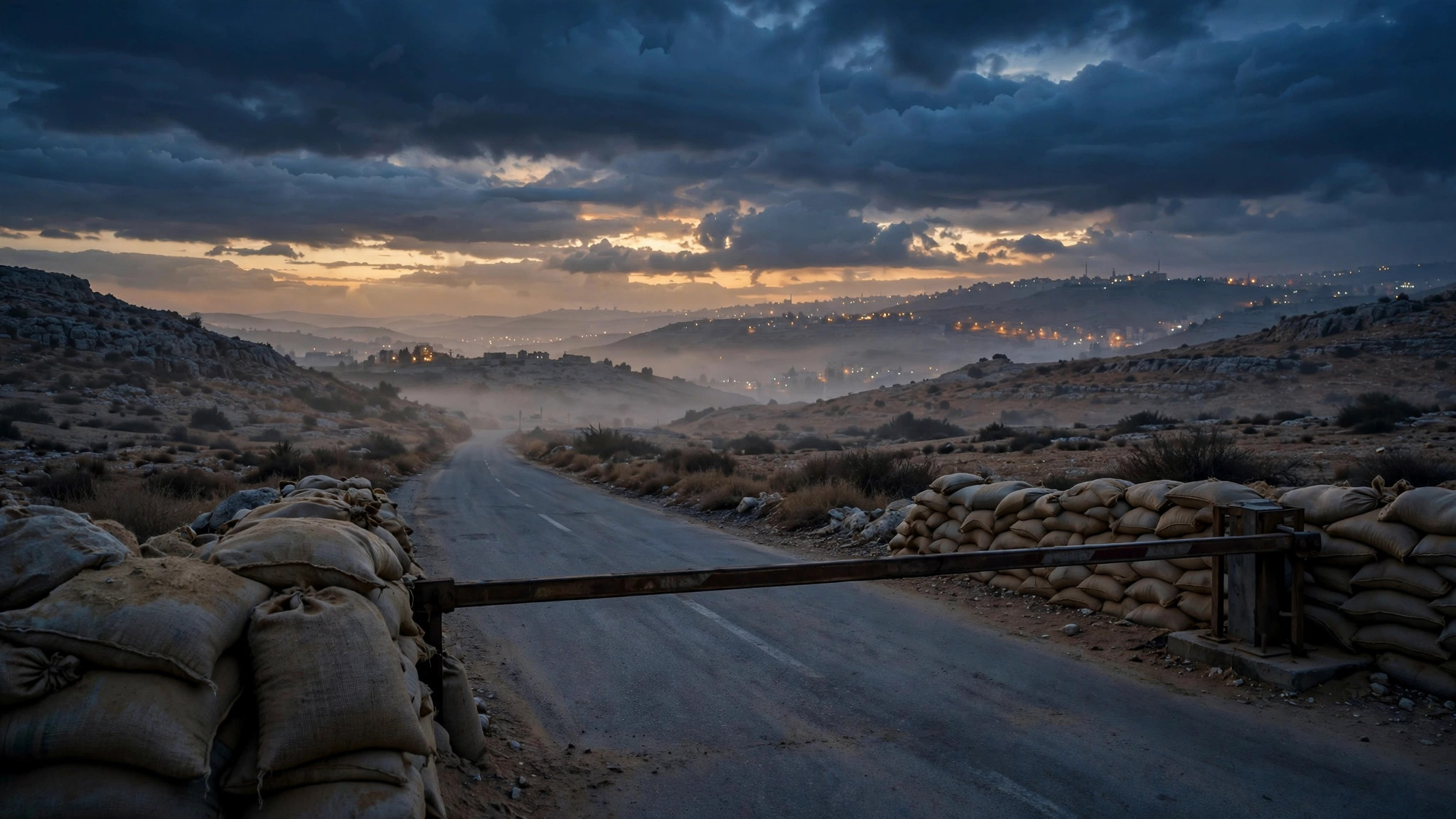
Israel ordered one of the most sweeping security crackdowns in the West Bank in years on Friday, October 23, 2026, after two gunmen opened fire near a checkpoint outside the Palestinian city of Hebron, wounding five Israelis — two of them critically — before soldiers shot both attackers dead. Prime Minister Benjamin Netanyahu ordered an immediate military cordon around Hebron and preparations for a full closure of the occupied West Bank that would last at least through the country's October 27 general election, just four days away.
The attack, which news outlets around the world are covering as one of the day's major international developments, put security at the center of an already tense campaign — and raised fears of a wider escalation in a territory already simmering with violence.
What happened near Hebron
According to the Israel Defense Forces (IDF) and Israel's emergency medical service, Magen David Adom, the shooting began at about 7:30 a.m. local time near Yehuda Junction — also reported as the Farsh al-Hawa checkpoint — on Route 35, close to Hebron in the southern West Bank. Two gunmen in a vehicle opened fire with an M16-type assault rifle and a handgun, the military said.
Five Israelis were wounded, all in their 20s. Two were in critical condition, including one man described as in "very serious condition" with gunshot wounds, while the other three sustained light to moderate injuries, according to Magen David Adom. All five were evacuated to hospitals in Israel — Shaare Zedek Medical Center and Hadassah Ein Kerem in Jerusalem.
IDF troops rushed to the scene and engaged the gunmen in a firefight that witnesses and local media described as intense and lasting more than 20 minutes. Soldiers from the Home Front Command's Ari Battalion ultimately killed both attackers. An AFP photographer who happened to be passing witnessed the exchange, describing two armed Palestinian men trading fire with Israeli forces before troops shot them dead near a petrol station.
The military said it had prevented what it called a "terror attack against Israeli civilians." Whether the wounded were soldiers or civilians was not immediately clarified in the initial reports.
The gunmen and the weapons they carried
Security sources cited by the Times of Israel identified the two attackers as Mohamad Yaaba and Firas Yaaba, both 27 years old and residents of Hebron, reportedly relatives. Their identities had not been publicly confirmed by authorities as of late Friday morning, and the exact relationship between them remained unclear.
What the military found in the attackers' vehicle drew particular attention. The IDF said soldiers recovered dozens of firearms, a grenade, and hundreds of rounds of ammunition from the car's cabin and trunk. IDF Chief of Staff Lt. Gen. Eyal Zamir, who visited the scene and held an operational meeting with brigade commanders, said the quantity of weapons indicated the pair had been preparing an attack on a much larger scale.
Intelligence assessments reported in the Israeli media said at least one of the two men had operated within Hamas structures and had previously been known to security services. Netanyahu himself accused Hamas of planning the attack on Israeli civilians — a claim that had not been independently verified. Hamas, for its part, praised the shooting as a "heroic operation" and called for more attacks, without claiming responsibility.
The IDF and the Shin Bet domestic security service carried out raids in areas where the attackers' families live, and investigators said they were examining the vehicle's route, the source of the weapons, and how the attack was funded.
Netanyahu orders a full closure
Within hours of the shooting, Netanyahu convened an emergency meeting with his Security Cabinet and senior military and security officials. His office then announced the harshest measures: the IDF would immediately cordon off Hebron and prepare for a complete closure of the West Bank — which Israel calls Judea and Samaria — starting Friday and continuing at least through the October 27 election.
"I salute the courage of our soldiers who acted with determination and prevented what could have been a major attack," Netanyahu said in a statement. He accused the attackers of planning "a major attack aimed at murdering innocent civilians," and vowed that Israel would pursue Hamas operatives and those who send them "everywhere and at all times."
On the ground, the orders translated quickly into facts. Troops imposed what the IDF described as a "total cordon" around Hebron and surrounding villages, set up mobile checkpoints on the region's main roads, and began checking vehicles and the documents of local residents. The Palestinian news agency Wafa reported that Israeli officials had resolved to implement a comprehensive closure of the entire West Bank, including shutting down border crossings into the territory.
With the clock counting down to election day, Netanyahu also called for all Likud party political meetings to be cancelled on Friday because of the attack.
Why the timing matters: the election four days away
The shooting landed four days before Israelis vote on Tuesday, October 27, in a parliamentary election that polling suggests could be one of the country's most consequential — and uncertain — in years.
Final polls published on October 22 diverged on the details but agreed on the broad picture: neither Netanyahu's bloc nor the opposition led by former army chief Gadi Eisenkot's Yashar party is projected to reach the 61 seats needed for a majority in the 120-member Knesset. Some surveys give Netanyahu's bloc a narrow edge; others show the opposition bloc ahead, with Arab parties potentially holding the balance of power.
Israel's government had already warned of potential attacks by the country's "enemies" in the lead-up to the vote. Security is now likely to dominate the final days of the campaign — territory where Netanyahu has traditionally been seen as strong. Whether the attack and the sweeping closure that followed move votes, however, is an open question in a race where polls show many Israelis still undecided.
A wider pattern of West Bank violence
The Hebron attack did not happen in a vacuum. The West Bank has seen a surge in Israeli military operations and settler violence in recent weeks, coinciding with the Palestinian olive harvest season — a period that regularly brings heightened confrontation between settlers, Palestinian farmers, activists, and journalists.
In just the past week, the IDF said it had arrested more than 70 wanted persons in operations across the West Bank, including people it described as affiliated with Hamas and the Palestinian Authority, and confiscated dozens of weapons and four explosive devices.
The unrest has also drawn international attention. A U.S. candidate was detained by the IDF during olive-harvest activities in the West Bank, in an incident covered in depth on this site, while a U.S. photojournalist was beaten in a settler attack during olive harvest clashes and European diplomats came under attack by settlers in Taybeh earlier this month.
The West Bank violence is unfolding alongside a broader regional escalation. Just this week, reporting revealed that the United States and Israel have been drafting plans for potential post-midterm military action against Iran, a development with major implications for regional security.
What happens next
In the immediate term, the trajectory is clear: Hebron stays locked down, and the West Bank faces a full closure through at least October 27. What remains unclear is how long the restrictions will actually last and how they will be enforced across a territory of nearly three million Palestinians — a question even initial reports said Israeli authorities had not fully answered.
The longer-term question is whether the attack marks the start of an election-week wave of violence or a single, contained incident. Israeli security officials say they are braced for more; the IDF has deployed additional soldiers to the Hebron area and signaled that operations could widen.
For now, the region holds its breath — and Israel votes in four days.
Sources: Associated Press via NPR; New York Post; The Business Standard; Times of Israel; Wafa; AFP.