
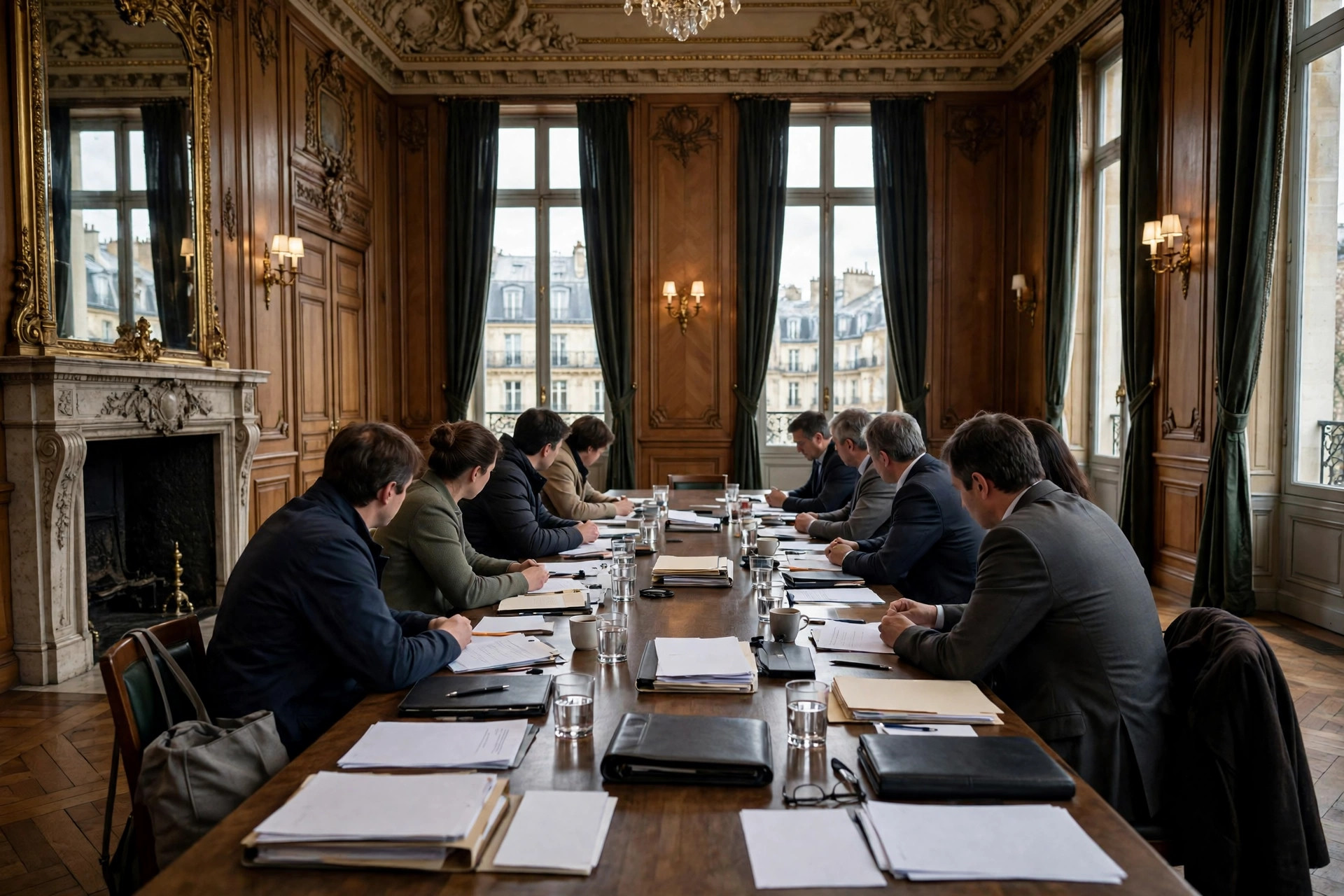
On Monday 9 November 2026, Prime Minister Sébastien Lecornu is due to open a social conference on the France minimum wage increase, bringing unions and employer organisations together at Matignon to talk about wages and purchasing power. The meeting starts at 09:30, and Lecornu will also meet representatives of high-school and university students from 15:30 to 17:00 the same day.
Nothing has been decided yet. A social conference is a meeting, not a decision, and its outcome is unknown at the time of writing. What is known is what each side is asking for, and the numbers behind those demands, which range from a 10% rise in the SMIC to a net increase of €100 a month.
The France minimum wage increase talks: what is planned for 9 November
Lecornu convenes the conference at Matignon on Monday 9 November at 09:30, with unions and employer organisations in the room. The subject is wages and purchasing power, and the minimum wage, the SMIC, France's statutory minimum wage, sits at the centre of it. The government is considering bringing forward the annual minimum-wage rise, which would move a pay decision that normally comes once a year into the present round of talks.
Labour Minister Jean-Pierre Farandou was asked to complete preliminary consultations by Sunday 8 November, the day before the conference. The student meeting in the afternoon, from 15:30 to 17:00, brings high-school and university representatives into the same day's talks, which links the wage discussion to the student protests that are also planned this week.
Background: the 5 November strike that set up the talks
The conference follows a nationwide strike and demonstrations on Thursday 5 November. The Interior Ministry counted about 575,000–600,000 marchers, while the CGT union counted about 1.6 million, including about 350,000 in Paris. The gap between the two counts is normal for French protests, as the police and the unions count differently, but both figures describe a large day of action.
The day also brought 448 arrests and 53 police injured, figures reported after the demonstrations. It was the 8th mobilisation since 29 September, which puts the 9 November conference at the end of more than a month of rolling protests rather than at the start of a new dispute.
The strike's message was about pay and living costs, and the conference is the government's answer to it: a formal meeting with the unions and employers instead of another round of street action. Whether the meeting produces anything the unions accept is the question the day will answer.
What unions and the government are asking for
The CGT is demanding a 10% rise in the SMIC. The CFDT is seeking a net increase of €100 per month. Both demands are framed as net figures, money in workers' pockets, rather than gross rates, which is how the debate is usually argued in France.
Labour Minister Jean-Pierre Farandou has suggested raising the SMIC above €1,500 net per month. That figure is about €22 above the current €1,477.93 net, a calculation reached by subtracting the current net rate from €1,500, not an amount the government has announced as a decision. The distinction matters: €1,500 is a figure Farandou has floated, not a rise that has been agreed.
The current SMIC is €12.31 gross per hour, or €1,867.02 gross per month, and about €1,478 net per month since June. Those are the rates any increase would start from, and they are the reason the debate is argued in tens of euros: for a worker on the minimum wage, €22 or €100 a month is a visible change in a monthly budget.
The government is considering bringing forward the annual minimum-wage rise. Bringing the rise forward would mean paying it sooner rather than making it larger, and it is one of the options on the table alongside the figures the unions and Farandou have put forward. None of it has been decided.
Why the France minimum wage increase talks matter
The SMIC sets the floor for pay in France, so a change to it reaches the lowest-paid workers first and ripples through pay scales above it. A rise also feeds into the cost of employing people, which is why employer organisations are in the room alongside the unions. The conference has to balance those two pressures in one meeting.
The timing adds weight. The talks come four days after a strike that drew hundreds of thousands of marchers, and a national education strike and student demonstrations are planned for Tuesday 10 November, the day after the conference. Unions meet on Tuesday evening to take stock, so the conference's outcome will be judged almost immediately, by the unions in the room and by the streets the next day.
For workers on the SMIC, the practical question is simple: how much more, and when. The conference may answer both, or it may answer neither and set up a further round of talks. Until Lecornu's meeting ends, the only honest statement is that a rise is being discussed, with figures on the table and no decision taken. Whatever the conference produces, the France minimum wage increase debate will not end on Monday: the figures on the table will be measured against pay packets, not press statements.
Key facts about the planned social conference
- Prime Minister Sébastien Lecornu convenes unions and employer organisations at Matignon on Monday 9 November 2026 at 09:30 for a social conference on wages and purchasing power.
- Lecornu will meet representatives of high-school and university students from 15:30 to 17:00 the same day.
- The conference follows a nationwide strike and demonstrations on Thursday 5 November: the Interior Ministry counted about 575,000–600,000 marchers; the CGT counted about 1.6 million, including about 350,000 in Paris.
- 448 arrests and 53 police injured were reported after the 5 November demonstrations; it was the 8th mobilisation since 29 September.
- The CGT is demanding a 10% rise in the SMIC; the CFDT is seeking a net increase of €100 per month.
- Labour Minister Jean-Pierre Farandou has suggested raising the SMIC above €1,500 net per month, about €22 above the current €1,477.93 net, a calculation, not an announced amount.
- The current SMIC is €12.31 gross per hour or €1,867.02 gross per month, and about €1,478 net per month since June.
- The government is considering bringing forward the annual minimum-wage rise; Farandou was asked to complete preliminary consultations by Sunday 8 November.
- Nothing has been decided yet: the conference is a meeting, not a decision, and its outcome is unknown at publish time.
- A national education strike and student demonstrations are planned for Tuesday 10 November, and unions meet Tuesday evening to take stock.
What happens next
The conference itself is the next event, starting at 09:30 on Monday. What comes out of it, a figure, a timetable, or a promise of further talks, will be the first real test of whether the meeting narrows the gap between the unions' demands and the government's position.
Tuesday brings the next test. A national education strike and student demonstrations are planned for 10 November, and unions meet on Tuesday evening to take stock of the conference. If the unions judge the outcome as too little, the mobilisation that began on 29 September is likely to continue; if they judge it as a start, the talks may move into a detailed negotiation.
For background on the strike that led to this conference, read our report on the France nationwide strike, and for the wider European picture on pay and pensions, see our explainers on Portugal's 2027 pension increase and Malta's 2027 budget changes for non-EU workers.
Sources
AJP; TNS News; fiscly.fr; Sortiraparis. November 2026.