
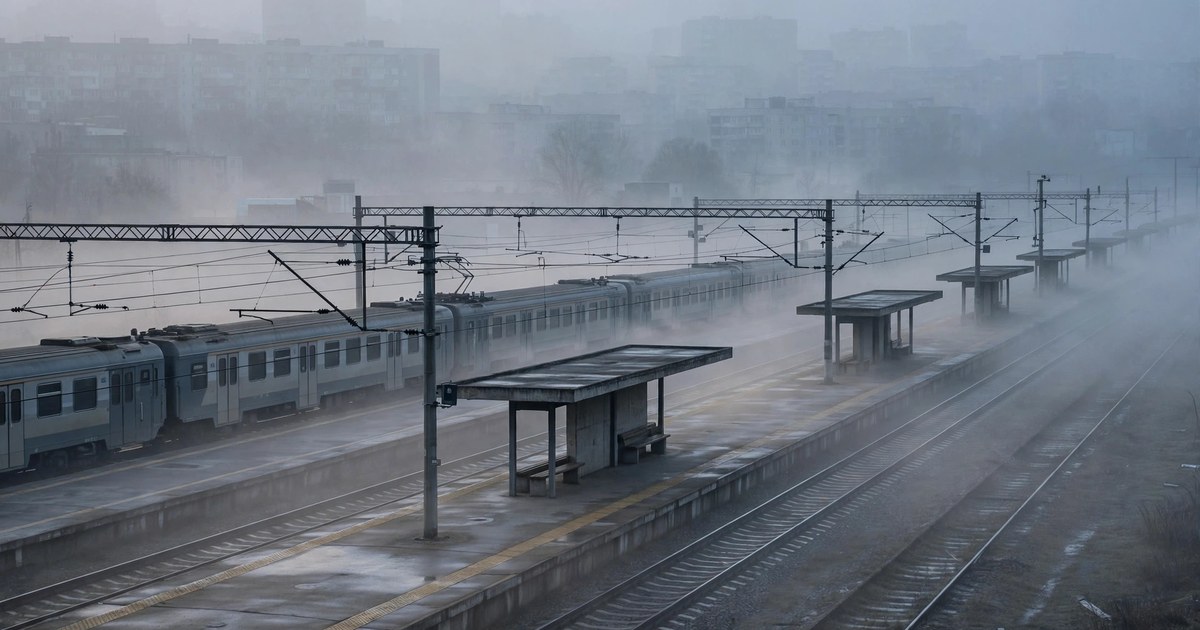
The Dnipro train station drone strike on Thursday 29 October 2026 killed at least 14 people on a crowded railway platform in the central Ukrainian city of Dnipro, Ukrainian officials said. A jet-powered drone hit the platform as people waited to board a commuter train, in what was reported as the deadliest strike on a Ukrainian railway station since 2022. The story is trending per news coverage from Reuters, CNN, The Times and other outlets, because the attack came on the same day as deadly strikes in other Ukrainian cities and while a narrow humanitarian truce was holding in the south of the country.
The first reports put the death toll at 13. President Volodymyr Zelenskyy later said the toll at Dnipro had risen to 14, and that 56 people had been injured across three attacks that day, including 10 children. Figures moved during the day as emergency teams worked at the scenes, so this article uses the latest figures attributed to Zelenskyy and to the regional authorities, and says where earlier reports differed.
What Happened in the Dnipro Train Station Drone Strike?
Ukraine's state railway company, Ukrzaliznytsia, said a jet-powered drone struck a platform at Dnipro's main railway station where a commuter train was preparing to depart for Zaporizhzhia, a city to the south-east. Reports identified the service as electric train No. 866 on the Dnipro to Zaporizhzhia route. Zelenskyy said in a post on X that the platform held an ordinary commuter train and a scheduled passenger train when the drone hit.
Ukrzaliznytsia said people were still on the platform despite a warning of heightened danger, and that rescuers, doctors and police officers were working at the site. Dnipro Mayor Borys Filatov wrote on Telegram: "Many people were killed. Lots were injured." Oleksandr Hanzha, the head of the Dnipropetrovsk regional military administration, confirmed the deaths in a Telegram update and said at least five more people had been wounded in the first count. Zelenskyy later put the number of injured at Dnipro at 10 in his first post, before giving the wider figure of 56 injured across three attacks.
The Times reported that more than a dozen people were injured at Dnipro, six of them seriously with multiple shrapnel wounds, according to Hanzha. Those seriously injured included an 11-year-old boy and a man who had both legs amputated, the report said. Images from the scene published by news outlets showed bodies on the platform and rescuers carrying the wounded away on stretchers. This article does not describe those images in detail.
No time of day for the impact beyond Thursday morning was given consistently in the reporting available at publication, and no official Russian statement on the Dnipro strike itself was included in those reports. Moscow denies deliberately targeting civilians, a position Reuters noted in its coverage. Casualty figures in this article come from Ukrainian authorities and have not been independently verified by the outlets reporting them.
How Many People Were Killed Across Ukraine on 29 October 2026?
Zelenskyy said the three attacks he named together killed 19 people: 14 at Dnipro, two in Chernihiv and three in Kremenchuk. CNN reported the same nationwide figure of at least 19 killed on Thursday. The Dnipro strike was by far the deadliest single attack of the three, and the wider toll underlines that Thursday's strikes were not limited to one city.
In Chernihiv, in northern Ukraine, two 15-year-old girls were killed in a drone strike on a central street, officials said. Reuters reported that 23 people were wounded in that attack on a busy downtown street. In Kremenchuk, in the Poltava region, Zelenskyy said a Russian Shahed drone struck an apartment building and three people were killed. Earlier Reuters reporting had put the number killed in other cities that day at five in total, before Zelenskyy's later update gave the fuller breakdown used here.
Ukrainian Prime Minister Sergiy Koretskyi said on Telegram: "Russia is deliberately hunting civilians: on trains, at stations, in residential buildings. There is no justification for this terror, and there never can be." That is Ukraine's characterisation of the strikes. Russia's stated position, as reported by Reuters, is that it does not deliberately target civilians.
Why the Dnipro Train Station Drone Strike Matters for Ukraine's Railways
Railways are a lifeline in wartime Ukraine. Trains move workers, families and students between cities, carry supplies toward the east and south, and keep daily life running in cities far from the front line. Dnipro is one of Ukraine's largest cities and a major railway hub, and the Dnipro to Zaporizhzhia route is an everyday commuter service, not a military transport. A strike on a crowded passenger platform therefore hits civilian travel directly, and it raises a practical question that Ukrzaliznytsia and the authorities will have to answer: what happens to passengers who are on a platform when a heightened-danger warning is already in force.
The Dnipro train station drone strike was also the deadliest strike on a railway station since 2022, according to The Times. The comparison is with Kramatorsk, where The Times reported that more than 60 people died in an attack on the railway station in 2022, and Chaplyne, a village not far from Dnipro, where 25 people were killed the same year. Those earlier attacks are part of why a station strike carries such weight in Ukraine: stations are places where large numbers of civilians gather at predictable times, and they have been hit before.
The weapon described in this attack matters too. Ukrzaliznytsia said the drone was jet-powered. A jet-powered drone is driven by a jet engine rather than propellers, which generally makes it faster and gives people on the ground less time to react after a warning than a slower propeller drone would. Reuters has reported more broadly that Russian drone and missile attacks on critical infrastructure, including the rail network, have exploited an acute shortage of air defence missiles in Ukraine. That shortage, if the reporting is correct, helps explain why even a warned city can still be hit.
The pattern is not new. Reuters reported that Russia regularly targets Ukraine's railways, and earlier reporting in 2026 covered repeated drone barrages that cut power and killed civilians in Ukrainian cities. Readers can follow that wider pattern in our coverage of the Russian drone barrage that cut power to 370,000 people in Ukraine, and in the United Nations findings covered in our article on the UN report on Russian energy strikes in Ukraine. The Dnipro strike fits that pattern, but its toll on a passenger platform sets it apart from strikes on power infrastructure alone.
What the Oleshky Truce Shows About the Wider War
The Dnipro strike happened while a narrow, local truce was holding in another part of Ukraine. Russia and Ukraine have since Tuesday been observing a six-day humanitarian truce in the Kherson region in the south, brokered with United States help, to allow aid to reach the Russian-held town of Oleshky and to let civilians leave. The White House said the truce was negotiated by First Lady Melania Trump, with Pope Leo also pressing for it, according to Reuters. Human rights officials from both sides said on Thursday that no violations had been recorded and that demining was under way so a humanitarian convoy could reach Oleshky safely.
Oleshky, across the Dnipro River from the city of Kherson, has been held by Russian forces since the first day of the full-scale invasion in 2022. An estimated 1,700 to 2,000 residents remain, mostly older people, facing severe shortages of food, medicine and clean water, according to the White House account reported by news outlets. Aid deliveries were due to begin the following day, Ukrainian ombudsman Dmytro Lubinets said on Thursday, after the truce had held for 54 hours.
Moscow has made clear that the truce applies only to the Kherson region, Reuters reported. Zelenskyy drew the contrast himself, saying the Dnipro, Chernihiv and Kremenchuk strikes were being carried out "right as the humanitarian operation in Oleshky is unfolding" and that "Russia's signals are clear, they want the war to continue." That contrast is the reason the Dnipro strike drew wider attention: a truce that protects one town does not pause the war elsewhere, and civilians in Dnipro had no equivalent protection on Thursday morning.
Readers can follow the background in our earlier coverage of the Melania Trump-brokered Oleshky ceasefire for humanitarian evacuation and the Ukraine, Russia and US talks planned in Abu Dhabi, where a reported timetable for talks between 6 and 10 November was set out. Moscow has cast doubt on that timetable, according to reporting on the talks, so the Dnipro strike lands in a week when diplomacy and escalation are running side by side.
What Officials Said After the Dnipro Train Station Drone Strike
Zelenskyy called the Dnipro strike "horrific" and called for stronger action from Ukraine's allies. In his post on X, he questioned how many more strikes Russia would carry out after sanctions on certain Russian oligarchs and on the Russian energy sector had been eased, and said sanctions against Moscow "must not be eased for as long as this Russian war continues". He called for "fair and decisive actions by America and Europe" and for new, stronger sanctions steps by the European Union, the United States and the G7. Those are his words and his policy argument, not a statement of what allies have decided.
French President Emmanuel Macron condemned the attack. "It is intolerable that Russia continues to reject all proposals to this end, choosing instead to pursue escalation and target civilians," he said, according to The Times. Zelenskyy thanked Macron for his condolences in a later post, in which he gave the updated Dnipro toll of 14.
The Kremlin's public focus on Thursday was elsewhere. Kremlin spokesman Dmitry Peskov condemned Ukrainian drone attacks on Moscow while the Russian capital hosted a Russia-Africa summit attended by delegations from 48 countries, according to reports of his remarks. Russia said Ukraine had launched a large overnight drone attack aimed at Moscow. That claim comes from the Russian side and was not independently confirmed in the reporting available at publication. It is included here because it shows how each side framed the same day: Kyiv pointed to civilian deaths at a railway station, while Moscow pointed to drones aimed at its capital during a summit.
What Happens Next After the Dnipro Drone Strike?
The immediate next steps are practical: emergency teams finishing their work at Dnipro station, hospitals treating the injured, and families being told what happened to people who were on the platform. The death toll may still change, as it already moved from 13 to 14 during Thursday, and the injured figure may be revised as hospitals report. Readers should treat the figures in this article as the latest attributed counts at publication, not as final totals.
Ukrzaliznytsia will also face questions about the warning and the platform. The company said a heightened-danger warning was in force and people remained on the platform. What that warning said, how it was announced at the station, and whether train No. 866 should have been held or moved are questions for the company's fuller account, which had not been published in the reporting available at publication. Until then, no conclusion about what could have prevented the deaths can fairly be drawn.
The wider questions are diplomatic. The Oleshky truce runs for six days from Tuesday, and aid and evacuations are due to follow. Whether it holds for its full term, and whether the reported Abu Dhabi talks in early November go ahead, will shape what follows the Dnipro strike. For now, the Dnipro train station drone strike stands as the deadliest attack on a Ukrainian railway station since 2022, on a day when 19 people were reported killed across three attacks and 56 were reported injured. That is the fact that will define 29 October 2026 in Dnipro.
Sources: Reuters reporting on the Dnipro station strike, the toll and the Kherson truce; CNN reporting on the updated toll of 14 at Dnipro and at least 19 killed across Ukraine; The Times reporting on the injured, the Kramatorsk and Chaplyne comparisons and President Macron's condemnation; Ukrzaliznytsia statements as reported by Reuters and other outlets on the jet-powered drone, train No. 866 and the heightened-danger warning; President Volodymyr Zelenskyy's posts on X on the toll, the three attacks and his call for stronger sanctions; and Reuters reporting on the Oleshky truce, the estimated remaining population and the positions of both sides. Where reports differed on the toll, this article follows the latest attributed figures and says so.