
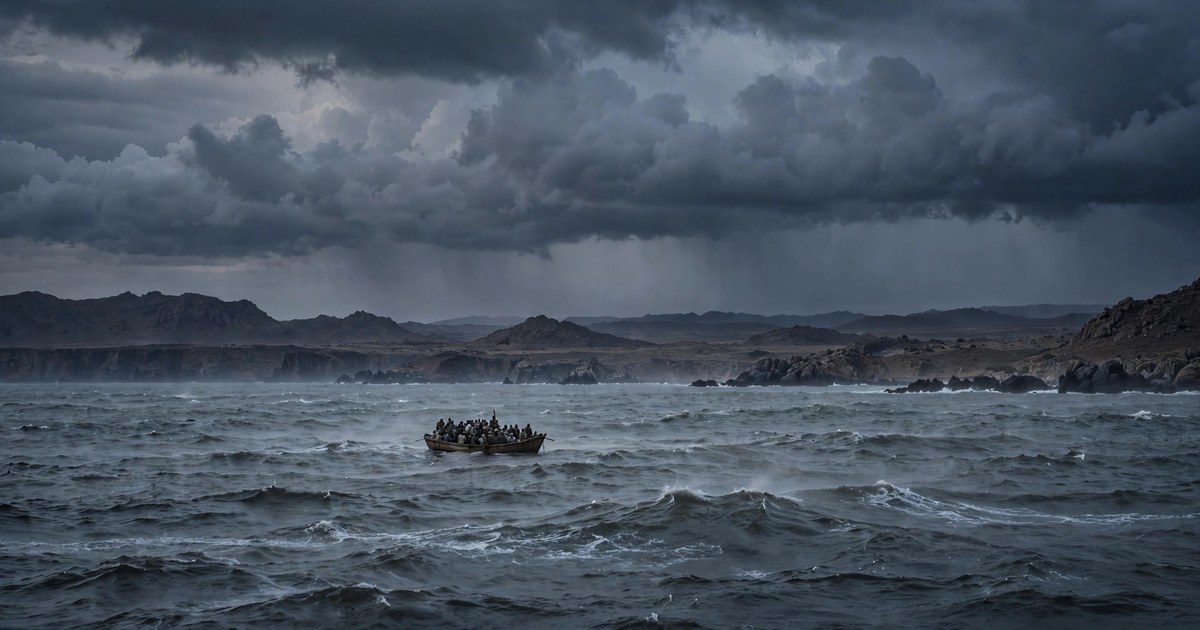
At least 139 migrants are dead and 84 more are missing after an overcrowded boat capsized off the coast of Djibouti — one of the deadliest shipwrecks ever recorded on the treacherous migration corridor between the Horn of Africa and Yemen, according to the United Nations. The disaster, confirmed by the UN's International Organization for Migration (IOM) on Sunday, has drawn international attention to one of the world's busiest and most dangerous sea routes, even as it remains overshadowed by the region's wars.
What happened off the Djibouti coast
The boat was carrying 305 people when it went down near Guehere, a coastal area north of the fishing town of Obock in northern Djibouti, during the night of October 8–9. It was travelling from Djibouti towards Yemen, survivors told the IOM. The vessel was a small wooden boat of the kind routinely packed far beyond capacity by smugglers who run the crossing across the Bab el-Mandeb Strait.
Only about 82 people survived the sinking, the IOM said, and all of them were Ethiopian nationals. Around 64 survivors are being assisted at the IOM's Migrant Response Centre in Obock, where the agency is providing emergency healthcare, psychosocial support, food, shelter and protection services. Djiboutian authorities are continuing search and recovery operations along the coast and are arranging burials for the dead, while local authorities also provide medical care to the survivors.
The death toll climbed over the weekend as recovery teams combed the waters and shoreline. An earlier IOM statement reported 109 dead — including at least 15 children — and 116 missing. After 30 more bodies were recovered, the confirmed toll rose to 139, with 84 still unaccounted for. Among the bodies identified were 52 men, 42 women and 15 children, including nine girls and six boys.
Photographs shared by the UN agency showed worn-out sandals and sneakers washed up on the shore — a quiet reminder of the people who never made it. Some of those who died had previously attempted the crossing and been turned back, only to try again, according to the agency.
The Eastern Route: one of the world's deadliest sea corridors
The Djibouti-to-Yemen crossing sits at the heart of what migration agencies call the Eastern Route — the sea corridor linking the Horn of Africa to the Arabian Peninsula via the Bab el-Mandeb Strait. Tens of thousands of people, mainly from Ethiopia and Somalia, attempt the journey each year despite the well-known risks: overcrowded and unseaworthy vessels, rough seas, and exploitation by smugglers.
The numbers tell a grim story. In 2025 alone, more than 900 migrants died or went missing along this route, according to the IOM's Missing Migrants Project, even as the number of people attempting the journey rose by 18 percent. Fatalities on the route hit a record 922 in 2025, and at least 94 deaths or disappearances were already recorded in the early months of 2026 — including another shipwreck off the same coast in March 2026 that left nine people dead and 45 missing.
The flow of people is accelerating, not slowing. The IOM's Displacement Tracking Matrix has recorded more than 20,000 incoming migrant movements from Ethiopia into Djibouti since September 10 alone. Djibouti is the starting point of the so-called eastern migration route: after the dangerous journey through the desert, most migrants wait in Obock for smugglers to organize places for them on fishing boats.
Why they risk the crossing
Most of those boarding the boats are young Ethiopians and Somalis heading for Yemen with the ultimate hope of reaching wealthier Gulf nations — principally Saudi Arabia, the United Arab Emirates and Oman — where they hope to find work and stability. "Poverty, insecurity and the growing impacts of climate change drive many to undertake this journey, despite mounting instability across the Middle East," the IOM said.
Ethiopia, the origin of the majority of the migrants, has been rocked by renewed fighting, with the biggest escalation of violence since the 2020–2022 Tigray war breaking out in recent months. That renewed conflict has added to the long-standing push factors of poverty and drought, swelling the numbers heading for the Red Sea coast.
"No one gets into a boat like that unless they believe there is no other safe way," said IOM Director General Amy Pope, calling on governments and donors to act. "We cannot keep treating these deaths as normal. Safe and legal pathways save lives. I am asking governments and donors to act before the next boat goes down."
Crossing toward a war zone
Perhaps the cruelest irony of the Eastern Route is the destination itself. Yemen — the country these migrants are desperately trying to reach — is itself in the throes of what the UN has long called the world's worst humanitarian crisis, and is currently experiencing the most serious escalation in fighting between Saudi Arabia-backed government forces and the Iran-backed Houthis since a UN-brokered truce in 2022. Saudi Arabia has retaliated against the Houthis with strikes of its own, and the Houthis have warned airlines away from Saudi airports after deadly attacks on Riyadh — a sign of how volatile the destination has become.
Yet the violence has not deterred the flow. "Despite the violence in Yemen, migrants are still making the perilous journeys hoping to make it to the Gulf countries," the IOM said. And surviving the sea crossing offers no guarantee of safety: migrants who reach Yemen face risks of violence, arbitrary arrest and detention, exploitation and human trafficking. Displacement is even flowing in the opposite direction — the UN refugee agency noted that the conflict in Yemen has displaced more than 130,000 people across the country, with thousands of Yemenis themselves fleeing to Djibouti to escape the civil war.
That two-way flow across the same strait — migrants heading toward a war zone while war refugees flee the other way — captures the desperation on both shores of the Bab el-Mandeb.
What happens next
Djiboutian authorities continue search and rescue operations as fears grow for the 84 still missing, and the death toll may still rise. The IOM is providing emergency assistance to survivors at its Obock centre and working alongside local authorities on recovery and dignified burials.
Humanitarian agencies have renewed calls for expanded search-and-rescue capacity, improved protection for migrants in transit countries, and the creation of safer, legal migration pathways. The IOM has urged international donors and partners to urgently bolster support for Djibouti's search and rescue response, warning that expanding needs are outstripping limited funding.
The shipwreck is already trending per news coverage worldwide, with Reuters, AFP, Sky News and other major outlets reporting the rising toll. It ranks among the deadliest incidents on the Eastern Route and has reignited debate over Gulf states' migrant labour policies and the responsibilities of destination countries. Whether the tragedy translates into the safe, legal pathways the IOM is demanding — or becomes another statistic on one of the world's deadliest sea routes — will depend on the response in the weeks ahead.
Violence linked to migration is rising elsewhere on the continent too: a foreign national was beaten to death by a mob during an anti-migrant march in Durban, South Africa.