
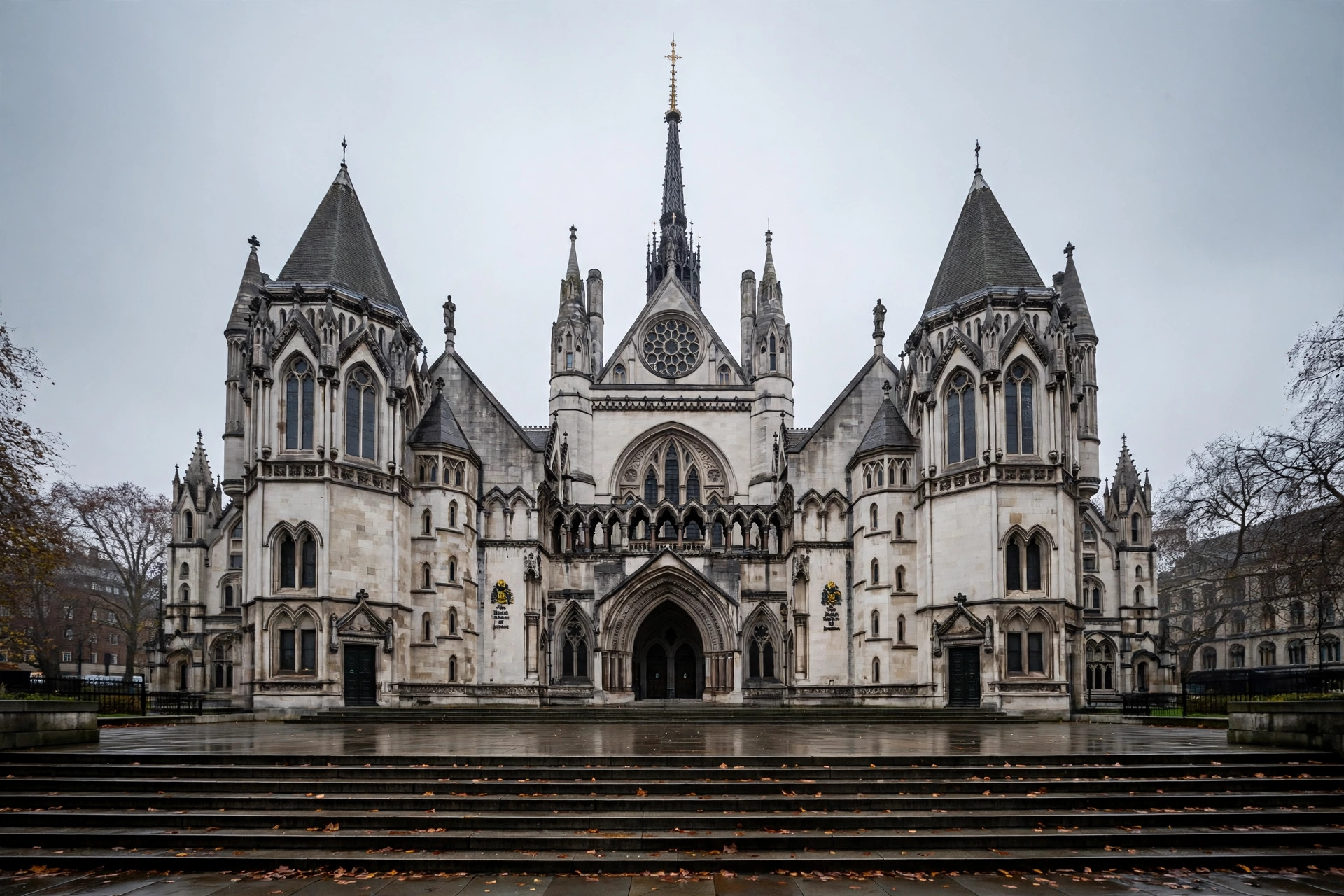
On Thursday 5 November 2026, at 10:30 in the morning, a courtroom in London became the latest stop in a sixty-year story. The Chagos High Court hearing took place in Court 69 of the Royal Courts of Justice, where Chagossian claimants asked a judge for permission to continue their legal challenge to the British government's handling of the proposed transfer of the Chagos Islands to Mauritius. The claimants are Louis Michel Mandarin and his son Louis Misley Mandarin, both British citizens, one born in Chagos and one born in Mauritius after the islanders were displaced. A linked claim was brought by Bertrice Pompe. The hearing decided only one thing: whether the challenge can proceed to a full judicial review. It did not decide who owns the islands, and it did not decide whether the treaty is lawful. At the time of publication, the outcome of the 5 November hearing had not been reported, and no ruling should be assumed.
What the Chagos High Court Hearing Was Asked to Decide
Judicial review in England is a two-stage process, and the 5 November hearing sat at the first stage. The claimants needed the court's permission to bring their challenge at all. A judge had previously refused permission on the papers, which means the case was turned down without an oral hearing. The claimants appealed that refusal, and the appeal court ordered a fresh hearing, which is what took place on 5 November. Permission hearings ask a narrow question: is the claim arguable enough to deserve a full hearing? They do not weigh the final merits, and they do not hand down a verdict on the underlying decision.
That narrow scope is easy to lose sight of, because the stakes behind it are large. The challenge concerns the government's decision-making over the proposed transfer of the Chagos archipelago to Mauritius, including the leaseback of Diego Garcia, the island that hosts a joint British-American military base. If permission is granted, the case moves to a full judicial review, where a judge examines whether the government acted lawfully in reaching its decisions. If permission is refused again, the challenge ends at this stage. Either way, the hearing itself settled nothing about sovereignty. Readers following the case should watch for the permission decision first, and treat any claim about a final ruling as premature until a court has actually given one. How the court system works explains the difference between a permission hearing and a full trial, and why the two stages exist.
The Chagos High Court Hearing in Context: A Treaty Signed but Not in Force
The Chagos High Court hearing turns on a treaty that is signed but not in force: the Agreement concerning the Chagos Archipelago including Diego Garcia, signed on 22 May 2025 by the British prime minister, Keir Starmer, and the Mauritian prime minister, Navin Ramgoolam. Under its terms, Britain accepts that Mauritius is sovereign over the archipelago, including Diego Garcia, and Britain then leases Diego Garcia back for 99 years so the joint British-American base can continue operating. The signature, however, did not bring the treaty into force. As of November 2026 it is still not in force. The implementing bill passed the House of Commons, but ratification has been paused, and the agreement cannot take effect until that process completes.
The pause has a specific cause. In February 2026, President Donald Trump opposed the deal, and the current British government under Prime Minister Burnham has said it could not obtain American consent for the existing arrangements. London and Port Louis are now discussing how to recast those arrangements, and Burnham and Ramgoolam have agreed to work on a shared plan by the end of the year. Mauritius has not waited quietly. Ramgoolam warned last month that Mauritius was prepared to take the legal route unless the deadlock was resolved, a warning that adds pressure from the other side of the negotiation. The result is a treaty that exists on paper, signed by two prime ministers, yet unable to move forward while the two governments and Washington disagree over its terms. The Burnham government has faced other difficult inheritances, but few carry the legal and diplomatic weight of this one.
The Money Question: What the Transfer Would Cost
The cost question is one reason the Chagos High Court hearing draws attention beyond the courtroom. Money has become one of the sharpest points of argument around the deal, and the figures quoted in public vary widely. The most authoritative estimate comes from the House of Commons Library, which put the total at about 3.4 billion pounds in payments to Mauritius over the initial 99-year period, measured in 2025-26 prices. The treaty's payment structure explains how that total is built. Britain would pay 165 million pounds a year for the first three years, then 120 million pounds a year, indexed to inflation, from year 14 onwards. On top of that come a 40 million pound trust fund for Chagossians and 45 million pounds a year for 25 years towards development in Mauritius.
Critics of the deal cite far larger figures, with some putting the lifetime cost at up to 35 billion pounds. That figure is a critics' estimate, not an official one, and it rests on different assumptions about inflation, indexing and the length of the arrangement. The gap between 3.4 billion and 35 billion pounds shows how much turns on the assumptions behind a headline number. The Commons Library figure is the one tied to the treaty's own terms and to a stated price base, which is why it is the figure this article uses. What the payments buy, on the British side, is continued use of Diego Garcia for 99 years. What they cost, on the Mauritian side, is a settlement that Port Louis has sought for decades. Whether the price is fair is a political argument. How much the treaty actually commits Britain to pay is a matter of reading its terms, and the terms point to the Commons Library figure.
A Sixty-Year Exile: How the Chagossians Got Here
The Chagos High Court hearing sits on top of a human history that began in the 1960s and 1970s, when the Chagossian people were forcibly removed from their islands so that the military base on Diego Garcia could be built. Families were moved to Mauritius and the Seychelles, and many have lived in exile ever since, with later generations born far from the islands their parents and grandparents called home. The removal has been challenged in courts and in international forums for decades. In 2019, the International Court of Justice gave an advisory opinion that Britain must end its administration of the Chagos archipelago as rapidly as possible, a ruling that strengthened Mauritius's claim and added moral and legal weight to the islanders' cause.
The treaty itself nearly ran into the courts on the day it was signed. In the early hours of 22 May 2025, at 2:25 am, Mr Justice Goose granted interim relief that temporarily blocked the signing. By around noon the same day, Chamberlain J had discharged that order, and the treaty was signed shortly afterwards. The episode showed how close the courts have already come to deciding the fate of the agreement, and it set the pattern for the November 2026 hearing: a legal challenge moving in parallel with a political negotiation, each capable of changing the other's course. There is a further strand to the story. Professor Dapo Akande, who argued against Britain at the International Court of Justice in 2018, was elected as the British judge at that court on 3 November 2026, for a nine-year term starting in 2027. His election does not affect the London hearing, but it places a lawyer who knows the Chagos case from the inside at the heart of the court that ruled on it. Mauritius itself is far more than this dispute, and its economy runs on finance, technology and tourism as well as the diplomacy that fills its headlines.
What Happens Next
Three paths now sit open after the Chagos High Court hearing, and the first depends on a decision that has not yet been reported. If the High Court grants permission, the challenge proceeds to a full judicial review, where the government's decision-making over the transfer will be examined in detail. That process would take months and could, in theory, still stop the treaty. If permission is refused, the claimants' challenge ends, though further appeal routes may exist. Either way, the treaty itself remains unsigned into force, paused while Britain, Mauritius and the United States work on a shared plan that Burnham and Ramgoolam have promised by the end of the year.
The campaign behind the case also deserves a plain statement. Great British PAC, the campaign group supporting the proceedings, has contributed more than 50,000 pounds to the case, according to its own account. That funding does not decide the legal questions, but it explains how a permission hearing brought by two islanders reached the Royal Courts of Justice at all. For the Chagossians themselves, the hearing is one more chapter in an exile that has lasted longer than most of them have been alive. The court will decide whether their challenge can be heard. The treaty will decide, if it ever comes into force, whether they can go home. Neither question has an answer yet.