
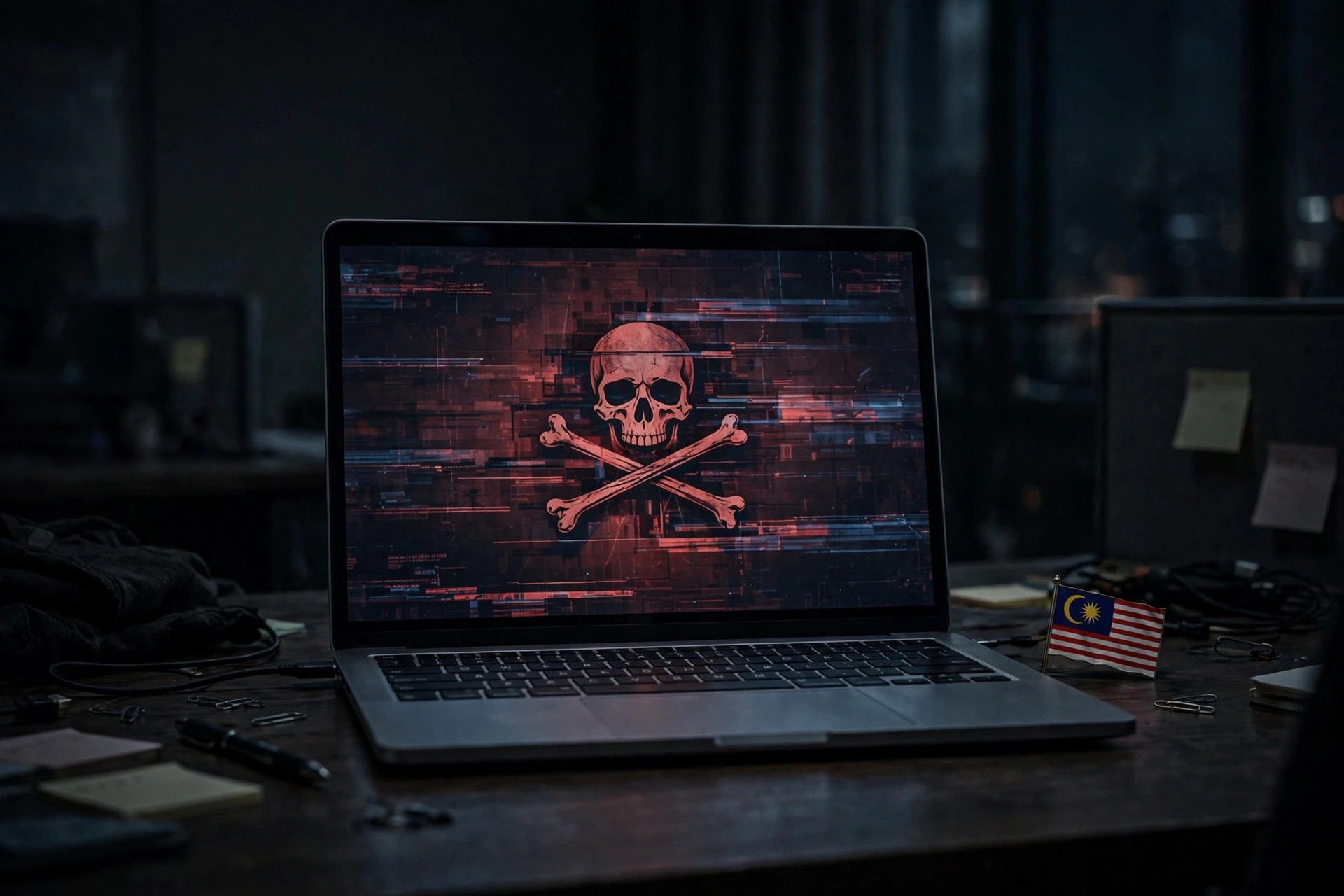
Late on Friday 6 November 2026, visitors to Bank Rakyat's corporate website found a message they were never meant to see. The Bank Rakyat website hacked pages displayed the words "MARLANWG IS HERE" on bankrakyat.com.my and on the bank's iRakyat online banking pages, and the bank took the sites down. Within a day, Malaysia's prime minister had ordered a cybersecurity review across the country's critical infrastructure, turning a defaced website into a national security question.
The incident is a useful case study in how a single hacked website can raise questions far beyond the website itself. The bank says customer money and personal data were untouched. A government minister says the attack was limited to web defacement. Yet the prime minister still ordered the National Security Council to review cybersecurity across government assets, banks, and government-linked companies. Understanding why those three statements can all sit together means looking closely at what actually happened, what the bank and the minister each said, and what remains unverified.
Bank Rakyat website hacked: what visitors saw on 6 November
The Bank Rakyat website hacked incident began late on Friday 6 November 2026. The corporate website, bankrakyat.com.my, and the iRakyat online banking pages displayed the message "MARLANWG IS HERE". The message was the visible sign of a defacement, the term used when an attacker replaces the normal content of a website with their own message. Visitors who tried to use the site saw the attacker's words instead of the bank's pages.
The bank issued an advisory at about 11:30 pm on 6 November saying its corporate website was temporarily inaccessible, and it took the sites down. Taking a defaced site down is standard practice: it stops more people seeing the attacker's message, and it gives the bank's technical teams room to work out what happened without the compromised pages still serving visitors.
The name in the message, "MARLANWG", is the name of the threat actor claiming the attack. No forensics have been published, and the identity of "MARLANWG" is unverified. That gap matters: a defacement message proves that someone changed what the website displayed, but on its own it does not prove who that person is, how they got in, or what else they may have reached.
As of 8 November, the defaced page was still serving the attacker's message, according to a check by the site hejes.my. That means that two days after the incident began, the compromised page had not been fully restored, even though the bank had taken the sites down.
What the bank said: a third-party technical issue
In a Facebook statement on Saturday 7 November, the bank attributed the disruption to "a technical issue with a third-party service provider" and said customer deposits, personal data, and banking services were unaffected. The bank said its banking systems continued normally.
The bank's statement did not explicitly confirm a cyberattack and did not mention the reported defacement, according to technology coverage of the incident. That wording is the first of two accounts of what happened, and it differs in emphasis from the minister's account. The bank described a technical fault at a supplier. The minister described a hack. Both accounts agree on the practical point that matters most to customers: deposits, personal data, and banking services were unaffected, and banking systems continued normally.
Third-party providers are a common weak point in website security, and the Bank Rakyat case shows why. A bank's corporate website is often built or hosted by an outside supplier rather than by the bank's own engineers. If that supplier's systems are breached, the bank's website can be defaced even though the bank's own core systems were never touched. That distinction is central to this incident, and it is why the minister's description and the bank's description can both be partly true at the same time: the website was hacked, and the fault lay with a third-party service provider.
What the minister said: hacked, but limited to defacement
Communications Minister Fahmi Fadzil, speaking in Doha on 7 November, said Bank Rakyat had reported its third-party-managed website was hacked, but the incident was limited to web defacement. He said there was no data theft and no disruption to online banking.
Fahmi's account is the second version of events, and it is the one that uses the word "hacked" directly. The distinction he drew is important: the website that was defaced was managed by a third party, while the online banking systems, which he said had not been disrupted, are a separate matter.
The two accounts differ in emphasis, and this article presents both rather than choosing one. The bank called it a technical issue with a third-party service provider. The minister called it a hack limited to web defacement. What they agree on is the scope: no data theft, no disruption to online banking, and no effect on deposits, personal data, or banking services. What neither account settles is the technical detail of how the attacker got in, and no forensics have been published that would settle it.
Claims that the attacker had internal access to the bank's systems remain unverified, as does any suggestion that the incident reached beyond the website. Until forensics are published, the only confirmed facts are the defacement itself, the bank's statement, and the minister's statement. Everything beyond that is a claim, not a confirmed fact.
Bank Rakyat website hacked: the review ordered after the incident
Prime Minister Anwar Ibrahim ordered the National Security Council to review cybersecurity across critical infrastructure, covering government assets, banks, and government-linked companies. The order was discussed at the Cabinet meeting on 6 November, and the National Cyber Security Agency is involved in the review. The speed of the order, coming on the same day the defacement was discovered, shows how seriously the government treated the incident, even though the bank and the minister both said core banking was unaffected.
A review of this kind looks at more than one website. Critical infrastructure means the systems a country depends on to function: government networks, banks, and the companies the government owns or controls. A defacement of one bank's corporate website does not threaten those systems directly, but it raises a question the government cannot ignore: if a third-party supplier can be used to deface a bank's website, what else might a supplier's access reach? The review is the government's way of asking that question across the whole sector rather than only at Bank Rakyat.
The National Security Council has also pushed back against speculation that the incident was part of a wider wave of attacks. The council dismissed social-media claims of a "cyberattack wave", based on a FortiGuard map showing 1.8 million attacks, as a hoax. The national cyber threat level stays moderate, according to the council.
That dismissal matters. Treating the defacement as part of a coordinated wave of attacks would overstate what happened, just as treating it as a core-banking breach would overstate it. The official position is narrower: one defaced website, a third-party supplier, no data theft, and a threat level that remains moderate.
Why the bank's earlier fine matters
The incident lands in an awkward context for Bank Rakyat. Bank Negara Malaysia fined the bank RM1 million earlier in 2026 for failing to meet cybersecurity requirements. A bank that has already been fined for cybersecurity failures will face harder questions when its website is defaced, even if the defacement itself was limited to a third-party-managed site.
The fine does not prove that the November incident was caused by the same failures that led to the earlier penalty. The two events are separate, and no forensics have been published linking them. But the fine is part of the record, and it explains why the bank's statement was read closely and why the minister's reassurance was needed. A bank with a clean record can call an incident a technical fault and be believed quickly. A bank that was fined RM1 million for cybersecurity failures earlier in the year has to work harder to show that this time, too, customer money and data were safe.
The wider pattern is familiar from other cyber incidents in 2026. Attackers have repeatedly found their way in through suppliers and connected systems rather than through the front door of the organisation they target. France blamed Iran for a cyberattack on supermarket fridge systems, as reported in France's accusation over the supermarket fridge cyberattack, and a cold-chain attack hit supermarket freezers, described in the cold-chain cyberattack on supermarket freezers. In the financial sector, the Credit Mutuel Arkea cyberattack showed how costly a bank breach can become.
What to watch next
Three questions will decide how this story ends. The first is technical: what will the bank's review, and the National Security Council's wider review, find about how the attacker got in, and will any of those findings be published? Without published forensics, the public record will remain what it is now: a defacement message, a bank statement about a third-party technical issue, and a minister's statement that the site was hacked but the damage was limited to defacement.
The second question is about restoration. As of 8 November the defaced page was still serving the attacker's message, according to the hejes.my check. How quickly the corporate website returns, and whether the bank explains what changed to prevent a repeat, will say more about the incident than the first statements did.
The third question is about the wider review. Prime Minister Anwar Ibrahim's order covers government assets, banks, and government-linked companies, and the National Cyber Security Agency is involved. If that review leads to new requirements for third-party suppliers, it could change how Malaysian banks manage the companies that build and host their websites. That would be a concrete result from an incident that, on the bank's own account, never touched customer money or data. For now, the confirmed facts are narrow: a website was defaced, the bank and the minister say banking was unaffected, the government has ordered a review, and the threat level remains moderate. What the review finds, and whether the public ever sees the forensics, is still to come.