
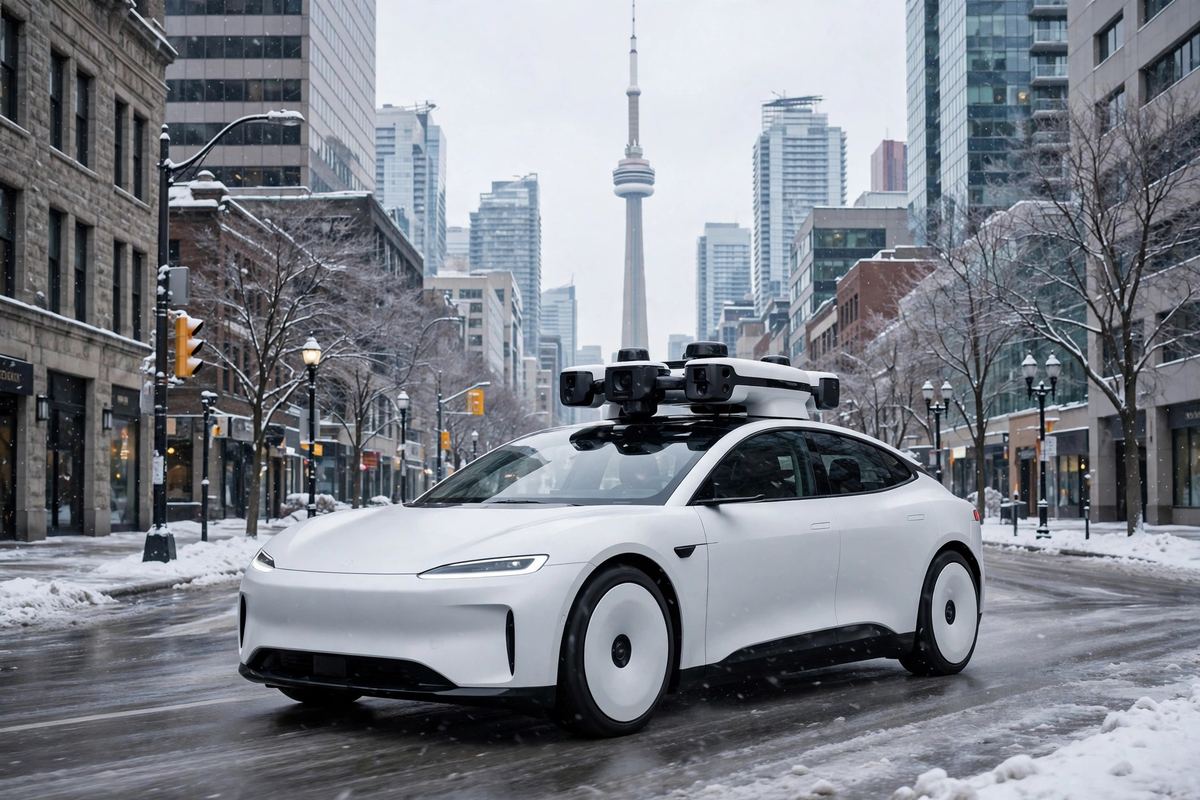
Self-driving cars are about to get a Canadian postal code. Waymo, Alphabet's autonomous driving unit, announced on October 16, 2026 that it plans to bring its driverless ride-hailing service to Toronto in 2028 — marking its first planned deployment in Canada and the most winter-battered proving ground the company has ever attempted. After years of concentrating its robotaxi expansion on the sunbelt of the United States, Waymo is heading north, and the choice of city is anything but accidental.
The announcement has drawn wide attention because Toronto represents something genuinely new for autonomous vehicle technology: a dense, multicultural, four-season metropolis where slush, black ice, blizzards, and construction cones are part of daily life. How the technology copes with that reality will shape not just Waymo's future, but public trust in self-driving cars across colder countries. Here is everything we know about the plan.
Background
Waymo is the autonomous driving division of Alphabet, Google's parent company, and it is widely considered the most advanced player in the race to commercialize driverless technology. The company has spent well over a decade developing a system that combines lidar, cameras, radar, and sophisticated software to navigate city streets without a human driver behind the wheel. Unlike many competitors that have remained in testing or abandoned consumer robotaxis altogether, Waymo crossed the threshold into real commercial operation: according to news coverage, it now runs paid ride-hailing services in 15 US cities. Its expansion push began in Austin in March 2025 and continued through Atlanta, and the company is also testing in London and Tokyo — but Canada has remained off the map until now.
To understand what a robotaxi actually is, it helps to grasp the basics of what artificial intelligence is and how AI learns from the driving data it collects. A Waymo vehicle builds a detailed three-dimensional understanding of its environment in real time, predicting what pedestrians, cyclists, and other drivers are likely to do and choosing its path many times per second. The software is trained on millions of miles of real driving plus vast amounts of simulated scenarios, including edge cases — a cyclist darting from behind a bus, a sudden lane closure, a traffic light obscured by snow — that human drivers handle by instinct. The Toronto deployment will be the sternest test yet of whether that learning holds up in genuinely harsh winter conditions.
The company's growth trajectory also reflects a broader shift in transportation. Just as the debate over electric vs gasoline cars has moved from theory to showroom, driverless cars are moving from lab curiosity to a visible — if still limited — part of city life. Waymo's expansion strategy has been deliberate: master one metropolitan environment, then adapt the system to the next, each with its own street geometry, traffic culture, weather, and regulations. Toronto is the newest and most demanding entry on that list.
What Happened
On October 16, 2026, Waymo publicly announced its intention to bring its autonomous ride-hailing service to Toronto, with public rides targeted for 2028. The move follows approval to join Ontario's automated vehicle pilot program, the regulatory framework that allows companies to test self-driving vehicles on public roads in the province. Participation in the pilot is the key legal step that makes the entire plan possible — without it, autonomous vehicles cannot be deployed on public streets in Ontario.
The rollout will happen in carefully staged phases, a playbook Waymo has refined across its US launches. First comes manual mapping: vehicles driven by people crisscross the city to build ultra-detailed maps of streets, curbs, lane markings, traffic signals, and construction zones — the digital scaffolding the autonomous system navigates by. Next is public-road testing with human safety operators behind the wheel, who can take over if the system encounters something it cannot handle. After that comes driverless testing — vehicles operating with no one in the driver's seat at all — and finally, public ride-hailing, where ordinary passengers can summon a robotaxi through an app.
Waymo is not coming alone. It has partnered with Element Fleet Management, a Toronto-based company, to handle fleet operations on the ground. That partnership covers the unglamorous but essential work of keeping a robotaxi network running: maintaining the vehicles, storing and charging them, cleaning them between rides, and managing depots. Waymo also says it expects the Toronto operation to create hundreds of local jobs — including fleet maintenance, validation driving (human drivers who verify that new software behaves safely in the real world), and customer service. For a city where the tech sector keeps deepening — see Canada's data centre boom as one signal of that momentum — the investment adds another heavyweight name to the local map.
Co-CEO Tekedra Mawakana described the move as "an important milestone in Waymo's global journey," a phrase that signals how the company sees Toronto: not just another pin on the map, but a strategic step toward operating in genuinely global conditions. Snow, ice, and the salt-coated streets of a Canadian winter are the headline challenge. If the system can handle February in Toronto, it can credibly handle almost any city with winter weather.
Why It Matters
The Toronto announcement matters for several reasons that go beyond one city's taxi options. The first is weather. Almost every commercial autonomous service in the world so far has operated in relatively forgiving climates — places where rain is a mild nuisance rather than an existential threat to sensors. Snow blinds cameras, coats lidar lenses, hides lane markings, and transforms road surfaces minute by minute. Black ice can make a car's best-laid trajectory plans worthless. Demonstrating safe, reliable service in Toronto winters would answer the single biggest skeptic's question about robotaxis: sure, they work in the desert — but can they work where the roads freeze?
The second is the geography of the industry itself. Waymo's expansion pattern — from Austin in March 2025 to Atlanta, with testing underway in London and Tokyo — has now crossed a national border in North America. That crossing brings new regulatory complexity: a different legal system, different federal and provincial rules, bilingual signage in parts of the country, and metric road measurements. Success in Toronto becomes a template for Ottawa, Montreal, Vancouver, and eventually other cold-climate cities worldwide.
The third reason is economic and civic. Hundreds of local jobs tied to fleet operations, vehicle maintenance, validation driving, and customer support is a meaningful commitment, and it spreads the benefits of the deployment beyond riders. Cities that host early autonomous deployments also tend to become hubs for the engineers, technicians, and suppliers that support them. For Toronto — already one of North America's largest tech centres — the Waymo announcement is another signal that the city is where next-generation transportation is being built, not just observed.
Finally, there is the question of public acceptance. Driverless cars remain one of the most polarizing technologies of the decade: some people can't wait to climb in, others wouldn't get in at any price. Toronto will offer one of the largest real-world experiments in whether everyday riders — commuters, night-shift workers, students, families — actually adopt robotaxis when they're available. The answer will influence regulators and competitors far beyond Ontario.
Key Facts
Here is the essential information at a glance. Waymo announced the plan on October 16, 2026, with public ride-hailing targeted for 2028. Toronto would be the company's first planned deployment in Canada. The deployment proceeds under Ontario's automated vehicle pilot program, which approved Waymo's participation.
The rollout unfolds in four phases: manual mapping drives first, followed by public-road testing with human safety operators, then driverless testing, and finally public rides. The fleet operations partner is Toronto-based Element Fleet Management, responsible for the day-to-day running of the vehicles. Waymo expects the operation to create hundreds of local jobs across fleet maintenance, validation driving, and customer service.
Waymo's co-CEO Tekedra Mawakana called the move "an important milestone in Waymo's global journey." According to news coverage, Waymo currently operates commercial robotaxi services in 15 US cities, having begun its latest expansion wave in Austin in March 2025 and continuing through Atlanta, with additional testing underway in London and Tokyo. Toronto is the northernmost and most wintry city on its roadmap — a deliberate choice that makes winter performance the defining challenge of the deployment.
As with every development in this space, the plan remains subject to the usual uncertainties of large-scale technology rollouts: regulatory approvals, software readiness, winter testing results, and timelines that can shift. But the public commitment — with a named city, a partner, a pilot program, and a target year — is the concrete form such announcements take.
What Happens Next
The first visible sign of the project will likely be unmistakable to Toronto residents: white vehicles with distinctive rooftop sensor pods, driven by people, methodically mapping the city's streets. That mapping phase is the foundation everything else builds on, and its progress will be the first real indicator of the timeline holding. Watch for the company's mapping cars appearing in neighborhoods across the city — and for local hiring posts for the fleet and customer-service roles Waymo says the operation will create.
After mapping comes testing with safety operators, which will put Waymo's vehicles — with a human ready to intervene — into the everyday flow of Toronto traffic: the streetcar corridors, the construction zones, the lake-effect snow squalls, the Gardiner at rush hour. How the system handles those specific environments, and how quickly the company moves from supervised testing to driverless testing, will tell the story of whether 2028 is realistic.
For the rest of the industry, Toronto becomes a new benchmark city. Competitors, regulators, insurers, and urban planners around the world will be watching the data: collision rates, disengagement frequencies, winter performance metrics, and rider adoption. If Waymo can run a safe, popular robotaxi service through a Canadian winter, the argument for deploying autonomous vehicles in cold-climate cities everywhere gets dramatically stronger.
For Torontonians, the practical question is simpler: in a couple of years, summoning a ride might mean no driver shows up at all. Whether that feels like the future arriving or a science experiment on public roads will depend on how well the technology earns their trust — one snowy street at a time. It is one of the most closely watched stories in transportation right now, trending per news coverage from Reuters and TechCrunch.
Sources: Reuters, TechCrunch — October 2026