
Japan nuclear resolution action took a familiar but still significant step on 27 October 2026, when a United Nations committee adopted a draft resolution submitted by Japan calling for efforts toward a world without nuclear weapons. The vote was 150 countries in favour, 7 against and 25 abstentions. It was the 33rd consecutive year that a resolution of this kind, submitted by Japan, had been adopted by the committee. For Japan, the only country to have suffered atomic bombings in war, at Hiroshima and Nagasaki in 1945, the annual resolution is both a diplomatic tradition and a statement of national experience. For the wider world, the vote offered a snapshot of where governments stand on nuclear disarmament at a time when progress in formal negotiations has been slow and trust between nuclear-armed states and other states remains strained.
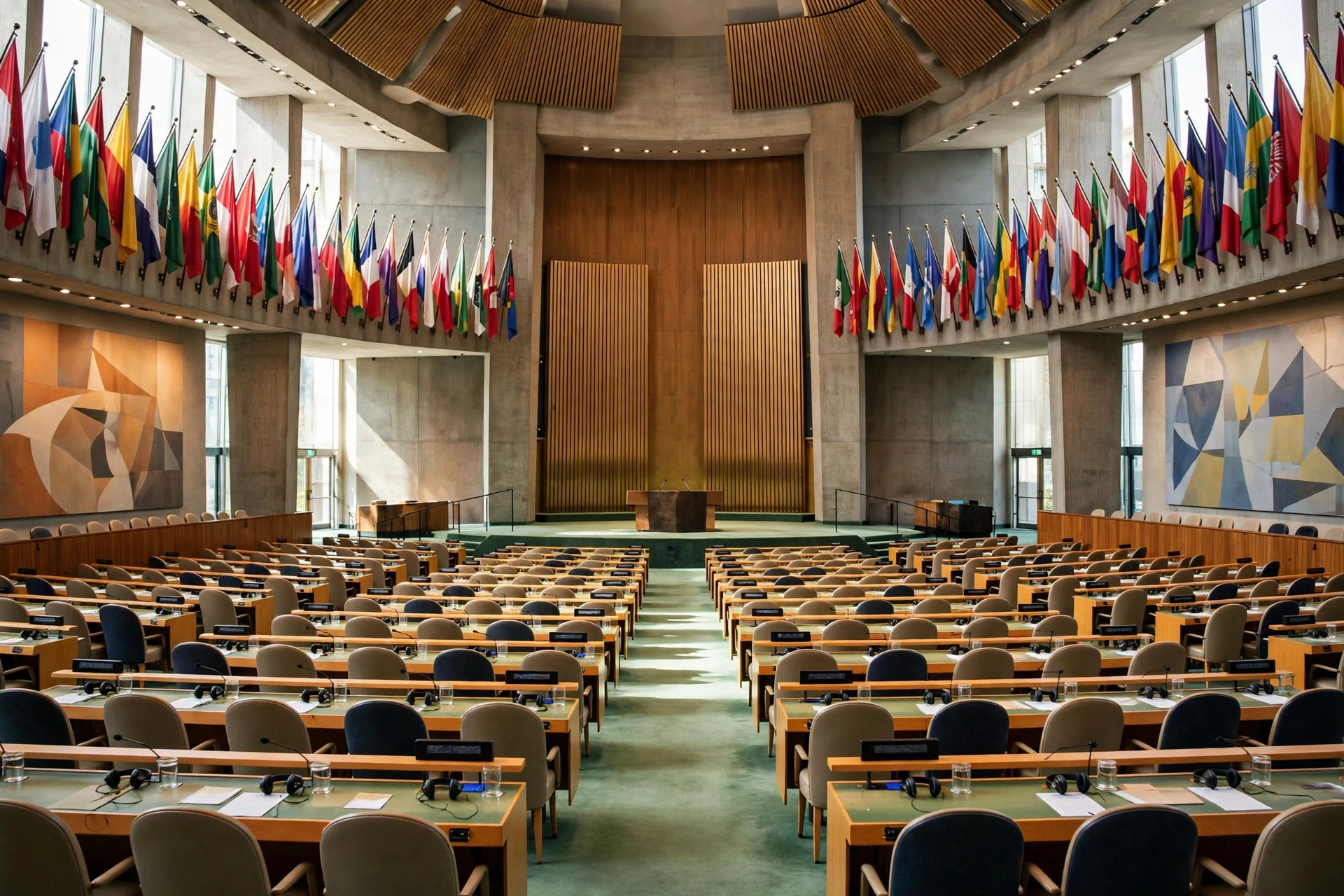
The resolution was adopted by the General Assembly First Committee, which deals with disarmament and international security. The First Committee is one of the main committees of the General Assembly. It debates draft resolutions, votes on them, and recommends them to the full General Assembly for a plenary vote. Adoption by the First Committee is therefore an important step, but it is not the final step in the annual cycle. The pattern in past years has been for the resolution to go forward to the full General Assembly, where all member states can vote. The First Committee vote is often watched closely because it shows the balance of support, opposition and abstention before the plenary stage, and because it can reveal shifts in the positions of major states.
Japan nuclear resolution: what was adopted
The draft resolution calls for efforts toward a world without nuclear weapons and expresses deep concern over the lack of progress in nuclear disarmament negotiations under the Treaty on the Non-Proliferation of Nuclear Weapons, usually called the NPT. The NPT is the central international treaty on nuclear weapons. It divides states into nuclear-weapon states and non-nuclear-weapon states, commits non-nuclear-weapon states not to acquire nuclear weapons, and commits nuclear-weapon states to pursue negotiations toward disarmament. It also supports the peaceful use of nuclear energy under safeguards. The resolution's concern about lack of progress reflects a long-standing frustration among many non-nuclear-weapon states that disarmament obligations have not been fulfilled as quickly or as fully as they believe the treaty requires.
The resolution also calls on nuclear-armed states to fulfil their disarmament obligations. That call is directed at the states that possess nuclear weapons, and it sits at the centre of the annual debate. Nuclear-armed states often argue that disarmament must take account of the security environment, that reductions must be verifiable, and that progress depends on trust and stability between major powers. Non-nuclear-weapon states often argue that the obligations in the NPT are clear, that the humanitarian consequences of nuclear weapons make delay unacceptable, and that concrete steps, timetables and transparency are needed. The Japanese resolution has traditionally tried to bridge those positions by calling for realistic and feasible steps toward disarmament, rather than by demanding immediate abolition in a single step. That bridge-building approach is part of why Japan has been able to maintain broad support for the resolution over many years.
Japan's Ambassador for Disarmament, Ichikawa, spoke in terms that reflected that approach. The gist of the position reported was that the involvement of nuclear-armed states is necessary for substantial progress, and that Japan will work toward disarmament in a realistic and feasible way. That emphasis on involvement matters. A resolution adopted without the support or engagement of nuclear-armed states can still express the views of a large majority, but it is less likely on its own to change the policies of the states that actually hold nuclear weapons. Japan's argument is that progress requires dialogue and practical steps that nuclear-armed states are willing to take part in, even when full agreement on the pace and scale of disarmament remains out of reach. The vote itself illustrated both the breadth of support and the limits of consensus, with a large majority in favour but with several nuclear-armed states opposed or abstaining.
How the vote broke down
The numbers tell a clear story. One hundred and fifty countries voted in favour, five more than last year. Seven countries voted against, including China, North Korea and Iran. Twenty-five countries abstained, including the United States and France. Only the United Kingdom among the nuclear-armed states voted in favour. Those figures should be read carefully. The resolution names no single country as its target, and the vote is not a ranking of governments. It is a record of how each delegation chose to position itself on a text that combines a general call for a world without nuclear weapons with specific language about the NPT, disarmament obligations and concern over lack of progress. Governments may vote the same way for different reasons, and may abstain for reasons that range from disagreement with particular wording to a wish to avoid taking a public position at committee stage before the plenary vote.
The increase of five votes in favour compared with last year will be noted by supporters of the resolution. A rising vote can signal growing support for the text, successful diplomacy by Japan in winning over states that previously abstained or were absent, or a changing international climate in which more governments wish to be recorded as supporting disarmament language. It does not, on its own, show that nuclear-armed states have changed their policies, because the majority in favour is made up largely of non-nuclear-weapon states. The more consequential question for disarmament is whether nuclear-armed states engage with the process and take practical steps. On that measure, the vote was mixed: one nuclear-armed state voted in favour, others voted against or abstained, and the United States abstention marked a contrast with earlier years.
The United States position deserves careful description. In earlier years, including 2020 and 2021, the United States had voted in favour of resolutions of this kind, according to records of the Ministry of Foreign Affairs of Japan. The 2026 abstention therefore marks a shift from those earlier votes. This article states that contrast as a matter of voting record, attributed to those records, without speculating about the full reasons for the change. Governments do not always explain every vote in detail, and a change in vote can reflect a change in administration, a change in the text of the resolution, a change in the wider security environment, or a combination of factors. What can be said is that the abstention places the United States alongside France among the abstaining states in this vote, and apart from the United Kingdom, which voted in favour. France's abstention and the opposition of China, North Korea and Iran show that nuclear-armed states did not take a single common position.
Diplomatic votes of this kind often take place alongside other high-level international activity, including state visits and summits where leaders discuss security, trade and cooperation in broader terms, such as the King Charles Caribbean tour to the Bahamas and Guyana for CHOGM. Elections and domestic politics can also shape how governments approach international security questions, as seen in other recent democratic contests covered in reporting on the Israel election results exit polls showing the Netanyahu bloc at 50, short of 61. Those events are separate from the disarmament vote, but they form part of the wider political environment in which governments decide how to vote and how much priority to give to disarmament diplomacy.
Japan nuclear resolution and the NPT context
The NPT context is essential to understanding why the resolution's language matters. The treaty entered into force in 1970 and has been extended indefinitely. It is widely regarded as a cornerstone of the global effort to prevent the spread of nuclear weapons. Its bargain is often described in three parts: non-proliferation, disarmament, and peaceful uses of nuclear energy. Non-nuclear-weapon states agree not to seek nuclear weapons. Nuclear-weapon states agree to pursue disarmament. All parties agree to support peaceful nuclear energy under international safeguards designed to detect diversion to weapons. When non-nuclear-weapon states say progress on disarmament has been too slow, they are arguing that one part of that bargain has not been kept in full. When nuclear-weapon states point to reductions since the Cold War and to the security conditions needed for further reductions, they are arguing that progress should be measured over decades and in the context of threats they face.
Japan's position within that debate is distinctive. As the only country to have suffered atomic bombings in war, Japan carries a moral authority on the humanitarian consequences of nuclear weapons that few other states can claim. At the same time, Japan relies on the security alliance with the United States, including extended deterrence, for its defence. That combination shapes its bridge-building role. Japan seeks to keep dialogue open with nuclear-armed states while also responding to the expectations of non-nuclear-weapon states and of survivors of the atomic bombings and their families, who have long called for abolition. The annual resolution reflects that balance. It is strong enough to express deep concern and to call for fulfilment of obligations, but it is framed in terms that have historically allowed a large majority, including at times the United States and the United Kingdom, to support it.
Japan has submitted resolutions of this kind since 1994. The 33rd consecutive year of adoption in 2026 therefore represents more than three decades of sustained diplomacy. Over that period, the international security environment has changed greatly, with new nuclear-armed states, new tensions between major powers, advances in missile and cyber technology, and renewed debate about the role of nuclear weapons in deterrence. The resolution has adapted in wording over the years, but its core call has remained consistent: work toward a world without nuclear weapons through realistic steps under the NPT framework. Supporters argue that consistency itself has value, because it keeps disarmament on the agenda even when formal negotiations stall. Critics argue that repeated resolutions without binding effect change little on the ground. Both points can be true at once, which is why the vote is best read as a political signal rather than as a legal change.
What happens next at the General Assembly
The next step in the annual cycle is a vote in the full General Assembly plenary session. The plenary vote will consider the resolution as recommended by the First Committee. In past years, the plenary vote has generally followed the committee pattern, with a large majority in favour, a small number against, and a significant number of abstentions. The exact plenary numbers may differ from the committee numbers as delegations confirm instructions from capitals, but a major reversal is unlikely unless the text is changed or the political context shifts sharply before the vote. The plenary stage also gives governments a further opportunity to explain their votes, to propose amendments, or to signal positions that will shape future negotiations.
It is important to be clear about what General Assembly resolutions do and do not do. Unlike resolutions of the Security Council adopted under Chapter VII of the United Nations Charter, General Assembly resolutions are generally not legally binding. They express the views and recommendations of member states, set political expectations, and can influence negotiations, norms and future treaties. They do not, on their own, require a state to disarm, to change its nuclear posture, or to join a treaty. Their power is political and normative rather than legal. That distinction does not make them meaningless. A resolution supported by 150 states sends a strong signal about international opinion, and it can shape the agenda for conferences, reviews and negotiations under the NPT and other forums. It can also be cited by civil society, parliaments and governments seeking to press for further steps.
For Japan, the work after the plenary vote will involve continued diplomacy with both nuclear-armed and non-nuclear-weapon states. That work includes preparations for NPT review meetings, dialogue on transparency and risk reduction, and efforts to keep channels open at times of tension. Practical steps often discussed in this context include reducing the risk of accidental or unauthorised use, improving communication between nuclear-armed states, increasing transparency about arsenals and doctrines, and taking verifiable steps to reduce numbers and roles of nuclear weapons. None of those steps is decided by the resolution alone, but the resolution provides a framework and a mandate for Japan and other supporters to pursue them. The test of the 2026 vote will therefore not be the plenary number alone, but whether it leads to engagement, dialogue and concrete measures in the months that follow, particularly involving the nuclear-armed states whose participation Ambassador Ichikawa described as necessary for substantial progress.
The Japan nuclear weapons resolution UN vote also highlights the gap between broad support and the engagement of nuclear-armed states. One hundred and fifty votes in favour show wide agreement on the goal, but substantial progress, in Japan's own framing, requires the involvement of the states that hold nuclear weapons.
When the Japan nuclear weapons resolution UN text reaches the full General Assembly, the plenary vote will test whether that broad support holds. The result will not bind states, but it will set the political context for the disarmament diplomacy that follows.
- The First Committee adopted Japan's draft resolution on 27 October 2026: 150 in favour, 7 against, 25 abstentions.
- It was the 33rd consecutive year of adoption; Japan has submitted such resolutions since 1994.
- Opponents included China, North Korea and Iran; abstentions included the United States and France; only the United Kingdom among nuclear-armed states voted in favour.
- The resolution expresses deep concern over lack of progress in disarmament negotiations under the NPT and calls on nuclear-armed states to fulfil disarmament obligations.
- The resolution next goes to a full General Assembly plenary vote; General Assembly resolutions are generally not legally binding.
The 2026 vote shows a broad international consensus in favour of working toward a world without nuclear weapons, alongside continued disagreement about pace, method and the security conditions for disarmament. Japan's resolution has survived for 33 years because it speaks to both the moral case for abolition and the practical need for engagement with the states that hold nuclear weapons. Whether the increased support in 2026 translates into practical progress will depend on the diplomacy that follows the plenary vote, and on whether nuclear-armed states choose to engage with the realistic and feasible steps Japan has proposed.
Sources: TV Asahi, Japan Ministry of Foreign Affairs, October 2026.