
How to Read the Sweden Weather Forecast
The Sweden weather forecast is best read locally, because Sweden is a long country and its weather refuses to be summarised nationally. SMHI publishes forecasts for thousands of localities, from Malmö in the south to Kiruna in the north, with hourly detail for the coming days and a ten-day outlook. Start with your exact locality, then look at temperature, wind and precipitation together, since a cold, calm, sunny day and a cold, windy, snowy day feel entirely different even at the same temperature.
Wind chill matters more in Sweden than in milder climates. A temperature of minus 5°C with a strong wind feels far colder than the same temperature on a calm day, and SMHI's feels-like temperatures capture that. Precipitation type matters too: rain, sleet and snow behave differently on roads and paths, and SMHI distinguishes them in hourly forecasts. The Sweden weather forecast becomes a practical tool once you read temperature, wind and precipitation type as a set, not as separate numbers.
SMHI Warnings: Yellow, Orange and Red
SMHI warnings follow the familiar colour scale but with Swedish specifics. A yellow warning means weather that may cause disruption locally, such as strong gusts, heavy rain or sudden ice. An orange warning means disruptive weather is expected, with a risk of damage, power outages and difficult travel. A red warning is rare and serious, signalling dangerous weather with major disruption, when authorities may advise against all travel in affected districts.
Warnings are issued by district and by phenomenon, so a red warning for snow in Norrbotten does not mean Stockholm faces the same risk. Sweden, Norway and Denmark now share a unified storm-naming approach for severe storms at orange level and above, which helps cross-border travellers follow a single storm across Scandinavia. Check the Sweden weather forecast warnings for every district on your route, especially in winter, when a snow warning in one district can close roads while neighbouring districts stay clear.
Väder Words for the Sweden Weather Forecast
A few Swedish words make local forecasts and radio bulletins far easier. Väder means weather, väderprognos means forecast, and vädervarning means weather warning. Regn is rain, snö is snow, åska is thunder, and vind is wind. Molnigt means cloudy, klart means clear, and frost means frost. Temperaturer are in Celsius, nederbörd means precipitation, and vindbyar means wind gusts, the number that matters on exposed roads and bridges.
Seasonal words help too: midnattssol is the midnight sun, polarnatt is the polar night, and ishalka means slippery ice, a common winter warning. Learning these words turns a Swedish-language Sweden weather forecast into a usable tool, even if you rely on English sources most of the time. If your trip crosses into Norway or Denmark, our guide to travelling on a budget covers flexible Scandinavian transport.
Sweden Weather Forecast by Region
Southern Sweden, including Skåne and Gothenburg, is the mildest region, with maritime influence, frequent wind and rain, and the longest growing season. Central Sweden around Stockholm and the Mälaren Valley mixes maritime and continental air, with cold, sometimes snowy winters and warm summers. The west coast faces Atlantic storms directly, while the east coast is slightly more sheltered.
Northern Sweden, Norrland, is a different world. Winters are long, dark and cold, with snow cover lasting months and temperatures far below freezing inland. Summers bring the midnight sun, mosquitoes in forested areas, and surprisingly warm days. The mountains along the Norwegian border add altitude effects: rapid weather changes, strong winds and heavy snow. A Sweden weather forecast for Kiruna and a Sweden weather forecast for Malmö describe different climates, and packing for one will not serve for the other.
Sweden Weather Forecast Through the Seasons
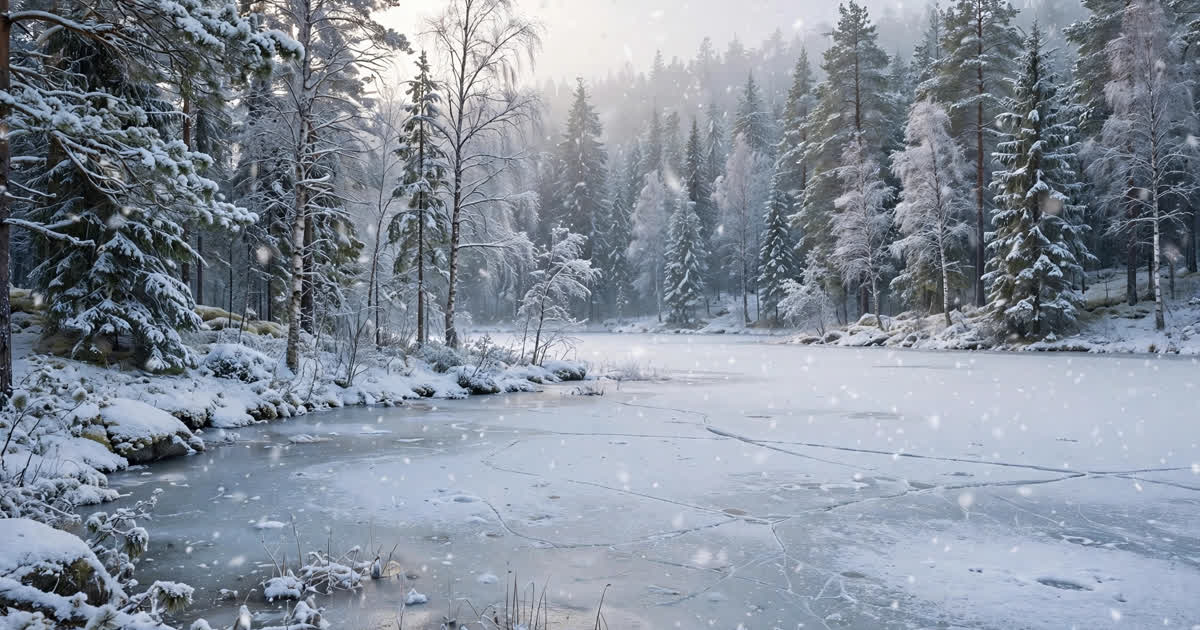
Winter in Sweden runs from November to March in the south and far longer in the north. Snow, ice and short days dominate, with the north offering northern lights on clear nights. Spring arrives gradually, with thaw, meltwater and lengthening days, but late snow and cold snaps are common into April. Summer, from June to August, brings the warmest weather, with southern temperatures often in the twenties Celsius, and the midnight sun in the far north.
Autumn is the storm season, when Atlantic lows bring wind and rain to the south and west, and the first snow returns to the north. Daylight changes dramatically through the year: Stockholm has about 18 hours of daylight at midsummer and only six in midwinter, while Kiruna swings between midnight sun and polar night. Plan activities around daylight as well as the Sweden weather forecast, since a fine but dark winter afternoon still limits what you can do outdoors. For winter trips, travel insurance explained covers weather disruption basics.
A Practical Sweden Weather Forecast Routine
A Swedish weather routine is simple and worth the two minutes. Check the SMHI forecast for your locality each morning, noting temperature, wind gusts and precipitation type. Check warnings for your district and any district you will travel through. In winter, check road conditions as well, since ice and snow affect driving more than the forecast alone suggests.
Dress in layers with a windproof outer layer, carry traction aids for icy pavements in winter, and keep a backup indoor plan for orange-warning days. Drivers should allow extra time in snow and ice, and travellers should check train and ferry operators during storms, since cancellations follow warnings quickly. Followed daily, the Sweden weather forecast stops being a surprise and becomes a quiet companion to life in a country of dramatic seasons. Over the years you will also notice how daylight shapes Swedish life as much as temperature or snow. Midsummer evenings invite late walks and lake swims, while midwinter darkness calls for candles, warm drinks and indoor gatherings. Planning around daylight, alongside the forecast, is a very Swedish skill, and visitors who learn it enjoy the country more in every season. Keep a flexible attitude, dress for the conditions, and let each season offer what it does best.