
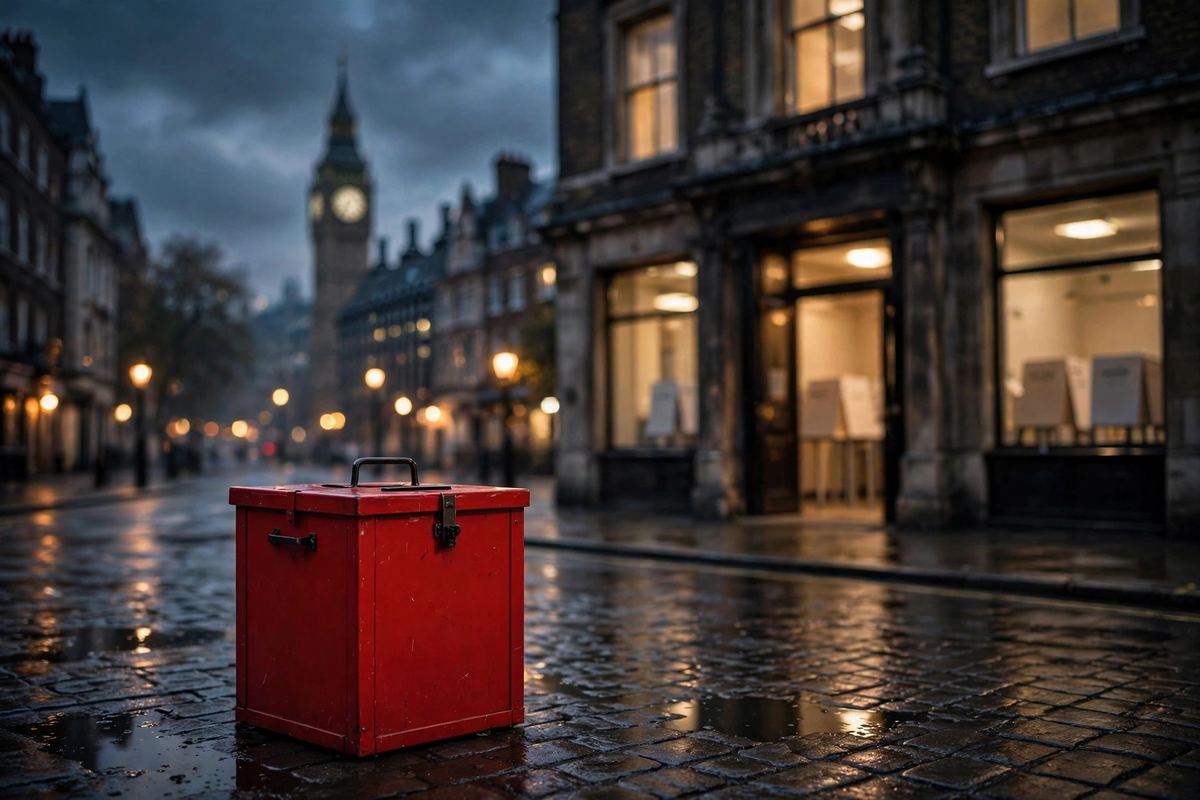
On the night of October 8-9, 2026, voters in the central London constituency of Holborn and St Pancras elected a new Member of Parliament. Labour's Sagal Abdi-Wali held the seat with 12,292 votes — 45 percent of the total — defeating Green Party leader Zack Polanski, who took 8,928 votes (33 percent). The result gives new Prime Minister Andy Burnham an early electoral win, while the Greens, who had poured everything into the contest, were left to concede before the declaration.
Background: a seat with national significance
Holborn and St Pancras is not an ordinary constituency. It was previously held by former Prime Minister Keir Starmer, who resigned the seat in September 2026, triggering the by-election. The contest was therefore read far beyond Camden's streets as an early test of the political landscape under Burnham, who took office as prime minister only in July 2026.
The short campaign began on September 1, and for weeks it was framed as a two-horse race between Labour and the Greens. The Green Party, led nationally by Polanski, has been on an upward trajectory: it counts roughly 200,000 grassroots members and made significant gains in the May local elections, with national polls showing it running close to the established parties. Winning Starmer's old seat would have been a landmark breakthrough — a fact both sides understood.
What happened: the result in numbers
The final tally, reported by Le Monde, Reuters, and other outlets covering the result on October 9:
- Labour — Sagal Abdi-Wali: 12,292 votes (45%)
- Greens — Zack Polanski: 8,928 votes (33%)
- Conservatives — Ewan Cameron: 1,922 votes
- Reform — Peter Newman: 1,612 votes
Labour's majority was 3,364. Turnout stood at 38.76 percent, with 27,211 valid votes cast (plus 108 rejected ballots) — a respectable figure for a by-election in a safe seat, and one that gave the result real credibility as a snapshot of voter sentiment.
Abdi-Wali's personal story was central to Labour's campaign. She arrived in the United Kingdom as a child refugee from Somalia in the early 1990s, has served as a Camden councillor since 2022, and in May 2026 became the first black female leader of Camden Council. She now becomes one of the most prominent new MPs in the Commons.
Why the Greens fell short
Several factors combined against the Greens in the final stretch. First, the party's own conference became a liability: a controversial motion declaring "Zionism is racism" generated damaging headlines, with former leader Caroline Lucas publicly calling the motion flawed and divisive. For a party trying to project broad appeal beyond its activist base, the row was a distraction it could not afford.
Second, the Labour government benefited from a timely policy signal. Its refusal to state a position ahead of the October 8 parliamentary vote on North Sea oil and gas fields appears to have reassured climate-concerned voters who might otherwise have defected to the Greens. In a constituency where environmental issues rank high, that ambiguity may have been enough to hold the line.
Third, Polanski's early confidence — he had said the Greens "might be the underdog" but could win — set expectations that made the eventual concession sting more. Reports indicate the Greens conceded the race before the formal declaration, a sign their internal numbers had told the story well before the returning officer did.
Why it matters
For Burnham, the result is breathing room. A loss in Starmer's old seat would have triggered immediate questions about his leadership only three months into his premiership. Instead, Labour can point to a comfortable hold in a high-profile contest. The 3,364-vote majority is not enormous, but in a four-way race with a credible challenger, it counts as a solid win. For background on how by-elections fit into the wider system, see our guide on how voting and elections work.
For the Greens, the result is more complicated. Falling short does not erase the party's 200,000-member base or its local-election gains, but it does show the limits of momentum in a first-past-the-post by-election. The 33 percent share is a strong second place by Green standards — yet the conference controversy has exposed fault lines that rival parties will exploit. Understanding how democratic systems channel protest votes helps explain why breakthrough moments are so hard to convert into seats.
The result also matters for the wider European left. Green parties across the continent are watching the UK closely, and the Holborn result will be parsed as evidence about whether green politics can break through in majoritarian systems or remains structurally capped. Compare it with other recent contests we have covered, including Brazil's 2026 election runoff and Spain's snap election, for a sense of how different electoral systems produce different outcomes.
Key facts
- Winner: Sagal Abdi-Wali (Labour) — 12,292 votes, 45%.
- Runner-up: Zack Polanski (Greens) — 8,928 votes, 33%; the Greens conceded before the declaration.
- Majority: 3,364; turnout 38.76% (27,211 valid votes; 108 rejected ballots).
- Also ran: Ewan Cameron (Conservatives, 1,922), Peter Newman (Reform, 1,612).
- Vacated by: Former PM Keir Starmer's resignation in September 2026.
- Test for: New PM Andy Burnham, in office since July 2026.
- Abdi-Wali's background: Child refugee from Somalia (arrived early 1990s); Camden councillor since 2022; first black female leader of Camden Council from May 2026.
- Green headwinds: ~200,000 members and May local-election gains, but a conference row over the "Zionism is racism" motion (criticized by ex-leader Caroline Lucas as flawed and divisive).
- Policy backdrop: Labour's refusal to state a position before the Oct 8 North Sea oil and gas vote may have reassured climate voters.
What happens next
Abdi-Wali will take her seat in the House of Commons, where her maiden speech will be closely watched — her biography gives her a distinctive platform on immigration, community, and local government. For Burnham, the win buys political capital ahead of the next legislative battles; expect the government to frame it as an endorsement of its early direction.
For Polanski and the Greens, the post-mortem begins immediately. The party must decide whether its conference needs tighter message discipline and whether it can sustain its membership surge without the breakthrough headline it craved. The next electoral tests — local contests and any further by-elections — will show whether Holborn was a ceiling or a stepping stone.
And for the Conservatives and Reform, both beaten into third and fourth, the result is a reminder of how far they have to travel in metropolitan London. Watch the coming weeks for how each party recalibrates its London strategy.