
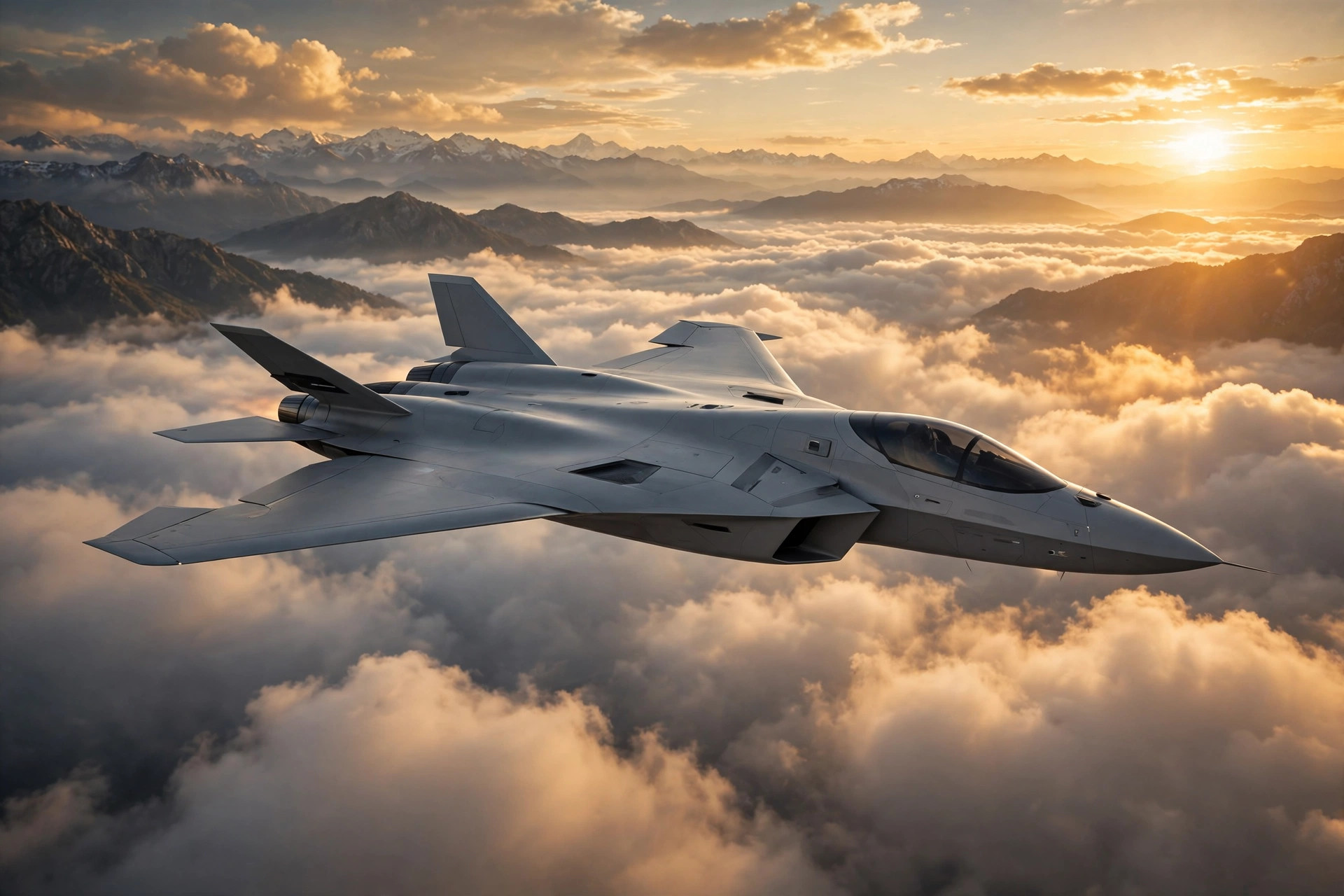
GCAP fighter jet programme discussions moved into clearer focus on 28 October 2026, when German Chancellor Friedrich Merz said in Tokyo that Germany is examining whether it could play a role in the programme. He spoke after a joint press conference with Japanese Prime Minister Sanae Takaichi, during a week-long trip through Asia that also took in Singapore and South Korea. His words did not commit Germany to joining, and he cautioned that Berlin might not meet the timetable Japan hopes for. They did, however, open a public conversation about a possible new partner for one of the most ambitious military aircraft projects now under way, and about what Germany will do after the collapse of a rival Franco-German fighter initiative earlier in 2026.
The Global Combat Air Programme, usually shortened to GCAP, is led by Japan, Italy and Britain. It aims to produce a next-generation combat aircraft due to enter service in 2035. The programme is often described as a sixth-generation fighter effort, a label that points to capabilities beyond those of current front-line jets, including advanced stealth, powerful sensors, networked operations with other aircraft and uncrewed systems, and the ability to process large amounts of information quickly. Those descriptions are general: the detailed design remains under development by the three partners. What is already clear is the scale of the ambition. A programme of this kind involves decades of design, testing, production and support, large industrial investment, and close coordination between governments and companies in each partner country.
What the GCAP fighter jet programme is
GCAP brings together three countries that each bring different strengths to a shared aircraft. Japan brings advanced technology and a strong industrial base, Britain brings experience in combat aircraft development and systems integration, and Italy brings aerospace manufacturing and programme experience. Working together spreads the very high cost of developing a new fighter and allows the partners to share technology, production work and export opportunities. It also creates difficult questions about who does what, who controls key technologies, and how decisions are made when national priorities differ. Those questions are often described as workshare discussions, and they matter as much as engineering, because each partner government must be able to show its own industry and workforce a fair return on investment.
The 2035 target for entry into service gives a sense of the timetable. Even if design work is well advanced, building, testing and certifying a new combat aircraft takes many years. Prototypes must be flown, systems must be tested in realistic conditions, and production lines must be prepared. Delays in any one area can move the whole schedule. For the existing partners, adding a new member part-way through that process would therefore require careful handling. A new partner could bring funding, industrial capacity and a larger potential market for the aircraft, which could strengthen the programme. It could also require changes to work already agreed, new negotiations over shares of production, and additional time to align requirements. That tension between the benefits of a larger partnership and the costs of reopening settled questions runs through much of the discussion about Germany.
GCAP fighter jet programme: why Germany is looking at it now
Germany's interest has a direct background. A rival Franco-German fighter initiative collapsed earlier in 2026. That collapse left Germany without a clear path in that particular partnership and with a strategic question to answer: how will it secure a next-generation combat aircraft for the decades ahead? Options include joining an existing programme, starting a new national or bilateral effort, buying an aircraft developed elsewhere, or some combination of those approaches. Each option carries different costs, industrial consequences and implications for defence cooperation with allies. Examining GCAP is therefore not a sudden change of direction, but a logical step in assessing all options after one route closed.
Merz's comments in Tokyo reflected that assessment. He said Germany is examining whether it could play a role, and he said defence ministers of Germany and Japan will meet soon to discuss the matter. That ministerial meeting will be an important next step, because defence ministers deal with the practical questions of requirements, budgets, industrial participation and timelines. At the same time, Merz cautioned that Berlin might not meet Japan's hoped-for decision timeline, with a decision sought by the start of next year. That caution matters. It signals that Germany wants time to weigh the industrial, financial and strategic consequences, and that it does not want to be rushed into a commitment before those consequences are understood. Workshare discussions among the existing partners are already advanced, which adds to the difficulty of joining late without disturbing agreements already made.
Prime Minister Takaichi did not mention GCAP specifically in the remarks reported from the joint press conference. She said Japan would promote defence industry cooperation where capabilities are mutually complementary. That formulation is broader than a single programme. It leaves room for cooperation in several areas, from joint development and production to supply chains, technology sharing and maintenance, without committing Japan to a particular arrangement on GCAP itself. It also reflects a careful diplomatic approach: welcoming closer cooperation in principle while leaving detailed programme decisions to the governments and companies directly involved. Readers should therefore not read her remarks as an invitation with fixed terms, but as an opening for further talks in which GCAP is one of the subjects on the table.
What Germany joining would still need to resolve
Several issues would need to be resolved before Germany could join GCAP in any meaningful sense. The first is workshare. If Germany joins, what share of design, production and support work would German industry receive, and what work would shift away from existing partners? The second is requirements. Would Germany accept the aircraft as currently planned, or would it seek changes to meet its own operational needs? Changes to requirements can add cost and delay, so partners are usually cautious about them. The third is governance and technology control. How would decisions be made in a four-country programme, and how would sensitive technology be shared and protected? The fourth is cost and timetable. How much would Germany contribute, over what period, and could it do so while meeting other defence spending commitments? None of these questions has a simple answer, and all of them would need to be worked through in ministerial and industrial talks.
There is also a wider political context. Earlier in October, British Prime Minister Andy Burnham said the UK was open to German participation in GCAP. That statement, reported by Reuters, indicated at least one existing partner's willingness to consider an expanded programme. Openness in principle, however, is not the same as agreement on terms. The existing partners will need to judge whether German participation strengthens the programme enough to justify the disruption of reopening workshare and governance arrangements. Germany will need to judge whether the terms on offer give its industry a substantial role and its armed forces an aircraft that meets its needs on an acceptable timetable. Both judgements will be shaped by domestic politics, industrial lobbying and budget pressures, as well as by strategic assessments of threats and alliances.
High-level visits often form the backdrop to such decisions, and leaders use them to signal priorities across a range of issues, as in other recent diplomatic travel such as the King Charles Caribbean tour to the Bahamas and Guyana for CHOGM. In Merz's case, the Asia trip was broader than a single defence programme. The visit combined defence, trade and technology themes, and it underlined Germany's interest in deeper ties with partners in the Indo-Pacific at a time when supply chains, critical materials and security cooperation are all under strain. GCAP should therefore be read as one strand of a wider effort to deepen partnerships, not as an isolated announcement.
GCAP fighter jet programme and the wider Asia visit
In Singapore, Merz pitched closer trade and security ties between Europe and Asia and warned about pressure from China, including on exports. That message reflected German and European concerns about economic dependence, coercion and the security implications of trade. In Japan, the focus shifted to deepening cooperation on defence, critical raw materials and future technologies. Critical raw materials matter for advanced manufacturing, including defence production, because modern aircraft, sensors and electronics depend on materials that are often sourced from a small number of countries. Future technologies, from artificial intelligence to advanced materials, are also central to next-generation military capability. Cooperation in these areas can support a fighter programme even if Germany does not join GCAP itself, by strengthening supply chains and industrial links between Germany and Japan.
The visit was not without tension. There was disagreement over a European Union industrial proposal favouring European-made cars, with Japan excluded. That dispute is a reminder that trade and industrial policy can complicate defence cooperation. Countries that cooperate closely on security may still compete fiercely on cars, steel, semiconductors and other goods. Managing that competition while building trust on defence is a recurring challenge for governments. It also explains why leaders use visits to address several issues at once: progress in one area can help offset friction in another, and a broad partnership is often more resilient than one based on a single project. The Asia-Pacific region has also faced severe weather challenges this season, including the Cyclone Arnab landfall with 150 kmph winds near Yanam, a reminder that regional cooperation extends beyond trade and defence to disaster response and resilience.
What happens next on GCAP and German options
The immediate next step is the planned meeting between the German and Japanese defence ministers. That meeting is expected to explore whether there is a workable basis for German participation and what form it might take. It is unlikely to produce a final decision on its own. More likely, it will set out the questions to be studied, the information to be exchanged, and the timetable for further talks. Germany will continue assessing all options in parallel, including any remaining possibilities linked to European cooperation and the option of buying or partnering elsewhere. Japan, Italy and Britain will continue their own programme work, including the advanced workshare discussions already under way, and will need to decide how much flexibility they can offer a potential new partner without slowing the programme.
For observers, the key signals to watch are concrete rather than rhetorical. A timetable for a German decision, a statement on workshare principles, any agreement on industrial participation, and clarity on whether German requirements would change the aircraft design would all indicate real progress. Vague expressions of interest, by contrast, would suggest talks are still at an early stage. The start of next year, the point by which Japan hopes for a decision, is one date to watch, but Merz's caution suggests Germany may need longer. If a decision slips, that does not necessarily mean Germany has rejected GCAP; it may mean the government is taking time to secure a deal it can defend at home. If a decision comes quickly, it will likely reflect a political judgement that the strategic and industrial case is strong enough to accept the terms on offer. Either way, the outcome will shape European and Indo-Pacific defence cooperation for decades, because the aircraft chosen now will remain in service long after the politicians who chose it have left office.
The GCAP fighter jet programme question also raises a practical point about timing. A decision taken too quickly could lock Germany into terms its industry has not fully assessed, while a decision taken too slowly could leave workshare and design choices settled without German input. The ministerial talks ahead will need to balance speed against substance.
In the end, the GCAP fighter jet programme will be judged by whether it delivers a capable aircraft on schedule and at a cost the partners can sustain. Germany's examination, the existing partners' openness to discussion, and the timetable Japan hopes for will all shape whether a four-country programme becomes reality.
- GCAP is led by Japan, Italy and Britain, with the aircraft due to enter service in 2035.
- Chancellor Merz said on 28 October 2026 in Tokyo that Germany is examining a possible role; German and Japanese defence ministers will meet soon.
- Prime Minister Takaichi spoke of defence industry cooperation where capabilities are mutually complementary, without naming GCAP specifically.
- A rival Franco-German fighter initiative collapsed earlier in 2026; UK Prime Minister Andy Burnham said earlier in October the UK was open to German participation.
- Germany may not meet Japan's hoped-for decision by the start of next year; workshare talks among existing partners are already advanced.
Germany's examination of GCAP is therefore best understood as a careful, consequential assessment rather than a commitment. It follows the collapse of one European option, it takes place during a wider effort to deepen ties with Asia, and it will be judged on industrial, financial and strategic terms that go far beyond a single press conference. The ministerial talks ahead will show whether that assessment can become a partnership, and on what terms.
Sources: Reuters, October 2026.