
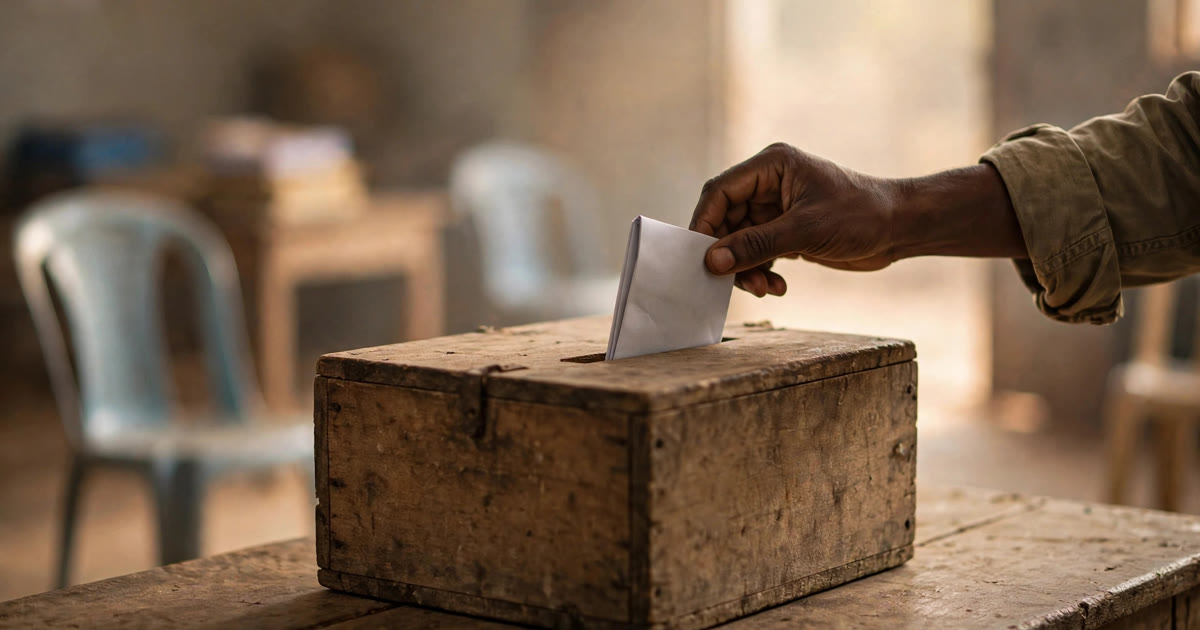
South Sudan elections postponed again — the world’s youngest nation will not vote on 22 December 2026 after all. The National Elections Commission announced on Saturday, 14 November 2026, that the country’s first general elections since independence in 2011 will now be held on Thursday, 11 February 2027, a delay of 51 days. The commission gave no reason for the change, even as it published a full revised timetable running from voter registration this month through to final results in February.
The announcement landed on the very day voter registration was due to begin, with 3,161 centres set up across the country and more than 22,000 staff hired. For a nation that has never held a general election since becoming independent on 9 July 2011, the new date is both a milestone and a test: the vote has been promised since 2022 and pushed back repeatedly, and the reasons it keeps slipping — money, readiness and politics — have not gone away.
Why Were the South Sudan Elections Postponed?
The commission itself offered no explanation. Its spokesperson, Josephine Achiro Fortelo, told Reuters the new timeline came “after a thorough consultation with the stakeholders”, and the commission’s secretary general, Ahon Malou Lueth, confirmed the change to AFP without giving further details. But the context around the decision is well documented. Days before the announcement, the UN Security Council heard warnings that South Sudan was not adequately prepared to hold elections in December, with UN and African Union officials cautioning that a rushed or badly managed vote could undermine the fragile peace and push the country back into conflict.
Money is the most concrete problem. The commission has received only $21 million of the $276 million it asked for to organise the elections, according to reporting by The Eastleigh Voice — less than a tenth of the budget, with registration already under way. Politics is the other. Former vice president Riek Machar has been under house arrest since March 2025, accused of “crimes against humanity”, and in September President Salva Kiir dissolved the transitional unity government and named a caretaker administration. The United Nations Commission on Human Rights in South Sudan warned in September and October that the country lacks the safeguards needed for a credible vote.
South Sudan Elections Postponed: The New Timetable in Full
The revised calendar, published on the commission’s official Facebook page, sets out every stage of the run-up to polling day. Voter registration runs from 14 to 28 November 2026 at 3,161 centres in the country’s 10 states and three administrative areas, with the provisional register due for publication on 29 November. Campaigning is scheduled to begin on 27 December 2026 and run for 45 days until 9 February 2027, followed by a single day of election silence on 10 February.
Polling day itself is Thursday, 11 February 2027, for both the presidential and parliamentary elections. Counting and announcing results at polling centres is set for 11 and 12 February, with tallying at state and national level to follow. The commission expects to declare the final results on 15 February and publish them on 16 February, and the calendar allows 148 days — from 17 February to 15 July 2027 — for the resolution of election disputes.
A Vote 15 Years in the Making
South Sudan gained independence from Sudan on 9 July 2011 and has never held a general election as a sovereign country. The vote was first promised for 2022, then pushed back repeatedly — to December 2026, and now to February 2027. Each delay has extended a transitional period that was supposed to end with an elected government implementing the 2018 peace agreement, a deal whose key provisions remain unfinished.
November 2026 has been a crowded month for elections elsewhere. In the United States, voters have just delivered their verdict, with Democrats winning control of Congress in the 2026 midterms — US Midterm Election Results 2026: Democrats Win Congress. South Africa’s municipal elections ended with the ANC falling to 30.76% in the final count — South Africa Election Results 2026: ANC Falls to 30.76% in Final Count — while New Zealand’s election count was still unfinished days after polling, with 399,365 votes outstanding — New Zealand Election Results November 2026: No Winner Yet as 399,365 Votes Remain. South Sudan’s voters, by contrast, are still waiting for their first chance — and the February date is now the one that has to hold.
What Happens Next — and What Could Still Go Wrong
The immediate test is registration. Centres opened on 14 November, the same day the delay was announced, and the commission has two weeks to enrol voters across a country where roads, communications and security are all patchy. The second test is money: unless a large share of the remaining $255 million arrives, the timetable’s later stages — campaigning, polling, counting — will be run on a shoestring. The third is politics. Machar’s detention and the caretaker government’s shape will both be read as signals of whether the vote is being prepared in good faith.
None of that makes another delay inevitable, and the commission’s calendar is detailed enough to suggest it intends to hold the date. But the pattern of the last four years is the reason for caution: every previous date has slipped, and this one was set on the day registration was supposed to start. What to watch now is simple — registration numbers at the end of November, whether campaigning genuinely opens on 27 December, and whether the funding gap starts to close.
Why the Delay Matters Beyond South Sudan
A first election is more than a date on a calendar. For South Sudan it would be the first time the world’s youngest nation chooses its leaders by ballot, closing a transitional chapter that has lasted a decade and a half. For the region, a credible vote would steady a country whose instability has repeatedly spilled across borders; a failed or endlessly deferred one would do the opposite. The UN’s warning — that elections held without the right safeguards could spark renewed conflict — is the reason the delay, frustrating as it is, may also be the safer course.
The February date now carries the weight of all of that. If registration runs cleanly, campaigns open on time and the money arrives, 11 February 2027 becomes the day South Sudan finally votes. If any of those pieces slips, the world’s youngest nation will be asking, again, how long a first election can wait.