
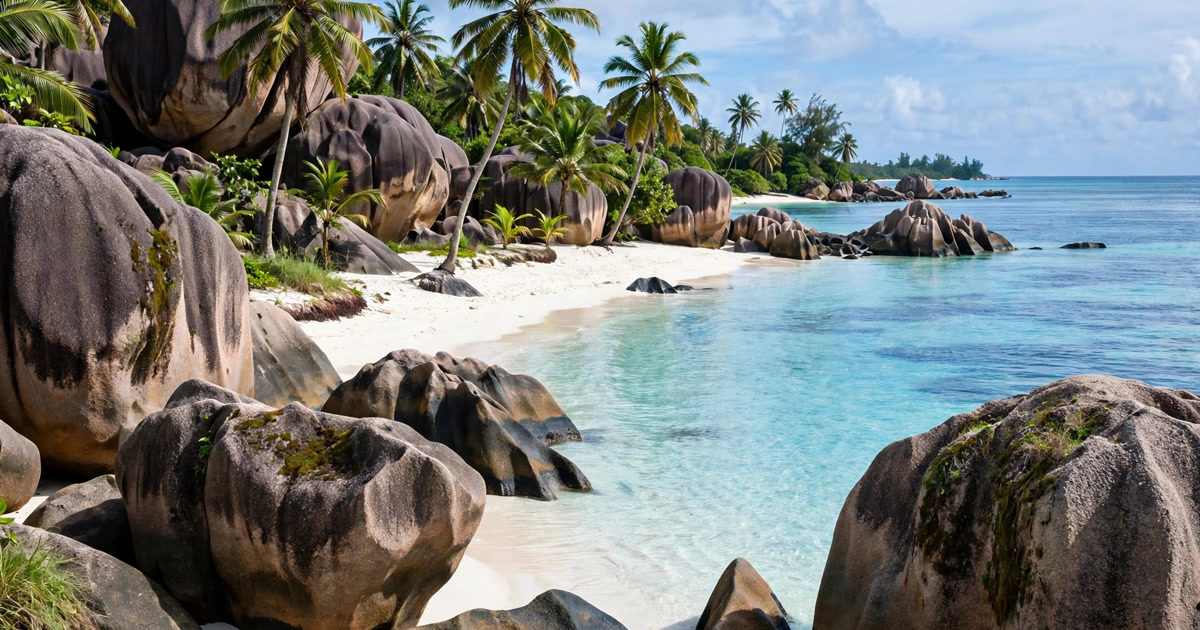
Seychelles beaches and island hopping define one of the most beautiful archipelagos in the Indian Ocean. One hundred and fifteen islands, most of them uninhabited, rise from turquoise water as granite peaks fringed with white sand, and the three main inhabited islands, Mahé, Praslin and La Digue, each offer a different rhythm. This guide explains Seychelles beaches and island hopping, the diving and snorkelling that make the islands special, and how to plan a trip that balances luxury, nature and budget.
The appeal of Seychelles beaches and island hopping lies in variety within a small area. Mahé offers mountains, markets, beaches and the capital, Victoria. Praslin offers the famous Vallée de Mai palm forest and some of the world's most photographed beaches. La Digue offers a slower, bicycle-paced island life centred on Anse Source d'Argent. Seychelles beaches and island hopping therefore reward travellers who visit more than one island instead of staying in a single resort.
Seychelles beaches: the essential guide
Seychelles beaches are famous for granite boulders, powdery sand and clear water, and each beach has its own character. Anse Source d'Argent on La Digue, with its sculpted granite rocks and shallow lagoon, is the most photographed beach in Seychelles and best visited early in the morning before crowds arrive. Anse Lazio on Praslin is a sweeping curve of white sand backed by palms and takamaka trees, ideal for swimming and relaxing, while Beau Vallon on Mahé is the liveliest beach, with water sports, restaurants and sunset views.
Other Seychelles beaches reward exploration. Anse Georgette on Praslin, reached through a resort or by boat, is secluded and beautiful. Grand Anse on Mahé is the island's longest beach but can have strong currents, so swim only where conditions are safe. Anse Cocos and Grand Anse on La Digue offer wilder, more remote beauty, reached by bicycle and footpaths. When planning Seychelles beaches and island hopping, always check currents, seasonal sea conditions and lifeguard advice, because the same beach can be calm in one season and rough in another.
Seychelles beaches are also part of a strong conservation story. Nearly half of Seychelles' land is protected, marine parks safeguard reefs, and visitors are asked to respect nesting turtles, avoid standing on coral, and take litter away. That protection is why Seychelles beaches and island hopping feel pristine: the islands have chosen sustainable, lower-volume tourism over mass development, and travellers benefit from that choice every day.
Seychelles beaches and island hopping: diving and snorkelling
Diving and snorkelling are central to Seychelles beaches and island hopping. The granite islands create reefs, drop-offs and underwater boulders that shelter turtles, rays, reef sharks and hundreds of fish species. Sainte Anne Marine National Park near Mahé, the reefs around Praslin and Curieuse, and the waters near La Digue all offer excellent snorkelling, while dive sites around Mahé, Praslin and the outer islands suit divers of all levels, including whale shark encounters in season near remote islands.
The best diving conditions for Seychelles beaches and island hopping occur during the calm inter-monsoon periods, roughly April to May and October to November, when seas are glassy and visibility is high. The south-east monsoon from May to September brings cooler, drier weather and stronger winds, favouring north-west-facing beaches, while the north-west monsoon from November to March brings warmer, more humid weather and calmer south-facing beaches. Dive operators will advise on the best sites for current conditions, and beginners can learn through resort dive centres with professional instructors.
Snorkellers do not need to dive to enjoy Seychelles beaches and island hopping. Many beaches offer reef snorkelling directly from shore, especially in calm conditions, and glass-bottom boat trips and guided snorkelling tours reach reefs further out. Use reef-safe sunscreen, never touch coral or marine life, and keep a safe distance from turtles and rays. Responsible snorkelling protects the reefs that make Seychelles beaches and island hopping so memorable.
Seychelles beaches and island hopping: ferries and island itineraries
Seychelles beaches and island hopping depend on ferries and domestic flights. Fast ferries connect Mahé with Praslin in about an hour and Praslin with La Digue in about fifteen minutes, while domestic flights connect Mahé with Praslin in about twenty minutes. Book ferries in advance in peak season, allow buffer time for connections, and note that sea conditions can affect schedules. On La Digue, bicycles are the main transport, while Mahé and Praslin offer rental cars, buses and taxis.
A balanced the islands itinerary might spend three or four nights on Mahé for beaches, markets, hiking in Morne Seychellois National Park and day trips, two or three nights on Praslin for Vallée de Mai, Anse Lazio and Anse Georgette, and two nights on La Digue for Anse Source d'Argent, bicycle exploration and slow island life. Longer trips can add Curieuse for giant tortoises, Cousin for birdlife, or a resort island for seclusion, but the three main islands already offer a complete Seychelles experience.
Practical planning for the islands includes accommodation, which ranges from guesthouses and self-catering apartments to luxury resorts, and budgeting, because Seychelles is more expensive than many tropical destinations. Booking accommodation in advance is essential, as visitors are generally required to have confirmed accommodation. Wider trip planning help is available in our guide on how to travel on a budget and our explainer on what travel insurance covers.
Seasons, culture and practical Seychelles beaches and island hopping tips
Seychelles has warm temperatures year-round, with two main monsoon seasons shaping the islands. April to May and October to November offer calm seas and are excellent for diving, sailing and island hopping, while May to September suits beach holidays on sheltered coasts and hiking, and December to February brings the warmest seas and occasional heavy rain. There is no bad month, only different conditions, so choose your season by activity rather than by a single best-time label.
Culture enriches the islands. Seychellois Creole culture blends African, European and Asian influences in music, dance, food and festivals, and Victoria's markets, temples, churches and museums offer a window into island life beyond the beaches. Try Creole dishes featuring fresh fish, rice, chutneys and tropical fruit, visit local markets, and respect island customs, including modest dress away from beaches and care for sacred and protected sites.
Finally, the islands reward a relaxed pace. The islands are small, the sea sets the rhythm, and the best experiences often come from an unplanned swim, a bicycle ride to a quiet beach, or a snorkel over a reef at the right tide. Plan your ferries, book your stays, pack reef-safe sunscreen and walking shoes, and let the islands unfold island by island.