
An exiled critic of Rwandan President Paul Kagame has been found beheaded in neighbouring Uganda, a killing that has shocked Rwandan dissidents abroad and revived long-standing fears about the safety of the country's opposition voices. The development, trending per news coverage, is being investigated by Ugandan police, who say the victim's head has still not been recovered.
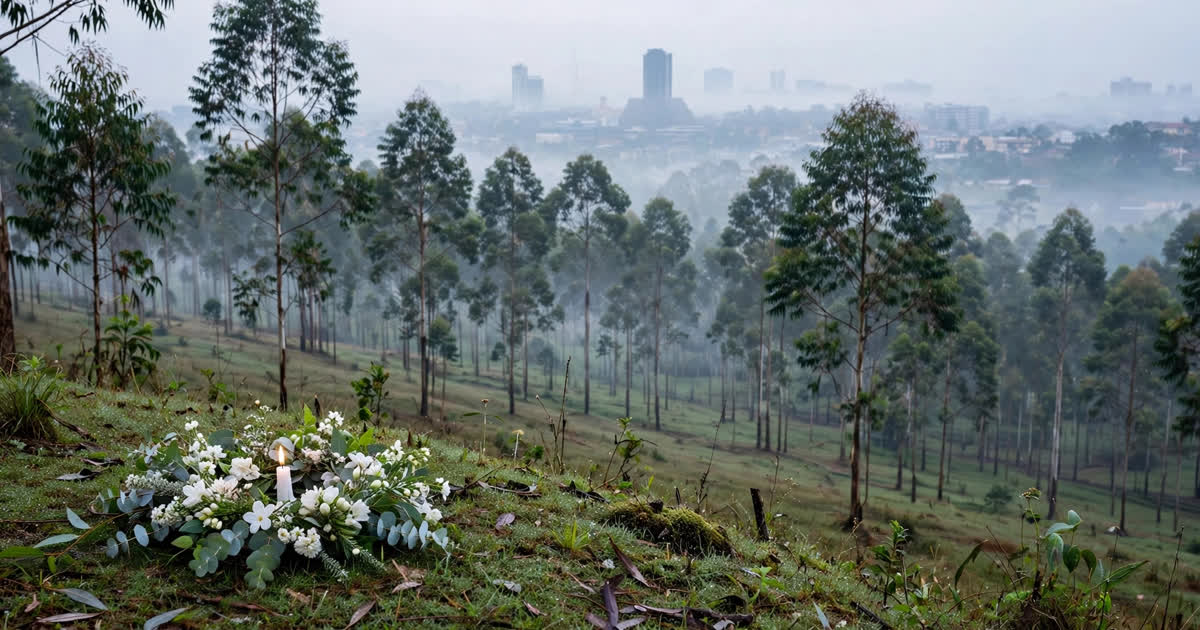
The victim was Robert Kabera, 50, a former sergeant major in the Rwanda Defence Force who fled Rwanda in late 2020 and built a large online following as a musician and YouTuber openly criticising Kagame's government. His body was discovered on the morning of Saturday, October 17, by residents in a eucalyptus plantation in Luwala village, Mpigi district, about 45 kilometres outside the Ugandan capital, Kampala. His brother identified the remains from a scar on his right hand and a pair of shoes found at the scene. Investigators believe Kabera was killed late on October 16 or in the early hours of the following morning, after travelling from Kampala to inspect a construction site.
Who was Robert Kabera?
Kabera had an unusual path to prominence. As a sergeant major in the Rwandan military he had worked as a musician and instructor with the army's Army Jazz Band. But after leaving the armed forces he became one of Kagame's most visible critics in exile. His YouTube channel, Major Robert TV, had attracted more than 144,000 subscribers and carried over 800 videos, many of them sharply critical of Kagame and his administration. He also produced music, including a song in support of Victoire Ingabire, the Rwandan opposition figure who has faced repeated imprisonment.
Kabera said he fled Rwanda in late 2020 because he feared for his life. After he left, Rwandan military authorities declared him a fugitive and accused him of corrupting a minor — charges he consistently denied and described as politically motivated. In Uganda, where he sought asylum citing political persecution, those close to him say he lived quietly. His brother Victor Agaba told the Agence France-Presse that Kabera "had no issues with anyone" in Uganda. "Our problem comes from home [Rwanda] … the army created a criminal case against him. It was a witch-hunt," Agaba said. Rwandan authorities have not publicly commented on Kabera's death or on the allegations made by his family.
What the police say
Ugandan police spokesperson Kituuma Rusoke confirmed on Monday, October 19, that Kabera's head had not been recovered and that a murder investigation was under way, but said officers had not publicly identified a suspect or established a motive. Police said relatives had grown concerned after Kabera failed to communicate with them as he normally did. No arrests have been announced.
The manner of the killing has drawn particular attention. The Rwanda National Congress (RNC), an opposition movement founded by exiled Rwandan officials, called for a full investigation. Abdulkarim Ali, an RNC official based in London, said Kabera's killing was deliberately gruesome. "The intention is to terrify any critics into abandoning their dissenting voices," he said. Police, however, have not established who killed Kabera or publicly confirmed any link between his death and his political activities, and investigators are examining all the circumstances surrounding the case.
For Kabera's family, the aftermath has brought grief and fear. His widow, Jeanne d'Arc Rwigema Uwizeye, told BBC Great Lakes in a written message that she now feared for her safety and that of their children. "It is scary. I feel crazy, the children and I don't have security," she said. Her fears are shared by other Rwandans living in exile in Uganda, where Kabera had sought refuge after leaving the country he once served as a soldier.
A grim history of dissidents targeted abroad
Kabera's killing lands against a backdrop that gives the case its international resonance. There is a long and grim history of Rwandan dissidents being attacked or killed outside the country, and Kagame's critics have accused Kigali of running one of the world's most persistent campaigns against exiled opponents.
The best-known case is that of Patrick Karegeya, a former Rwandan intelligence chief who helped found the Rwanda National Congress. Karegeya was found strangled in a hotel room in Johannesburg, South Africa, on New Year's Day 2014. South African authorities issued arrest warrants in 2019 for two Rwandan nationals accused of his murder. Other Rwandan opposition figures were killed in Mozambique and South Africa in 2021. None of those cases has led to accountability in a court that satisfied critics, and each fresh death abroad has deepened the sense of impunity around the targeting of Rwandan dissidents.
Uganda, in particular, has been an uneasy refuge. Kampala and Kigali have a volatile history — the two countries' forces clashed in the Congolese city of Kisangani in 2000, and relations have swung between tension and rapprochement for decades. For exiled Rwandans in Uganda, the question now, as the RNC put it in a statement posted on X, is chilling: "Today, his family is grieving, his voice is gone, and Rwandans in exile are confronting a terrifying question: where can we be safe?"
Why this is drawing global attention
Several things have converged to push the Kabera killing into the international headlines. First is the brutality: beheading is a method chosen, the RNC argues, for its terror value, and it echoes the treatment of dissidents in cases that became global causes. Second is the timing. Kagame, who has led Rwanda since the end of the 1994 genocide, is due to attend the Commonwealth heads of government meeting in Antigua and Barbuda in less than a fortnight, alongside the King and other heads of state — a platform where the circumstances of a critic's death are difficult to avoid. Third is the ten-year deal Rwanda recently secured to host a Formula 1 Grand Prix at a new circuit outside Kigali, the first on the African continent since South Africa hosted in 1993. Critics have labelled that deal "sportswashing" — an attempt to burnish the country's image while dissent is crushed — and a beheaded dissident is the starkest possible counterpoint to that narrative.
The killing also comes amid a period of intense scrutiny of security across Africa. Kabera's body was found just days after Burkina Faso voted to reinstate the death penalty and as Uganda manages public-health responses to regional outbreaks — a reminder that the continent's headlines this week have been dominated by hard-edged questions of state power, security and accountability.
What happens next
The immediate next steps belong to the Ugandan police, who must identify Kabera's killers and establish whether his criticism of the Rwandan government played any role in his death. Forensic work continues, but the missing head — and the absence of announced suspects or arrests — means the investigation could be long and inconclusive. International pressure may shape its course: the RNC has demanded that those responsible be brought to justice, and Western governments and press-freedom organisations have historically amplified such cases when they involve critics of powerful governments.
For Kigali, the case is an unwelcome spotlight regardless of the investigation's outcome. Rwanda has long denied any role in attacks on dissidents abroad, and it has not commented on Kabera's death. But the pattern of killings — Karegeya in 2014, the 2021 deaths, now Kabera — is, for human-rights advocates, the point. Whether or not this murder is ever solved, the message its manner of execution sends to every other Rwandan critic in exile has already been delivered.
Sources: The Times; BBC Great Lakes; Agence France-Presse; Uganda Daily Monitor; News Central TV; Nairobi Law Monthly; Court Helicopter; Africa Briefing; Rwanda National Congress statement.