
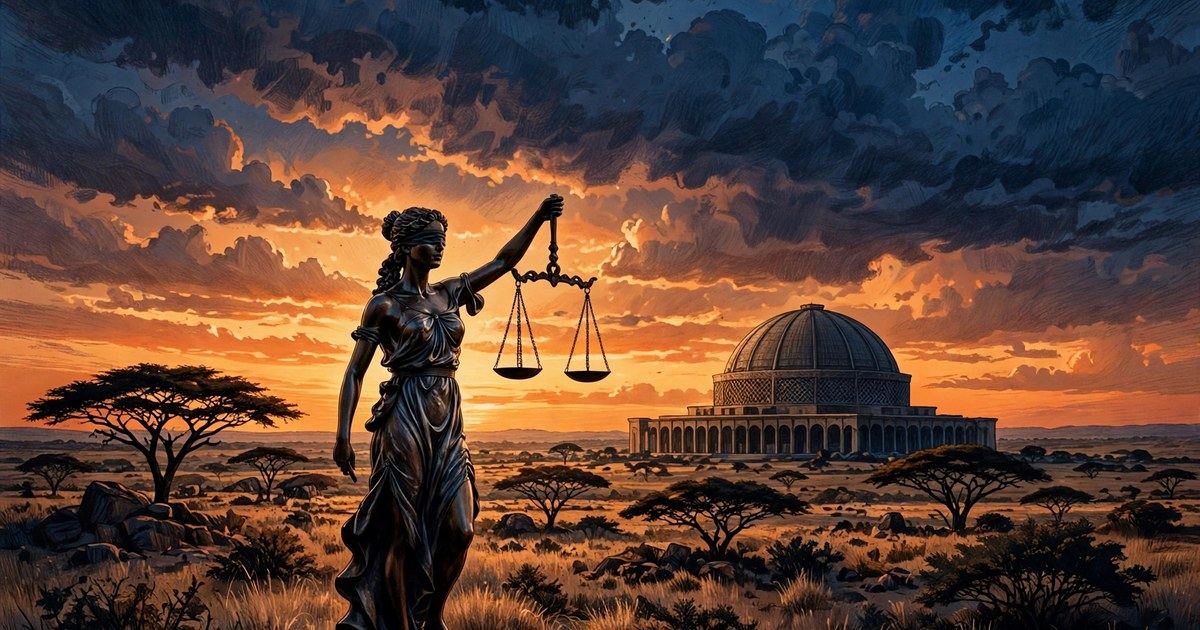
Burkina Faso's parliament has voted to bring back the death penalty, nearly a decade after the West African nation abolished capital punishment for all crimes. The 71-member assembly voted unanimously on Tuesday in favor of a revised penal code that reintroduces execution for terrorism, espionage and high treason, according to a statement from the country's Justice Ministry.
The move, trending per news coverage worldwide, reverses a landmark 2018 decision and hands the country's military-led government one of the harshest judicial tools available at a moment when it is fighting a decade-long jihadist insurgency that has killed tens of thousands of people and displaced millions.
What the vote decided
The revised penal code, adopted by the Transitional Legislative Assembly, reintroduces the death penalty for crimes including terrorism, espionage and high treason, state-run media reported. It also applies to anyone who imports expired or banned products when that conduct results in deaths.
Justice Minister Edasso Rodrigue Bayala presented the bill to lawmakers on behalf of the government, arguing that the relative leniency of the previous penal code had helped armed groups recruit members. The Justice Ministry said in a statement that the reform aims to "reinforce public order, consolidate the fundamental values of the nation, and guarantee the safety of people and property."
The reform goes further than the death penalty. It aggravates punishments for embezzlement, which can now carry life imprisonment, and toughens penalties for crimes related to road safety, which will now be punished with prison sentences, according to reporting by Spanish outlet Democrata.
Reversing the 2018 abolition
The vote undoes a decision taken in May 2018, when, under then-president Roch Marc Christian Kabore, the National Assembly abolished the death penalty for all crimes. According to Amnesty International, Burkina Faso's last known judicial executions date back to 1988, meaning the country has effectively been execution-free for nearly four decades.
The path to reinstatement began last year, when the Council of Ministers first approved the bill. Human Rights Watch warned at the time that bringing back capital punishment could "deepen repression, entrench a climate of fear and send a chilling message to critics of the military government."
Why now: a decade of insurgency
Burkina Faso's Islamist insurgency began in 2015 in the country's north, amid the broader Mali war, and has since spread across most of the nation. Al-Qaeda-linked groups such as Jama'at Nasr al-Islam wal-Muslimin (JNIM) and Ansarul Islam, along with the Islamic State in the Greater Sahara, have targeted military bases, civilians, schools and local officials.
The human toll has been enormous: at least 20,000 civilians and combatants have been killed and more than 2 million people displaced, with large areas suffering severe food insecurity and disrupted public services. The conflict is widely seen as the Burkinabe theatre of the broader War in the Sahel.
The violence has already toppled two governments. Military coups in 2022 first brought Lieutenant Colonel Paul-Henri Sandaogo Damiba to power and then Captain Ibrahim Traore, who still leads the country. Traore's government broke decisively with France and other Western partners, joining Mali and Niger in a new Sahel alliance and deepening security cooperation with Russia.
The junta says the hard line is working — but rights watchdogs and conflict analysts say violence has worsened since Traore took power, with jihadist groups still controlling or contesting large rural areas despite major offensives and the mobilization of a 50,000-strong civilian auxiliary force, the Volunteers for the Defense of the Homeland.
Why human rights groups are alarmed
Rights groups say the new law is as much about the junta's grip on power as about fighting jihadists. Burkina Faso's military government has banned or silenced local and international media, dissolved the Burkinabe Journalists' Association and detained reporters — creating, in Human Rights Watch's words, "a climate of fear to deter people from speaking out."
That history is why the broad categories in the new code — "treason," "espionage" — alarm observers. Under the junta, those labels could easily be applied to journalists, opposition figures or civil society activists, not just militants.
Human Rights Watch has spent the past year and a half documenting 57 attacks across the country, speaking with nearly 400 witnesses and recording at least 1,800 civilian killings between 2023 and 2025 by government forces and allied militias — particularly targeting ethnic Fulani communities accused of supporting JNIM. The group says all sides have committed abuses amounting to war crimes and crimes against humanity, and it warns the death penalty gives the government a new, irreversible instrument in a conflict where accountability is already absent.
A striking reversal on a divided continent
Africa is deeply divided on capital punishment: many states retain it and carry out executions, while a growing number have abolished it in law or practice. What makes Burkina Faso's move stand out is the direction of travel — reinstating the death penalty after a full abolition is far rarer than abolishing it, and it puts Ouagadougou at odds with the broader global trend toward abolition.
The capital-punishment debate is far from settled elsewhere either: in the United States, the Supreme Court recently rejected a plea deal for 9/11 mastermind Khalid Sheikh Mohammed, putting the death penalty back on the table in one of the country's most consequential terrorism cases.
The Burkina Faso vote also lands against a backdrop of deepening regional instability across the Sahel and beyond — Sudan's conflict has escalated with deadly drone attacks — as military governments across the region consolidate power and rewrite their legal codes.
What happens next
The revised penal code must now be formally promulgated before it takes effect. Once in force, prosecutors will be able to seek the death penalty in terrorism, espionage and treason cases — categories that, under the junta, are defined and applied by the state itself.
No timetable has been announced for when a first death sentence might be handed down, and the country has not carried out a judicial execution since 1988. But rights organizations say the danger is not only who gets executed — it is who gets charged. In a country where journalists have been detained and media outlets suspended for calling the government a "junta," the new law's critics say the courtroom itself has become another front in Burkina Faso's long conflict.
International reaction will be watched closely in the coming days, as Western governments and rights organizations that had praised the 2018 abolition now face a country moving firmly in the opposite direction.
Sources
Reuters; Democrata (Spain); Human Rights Watch; Amnesty International; Worldlession research. This story is trending per news coverage.