
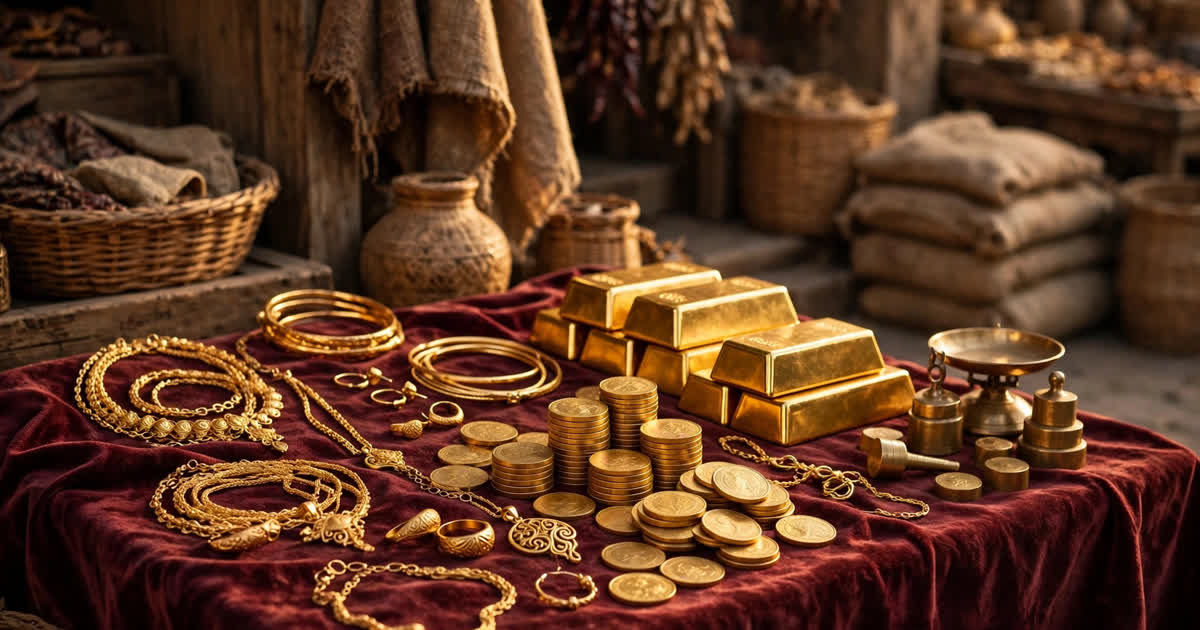
Turkey gold prices are watched daily by households, jewellers and investors, because gold has long been a trusted store of value in Turkey, especially during periods of lira depreciation and high inflation. Gold is bought for weddings, savings, gifts and investment, in forms ranging from gram gold bars to quarter gold coins and Cumhuriyet gold. This guide to Turkey gold prices explains the main gold types, how prices are set, how currency rates affect them, and how to buy safely.
Gold prices in Turkey are quoted in lira per gram, but they are driven by two global factors: the international gold price in dollars per ounce, and the dollar-lira exchange rate. When either rises, lira gold prices rise, and when the lira weakens sharply, gold in lira can rise even if the dollar gold price is flat. Understanding Turkey gold prices therefore means watching both the world gold price and the exchange rate, not just the jeweller's window price.
Turkey Gold Prices: Gram, Quarter and Cumhuriyet Explained
Turkey gold prices start with types. Gram gold, usually 24 carat or 995 fineness, is sold as small bars or in bank and jeweller accounts, priced per gram with a small premium over the market price for minting and handling. Quarter gold, çeyrek altın, is a 22 carat coin widely given at weddings and celebrations, with a fixed weight and a premium for minting and design. Half gold, full gold and Cumhuriyet gold are larger coins in the same tradition, with Cumhuriyet gold issued in republic designs and also traded as an investment coin.
Jewellery gold, usually 22 or 14 carat, carries additional making charges for design and labour, which are lost partly or fully on resale, unlike investment gold where the premium is smaller. When buying for savings, gram gold and investment coins usually preserve value better than jewellery, because making charges are lower. When buying for gifts or weddings, quarter and Cumhuriyet gold carry cultural meaning beyond metal value, and recipients often keep them for years. Always confirm carat, weight and fineness before buying, and keep receipts and certificates.
Turkey Gold Prices: How Prices Are Set Daily
Turkey gold prices are set through the interplay of international and domestic markets. The London gold price in dollars per ounce is converted to lira per gram using the dollar-lira rate, then adjusted for local premiums, minting costs, taxes and jeweller margins. Prices update during market hours and can move intraday with dollar gold moves and lira volatility, so morning and evening prices on the same day may differ. Banks, the Istanbul Gold Exchange and jeweller associations publish reference prices, though individual jewellers' buy and sell prices vary by premium and stock.
Buy and sell spreads matter: jewellers buy gold at a lower price than they sell it, and the spread covers costs and risk. Gram gold from banks or digital gold accounts often has narrower spreads than physical coins, but physical gold offers tangibility and cultural use. Before buying, compare buy and sell prices across two or three reputable jewellers or banks, ask for the total price including any making charges, and confirm whether the price is locked at purchase or varies until payment. For large amounts, a small spread difference becomes significant.
Turkey Gold Prices: Dollar, Lira and Inflation Effects
Turkey gold prices rise with lira weakness because gold is priced in dollars internationally. If the dollar gold price stays flat but the lira falls 10 percent against the dollar, lira gold prices rise roughly 10 percent, before premiums. If both dollar gold and the lira move, effects compound. Inflation also drives gold demand in Turkey: when lira savings lose purchasing power quickly, households shift to gold and dollars as stores of value, increasing local demand and sometimes premiums, especially for coins during wedding season.
That dynamic makes gold both a hedge and a risk. Gold protects against lira depreciation and inflation over long periods, but its price can fall in dollars, and lira gold can fall if the lira strengthens or dollar gold drops. Gold pays no interest or dividends, so holding it has an opportunity cost versus interest-bearing savings, especially when lira deposit rates are high. A balanced view treats gold as one part of savings, not as the whole portfolio, and avoids borrowing to buy gold on speculation.
Turkey Gold Prices: Where to Buy Safely
Turkey gold prices safety starts with reputable sellers. Buy from established jewellers, banks, or licensed gold dealers, and avoid street sellers, social media offers with prices far below market, and unmarked gold without hallmarks or certificates. For physical gold, check weight on a scale where possible, confirm carat and fineness, and obtain a receipt stating weight, carat, price and seller details. For digital gold accounts, confirm the provider's terms, fees, buy-sell spreads, withdrawal options for physical delivery, and whether holdings are backed by physical gold.
Storage is part of safety. Home storage of large gold amounts carries theft risk, while bank safe deposit boxes, jeweller custody or insured storage offer protection at a cost. Keep gold holdings private, avoid discussing amounts publicly, and insure valuable holdings where practical. For wedding gold, families often store coins in bank boxes or safes, and record gifts to avoid disputes. If selling, compare buy prices across jewellers, bring identity and receipts, and be wary of buyers who offer cash without records for large amounts.
Turkey Gold Prices: Gold Versus Deposits, Dollars and Shares
Turkey gold prices comparisons help savers choose wisely. Lira time deposits offer interest that may beat inflation in some periods but lose value if inflation outpaces rates or the lira falls. Dollar savings protect against lira depreciation but earn little interest and carry exchange and security considerations. Shares and funds offer growth potential but higher volatility and require knowledge and risk tolerance. Gold offers tangibility, cultural acceptance and inflation hedging, but no income and price volatility in dollars.
A simple household approach is to separate money by purpose: daily spending in lira, emergency buffer in accessible, safe form, and long-term savings diversified across deposits, gold and, where suitable and advised, investments. Avoid putting emergency money into illiquid gold that is hard to sell quickly at a fair price, and avoid putting all long-term savings into a single asset. Professional financial advice, tailored to income, age and risk tolerance, is worthwhile before large gold purchases, especially for retirement savings.
Turkey Gold Prices: A Practical Checklist
A Turkey gold prices checklist before buying runs: check the international dollar gold price and dollar-lira rate that day, compare buy and sell prices across reputable sellers, confirm carat, weight and total price including premiums, and keep receipts and certificates. Decide purpose first: gift, wedding, savings or investment, because purpose determines whether coins, gram bars, jewellery or digital gold fits best. Store safely, insure where appropriate, and review holdings periodically rather than reacting to daily price moves.
Gold has served Turkish households for generations, and with careful buying, Turkey gold prices can be a useful part of a balanced savings plan. The key is to buy for the right reason, at a fair spread, from a trusted seller, and to hold gold as part of a diversified approach rather than a single bet. For related finance guidance, see what inflation means, what compound interest means, and stocks versus bonds explained.