
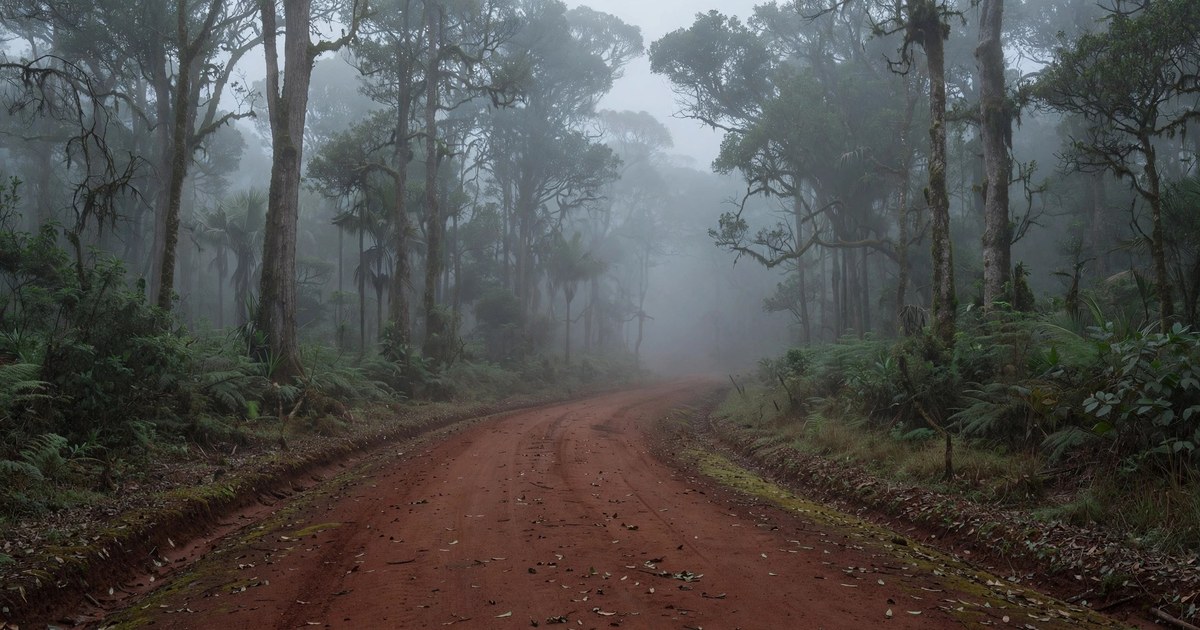
Paul Mackenzie sentenced to 200 years in prison on Friday, 6 November 2026, for the murder of 191 people — 190 of them children — in the Shakahola starvation cult case, one of the deadliest religious tragedies in Kenya's history. Lady Justice Diana Kavedza of the Mombasa High Court handed down two consecutive 100-year terms: one for the followers who died by forced starvation, and one for those killed directly. The sentence closes the trial phase of a case that began when police started pulling bodies from shallow graves in Shakahola Forest in April 2023 — but it does not end the story. Mackenzie still faces a separate case over 52 more deaths, and his lawyers say they will appeal. The story is trending per news coverage.
Paul Mackenzie Sentenced to 200 Years: How the Two Terms Add Up
The 200-year sentence is made of two 100-year terms running consecutively, not at the same time. Justice Kavedza imposed 100 years for 183 murders committed through starvation — 182 children and one adult — and a further 100 years for eight murders by direct homicide, all of them children. Because the terms run one after the other, the 50-year-old preacher will spend the rest of his life in prison.
Mackenzie, founder of the Good News International Church, was convicted on 19 October 2026 alongside 28 co-accused, after the court found all 29 guilty on 191 counts of murder. The 28 others received sentences ranging from 10 to 160 years; Smart Mwakalama, one of his closest associates, received 160 years. Prosecutors had asked for the death penalty. The judge refused it — for a reason that says as much about Mackenzie's beliefs as about the law.
What Happened at Shakahola Forest
Mackenzie told his followers that the world would end in August 2023 and that they had to starve themselves — and their children — to meet Jesus in heaven before that day came. He persuaded families to abandon their homes and move to Shakahola Forest in Kilifi County, near the coastal town of Malindi, on the 800-acre Chakama Ranch. There, according to the court, church leaders and armed guards enforced a system of sequential fasting that began with the children, and prevented followers from escaping.
The deaths took place between January 2021 and September 2023. The horror only surfaced in April 2023, when police began uncovering bodies buried in shallow graves across the forest. Investigators ultimately recovered 448 bodies from Shakahola, according to figures cited by the Kenya National Commission on Human Rights, although an earlier 2024 count put the toll at 429 and many remains are still unidentified. The youngest victim was a 12-day-old infant starved from birth; 161 toddlers and children under the age of 10 died of forced dehydration and hunger.
Authorities had shut down Mackenzie's church in Malindi in 2019, after which he relocated his movement to the forest. At trial, prosecutors presented evidence from 123 witnesses, digital recordings, and forensic and DNA reports. Mackenzie denied ordering anyone to starve, insisting his congregation had fasted voluntarily. The court rejected that defence entirely.
Why the Judge Did Not Impose the Death Penalty
Justice Kavedza's sentencing remarks addressed the death penalty directly. She said she did not impose it because it could strengthen the convicts' belief that dying would reunite them with Jesus, rather than deter them — in effect, turning an execution into the martyrdom Mackenzie had promised his followers. The court instead applied Section 14 of Kenya's Criminal Procedure Code alongside the 2023 Sentencing Policy Guidelines, balancing concurrent and consecutive terms under the principle of totality.
The reasoning, as the court explained it, rests on three grounds: preventing false martyrdom, since people who welcome death as an entry into paradise are not deterred by it; sustained accountability, forcing the perpetrators to spend decades in confinement confronting the fact that their promised apocalypse never arrived; and a sentence that guarantees the ringleaders remain behind bars for the rest of their natural lives without imposing an arbitrary aggregate penalty. All 29 of those convicted have 14 days to appeal. Defence lawyer Lawrence Obonyo said the team would challenge the judgment.
Paul Mackenzie Sentenced to 200 Years: What Happens Next
The sentencing ends the main trial, but three threads remain open. First, the appeal: the defence has 14 days from the sentencing to file, and Obonyo has already said it will. Second, the separate case over 52 deaths at another location about 30 kilometres from Shakahola, to which Mackenzie has pleaded not guilty — a case that would push the suspected total death toll across the investigations to about 500. Third, further charges in other courts, including terrorism, manslaughter, child abuse and torture.
Then there is the question Kenya itself has yet to answer. President William Ruto acknowledged government failure in 2023 and appointed a task force to examine how religious organisations are regulated, after a movement was able to operate for years, move hundreds of people into a forest, and bury them there before the state intervened. The 200-year sentence delivers long-overdue justice for 191 victims, as Kenyan commentators have put it — but the institutional failures that allowed 448 people to die in a forest demand answers that a prison term alone cannot provide.
Why the Shakahola Case Matters Beyond Kenya
Shakahola is one of the worst mass-casualty cases linked to a religious movement anywhere in modern times, and the sheer number of child victims — 190 of 191 — sets it apart from almost every comparable tragedy. The court's refusal of the death penalty on martyrdom grounds is also unusual: it is a deliberate legal answer to a belief system, not just a punishment, and it will be studied by courts facing extremist defendants elsewhere.
The sentences land in a month when courts in several countries have been in the headlines — from the Krakow shooting case in Poland to the halted house-arrest transfer of former Malaysian prime minister Najib Razak. But Shakahola stands apart because the victims were not killed in a moment of violence. They were starved over months, in an organised system, with children made to die first. That is why the judge called Mackenzie's culpability primary, and why the sentence — 200 years, the harshest yet in the case — was designed to outlast the man himself.
Sources: CNN; Reuters (via Glasgow Times); Associated Press (via AmeriLedger); Pulse Kenya; Africa Briefing; The Trent; Mount Kenya Times; Orbits News; Kenya National Commission on Human Rights. Figures for the victims and the sentence breakdown are as reported by those outlets from the Mombasa High Court proceedings.