
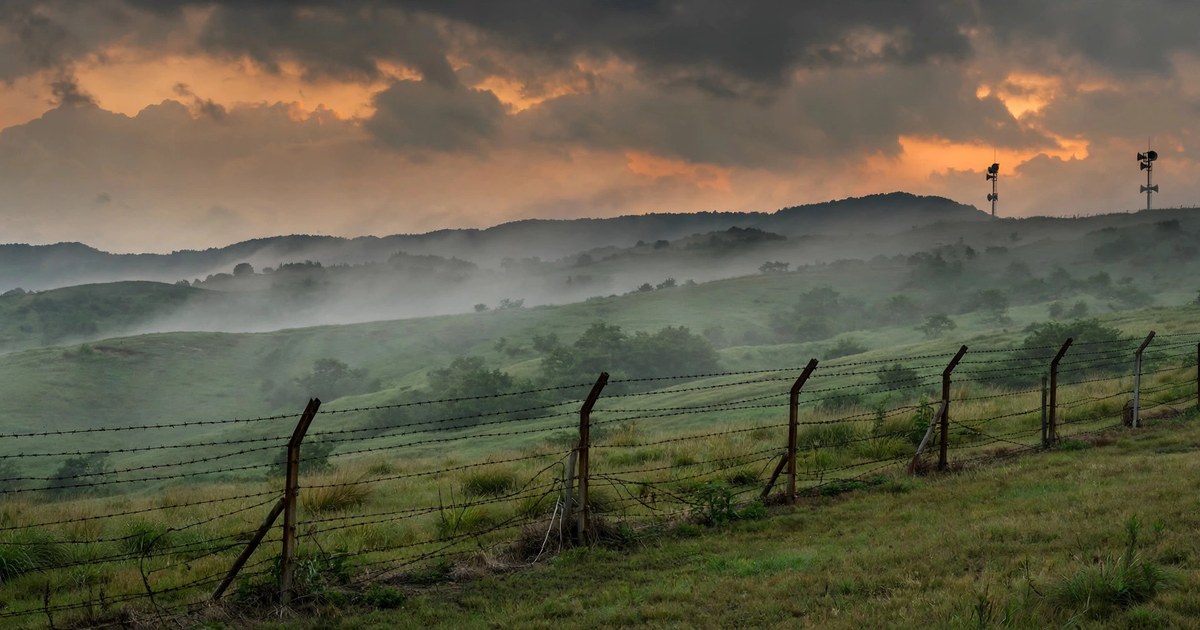
Tensions on the Korean Peninsula spiked this week after North Korea threatened to resume propaganda loudspeaker broadcasts across the Demilitarized Zone (DMZ) and deploy more "tactical strike" weapons along the border — moves that would reverse some of the most significant de-escalation steps taken between the two Koreas in years. South Korea responded within hours, vowing "decisive retaliation" against any further North Korean provocation and ordering reinforced readiness at frontline units.
The exchange, unfolding between October 19 and 20, centers on a dispute over incidents in the DMZ that began with a land mine explosion in September that injured three South Korean soldiers. As both sides trade accusations and warnings, the standoff is raising fresh concerns among regional security analysts about the risk of accidental clashes along one of the world's most heavily fortified borders.
What Kim Yo Jong said — and why it matters
The latest round of threats came from Kim Yo Jong, the powerful sister of North Korean leader Kim Jong Un, in a statement carried by state news agency KCNA on Monday, October 19. She accused South Korea's military of firing warning shots and making warning broadcasts numerous times at the border since August — under what she called "such an unreasonable pretext" that North Korean soldiers had crossed the border.
Kim claimed South Korean forces had aired 2,870 warning broadcasts and fired 201 warning shots between August 1 and October 17. She declared that the situation along the border had become "very unstable" and said the North Korean military was considering "deploying more tactical strike means along the southern border as a preemptive and suppressive measure to deal with contingency, and of resuming the loudspeaker broadcasting against the ROK" — using South Korea's official name, the Republic of Korea.
The unusually precise tally of South Korean warning broadcasts and shots — a level of detail analysts link to Kim Jong Un's inner circle — highlights how closely the Korean People's Army has been tracking each South Korean response along the frontier. Kim did not specify which weapons would be moved forward, how many, or when, leaving the threat open-ended.
Why the border is on edge: the September mine blast
The current standoff has its roots in a September 21 land mine explosion inside the DMZ that injured three South Korean soldiers. A joint investigation by Seoul and the United Nations Command concluded that the blast was caused by anti-personnel mines planted by North Korea south of the Military Demarcation Line — in violation of the Armistice Agreement that ended fighting in the Korean War. Pyongyang has categorically denied any involvement and warned of strong retaliation if provoked.
Earlier this month, South Korea formally blamed North Korea-planted mines for the blasts, urging the North to apologize and remove other mines from the area. The accusation deepened a standoff that has been building for more than two years: since April 2024, North Korea has been fortifying its side of the DMZ with mines, barbed-wire fences, and anti-tank barriers, part of a broader policy of terminating ties with the South.
Seoul estimates that North Korea has deployed roughly 7,000 workers to the fortification effort this year and says there have been around 50 incursions across the Military Demarcation Line — crossings that typically trigger warning shots and broadcasts from the South under the rules of engagement both sides have long observed. South Korea describes those measures as legitimate defensive operations under the Armistice Agreement. Pyongyang calls them provocations that have "gone beyond the red line."
Why the loudspeaker threat is significant
Of the two threats — more weapons at the border and the return of loudspeaker broadcasts — it is the loudspeakers that carry the deeper symbolic weight. For decades, both Koreas blared propaganda across the DMZ: the South broadcast news, music, and criticism of the North Korean regime, while the North answered with its own messages. The broadcasts were one of the most visible instruments of psychological warfare on the peninsula.
That changed in June 2025, when South Korea's President Lee Jae Myung — who took office that month on a reconciliation platform — ordered the suspension of the South's anti-North propaganda loudspeakers as a confidence-building measure. North Korea subsequently halted its own broadcasts in response, producing the first sustained quiet on that front in years.
A North Korean decision to restart its broadcasts would unwind that de-escalation achievement and could easily trigger a reciprocal response from Seoul. A South Korean military official has already said that resuming the South's own broadcasts is "not being ruled out." If both sides return to full loudspeaker warfare, the fragile calm of the past year would effectively end — and each broadcast round risks being interpreted as an escalation in an already tense environment.
Seoul's response: decisive retaliation promised
South Korea's Defense Ministry answered Kim Yo Jong's statement on Tuesday, October 20, expressing "grave concern" over her criticism of what it called legitimate military operations and her "escalation of tensions through military threats." The ministry's statement was unambiguous: "We will retaliate decisively should North Korea engage in further provocations using our legitimate measures as a pretext."
The ministry also urged Pyongyang to "cease its far-fetched claims and repeated incursions" south of the demarcation line and to respond to Seoul's calls for efforts to resolve border-line issues — demands the North has historically rejected.
On the same day, Joint Chiefs of Staff Chairman General Jin Yong-sung visited a central frontline unit and ordered the military to "sternly respond" to potential North Korean provocations. He said South Korea's forces would firmly deal with border breaches by North Korean troops, and ordered operations to reinforce the South's initiative in the DMZ. A military source told Yonhap News Agency that the response could include new patrol routes and retractable guard posts along the frontier.
The timing is sensitive: the exchange coincided with the start of South Korea's annual Hoguk field exercise on October 19, conducted with the participation of U.S. Forces Korea, as well as Japan's Keen Sword drills. Pyongyang routinely denounces such exercises as rehearsals for invasion, adding another layer of friction to the current standoff.
Why this standoff matters for the region
Inter-Korean tensions are not new, but analysts say the current episode carries elevated risk for several reasons. First, the Sept. 21 mine blast introduced a casualty event into a dispute that had previously been conducted through rhetoric and fortification. Second, both sides have now publicly committed to punitive responses — Pyongyang to "preemptive" deployments and broadcasts, Seoul to "decisive retaliation" — narrowing the diplomatic space for de-escalation.
Third, the threatened resumption of loudspeaker operations directly targets the one concrete achievement of the Lee administration's reconciliation policy. If Pyongyang follows through, it would signal that the diplomatic framework built since June 2025 has collapsed — with consequences extending beyond the border itself. North Korea's broader pattern of military signaling, including missile activity in the East Sea earlier this month, suggests the DMZ threats are part of a wider posture of pressure. Even as tensions simmer on the peninsula, Pyongyang's ties with Beijing have been deepening — the New Yalu River Bridge between China and North Korea has finally opened after a 12-year delay.
For now, the most likely near-term outcome is a prolonged, noisy standoff rather than an immediate clash: warning shots and broadcasts on both sides, more fortification, and continued verbal threats. But along a frontier where tens of thousands of troops face each other across a four-kilometer-wide strip, every additional weapon system and every resumed broadcast raises the odds of a miscalculation. Regional diplomats will be watching whether the loudspeakers — the concrete, verifiable measure both sides can switch on or off — stay silent in the coming days.
Sources: Associated Press (Seoul, 20 October 2026); Yonhap News Agency (Kim Seung-yeon, 20 October 2026); WION News (20 October 2026); KCNA statement by Kim Yo Jong (19 October 2026); South Korean Ministry of National Defense statement (20 October 2026); South Korean Joint Chiefs of Staff (20 October 2026). Trending per news coverage.