
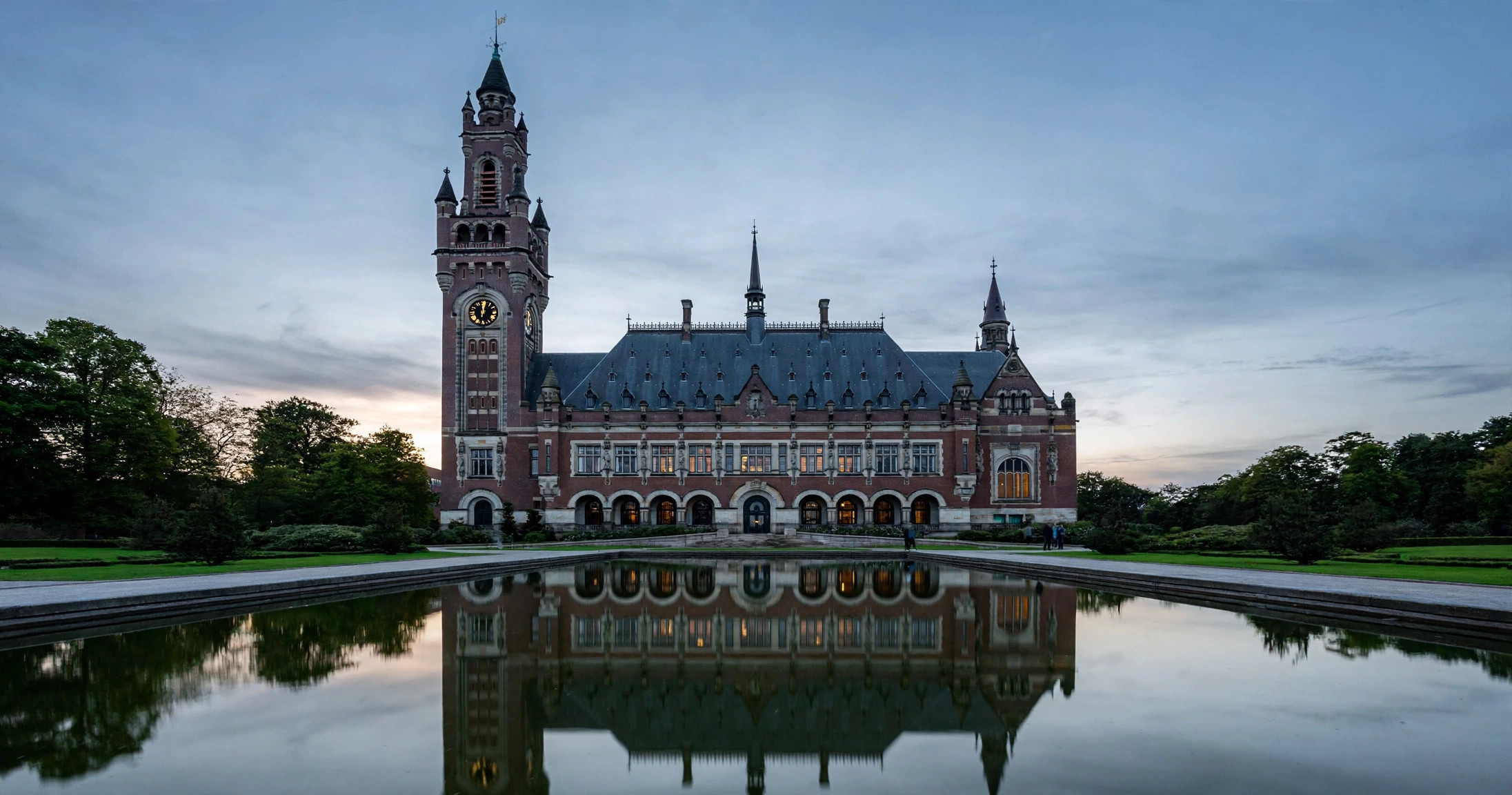
The International Court of Justice ruled on Thursday, 19 November 2026, that Myanmar committed genocide against its Rohingya minority — the first time in the court's 80-year history that it has held a state responsible for genocide. The Myanmar Rohingya genocide verdict, delivered by nine votes to six after a reading of nearly three hours at the Peace Palace in The Hague, found that Myanmar's security forces killed thousands of civilians, carried out widespread sexual violence, and attacked Rohingya families as they fled to Bangladesh in 2017. The ruling is final and binding, and it cannot be appealed. What it cannot do on its own is bring anyone home.
For the survivors, the wait lasted almost a decade. The case was filed in November 2019. The violence it concerns happened in 2017. More than 730,000 Rohingya fled across the border into Bangladesh in a matter of weeks, and about 1.2 million refugees now live there, according to the United Nations refugee agency. Thursday's judgment gives that suffering a formal legal name for the first time: genocide, committed by a state.
What the Myanmar Rohingya genocide verdict says
The court's president, Judge Yuji Iwasawa, read the judgment in a public sitting that began at 10 a.m. local time. The core of it was a single sentence of reasoning. The judges found that the scale and nature of Myanmar's atrocities "went well beyond what would be required to punish the population and are instead characteristic of an intent to destroy a substantial part of the group," Iwasawa said, according to CNN's account of the reading. "The court is of the view that the only reasonable inference that can explain Myanmar's actions is an intention to destroy a substantial part of the protected group, namely the Rohingya population in northern Rakhine state."
That word — inference — is doing heavy work. Genocide is not established by showing that terrible things happened. It requires proof of a specific intent to destroy a group, in whole or in part. The court said the evidence left no other reasonable explanation. It gave particular weight to three patterns: the widespread sexual violence, the extreme violence against children, and the attacks on Rohingya as they tried to flee in large numbers to Bangladesh.
The judgment also put a number on the killing. The court found that Myanmar's security forces killed thousands of Rohingya civilians, and it determined that the United Nations' estimate of 10,000 Rohingya violently killed during the 2017 clearance operations is supported by the evidence. A 2018 report by the UN Independent International Fact-Finding Mission on Myanmar had called 10,000 a conservative figure.
Myanmar's defence was that its operations were a lawful counterterrorism response. The military said it was answering attacks by the Arakan Rohingya Salvation Army on police posts on 25 August 2017, attacks that killed 12 security personnel. The court rejected that position. CNN reported that the judges found the military did not distinguish between militants and civilians.
How The Gambia brought Myanmar to court
The case is formally The Gambia v. Myanmar, and its origins explain a lot about how international law actually works. The Gambia, a small West African country with no obvious connection to Myanmar, filed the case on 11 November 2019 under the 1948 Convention on the Prevention and Punishment of the Crime of Genocide. The convention lets any state party bring a dispute to the court, and The Gambia acted with the backing of the 57-nation Organisation of Islamic Cooperation.
The man who drove the case was Abubacarr Tambadou, then The Gambia's justice minister. The Times reported that he took it up after hearing stories of atrocities from Rohingya refugees on a visit to Bangladesh. In December 2019, Myanmar's then leader Aung San Suu Kyi appeared in person at The Hague to defend her country, calling the accusations an incomplete and misleading picture.
The road to judgment ran seven years. In January 2020 the court ordered provisional measures, telling Myanmar to take all steps in its power to prevent genocidal acts, preserve evidence, and report back on compliance. Myanmar objected to the court's jurisdiction; those objections were rejected in July 2022. Hearings on the merits were held from 12 to 29 January 2026, including closed-door testimony from Rohingya witnesses, according to Reuters.
Why the 9-6 vote matters
The decision was nine votes to six. Six judges dissented, and that split is itself informative. Nobody on the bench disputed that atrocities happened. The hard question in every genocide case is intent, and proving a state's intent to destroy a group has been the central obstacle in every earlier case — which is why, in the court's history since 1946, it had never before found a state responsible for genocide. This was only the third time the court has ruled on the merits of a genocide case, and the first in more than a decade.
Michael Becker, an international law professor at Trinity College Dublin and a former ICJ legal officer, told reporters before the ruling that the outcome could clarify the court's longstanding "only reasonable inference" test — the rule under which judges infer genocidal intent from a pattern of conduct only when no other reasonable explanation fits. The court's judgment now applies that test to a full record and finds it met. It is also the first final judgment out of five genocide cases currently pending before the court.
What the Myanmar Rohingya genocide verdict changes — and what it does not
The change is real but narrow. The ruling gives formal legal recognition to what survivors and investigators have said for years, and it places responsibility on Myanmar as a state. That matters because the case was never about whether atrocities occurred in general. It was about whether Myanmar, as a state, breached the Genocide Convention. The court has now answered that question directly.
What the ruling does not do is punish anyone. It does not determine the criminal guilt of individual soldiers or commanders; that is a matter for other courts. And the court has no police force. Its judgments are final and binding, but it cannot compel a state to comply. As one report on the ruling put it, the judgment's force will depend on what states and United Nations bodies do next.
For the roughly 1.2 million Rohingya refugees the UN refugee agency counts in Bangladesh, and the roughly 520,000 who remain in Myanmar under severe restrictions, the judgment alone does not decide return, citizenship or safety. Becker cautioned that a genocide finding may do little in the short term for the more than one million victims of violence and displacement. The Gambia had asked the court to order Myanmar to ensure displaced Rohingya can return safely to their land, compensate them, and rebuild destroyed homes and property — but the practical questions of return and repair now sit with governments, not with the court.
What happens next for the Rohingya
Three things are worth watching. The first is Myanmar's response. The military government has denied committing genocide throughout, and nothing in the judgment gives the court a way to force compliance. The second is what other states do with a final, binding finding in hand — whether they use it to press for access, for accountability, or for a negotiated path home for refugees. The third is the court's own next steps: the judgment settles responsibility, but the remedies The Gambia sought will be argued over in the months ahead.
The ruling also lands at a difficult moment for international justice itself. CNN noted that the decision comes as the broader idea of international justice has come under fire from the Trump administration. A court that has just delivered the strongest judgment in its history still depends entirely on states choosing to act on it.
Why this ruling reaches beyond Myanmar
The Myanmar case was the first of five genocide cases pending before the court, and its reasoning will shape the rest. Reuters noted before the verdict that a finding of genocide would reshape how every pending and future case under the Genocide Convention is argued, including the separate case South Africa has brought against Israel over the war in Gaza. That finding now exists. The "only reasonable inference" test has been applied to a full record and met, and every lawyer arguing the next case will have to reckon with how this court weighed patterns of sexual violence, attacks on children, and the targeting of people as they fled.
That is the measure of Thursday's ruling. It does not end the Rohingya's exile, and it does not rebuild a single village. But after almost a decade of argument about whether the word genocide applies, the world's highest court has said that it does — by nine votes to six, on the record, and for the first time against a state.
Sources: CNN; The Times; Reuters; Associated Press; Human Rights Watch; Trinity College Dublin; United Nations Independent International Fact-Finding Mission on Myanmar.