
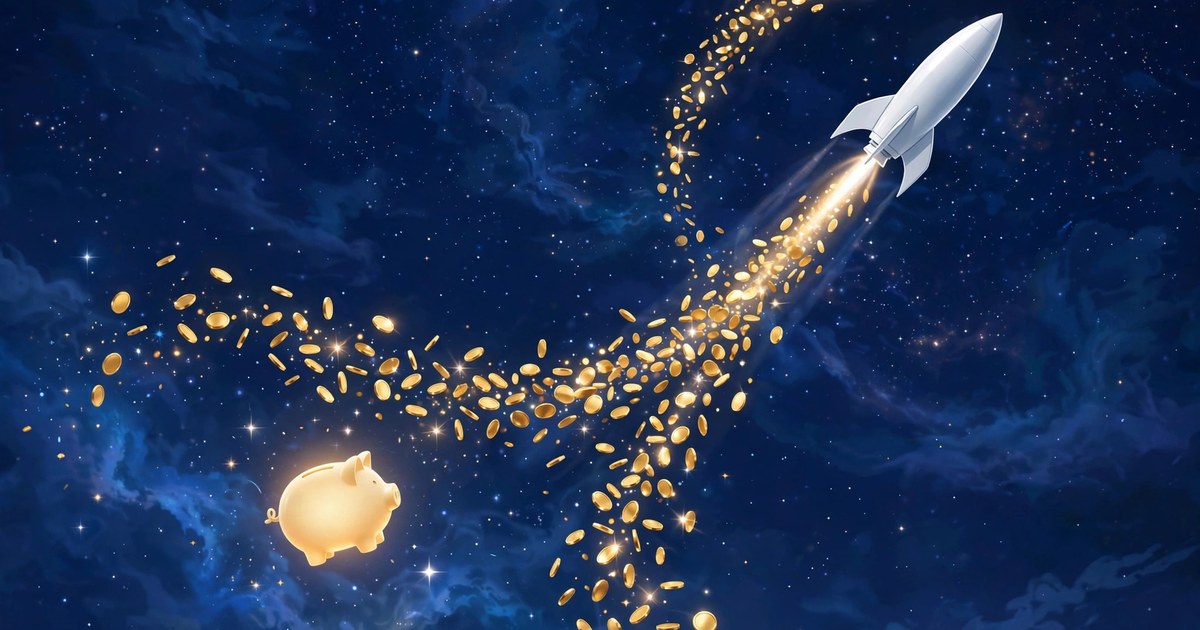
Elon Musk says he will give one of his own SpaceX shares to every child in America. The billionaire made the pledge in a post on his social media platform X just before 4 a.m. Eastern time on Monday, writing: "Next year, I will give one of my SpaceX shares to every kid in America. This will be the first of many." Hours later, President Donald Trump publicly thanked Musk on Truth Social, saying the shares would be distributed through Trump Accounts, the administration's tax-advantaged savings program for minors. The story is trending per news coverage.
The announcement is classic Musk: enormous in scale, light on detail. The post named no distribution mechanism, no eligibility definition — does "every kid in America" mean every US citizen under 18, roughly 70 million children? — and no date beyond "next year." It did not even explicitly mention Trump Accounts; it was Trump who connected the pledge to the program. Still, the pieces fit: late last month, the Treasury Department published new rules that for the first time allow wealthy individuals and companies to donate individual stocks directly into children's Trump Accounts.
What Musk actually announced
Musk's exact words were brief, posted in the small hours of Monday morning: "Next year, I will give one of my SpaceX shares to every kid in America. This will be the first of many." He owns billions of SpaceX shares — reports cite between 4.8 billion, the figure given when the company went public this year, and 6.4 billion, the figure in SpaceX's August filing with the Securities and Exchange Commission. At Friday's closing price of about $146 a share, handing one share to roughly 70 million children would be worth around $10.5 billion — a sum Musk could cover many times over from his personal holdings alone.
SpaceX itself, which went public this year at a valuation of nearly $2 trillion, barely reacted to the news. The stock closed Friday down 1.7 percent and opened Monday's premarket session essentially flat, treating the pledge as noise rather than a corporate event worth repricing. The market's shrug is telling: as an announcement, the pledge is spectacular; as a financial event, it changes nothing about SpaceX's business, which reported quarterly revenue of $7.8 billion — up 92 percent year on year — and $12.5 billion for the first half of the year.
What are Trump Accounts?
Trump Accounts are tax-deferred investment savings accounts for children, launched by the White House on July 4. More than 60 million accounts have been created automatically, and nearly 70 million children — US citizens under 18 — now have one, according to administration figures. For babies born between January 1, 2025 and December 31, 2028, the federal government deposits $1,000 into each account, money that cannot be touched until the beneficiary turns 18. Parents and family members can contribute up to $5,000 a year until the year before the child turns 18, and employers can add up to $2,500 a year. Once the beneficiary turns 18, the funds can be used freely. The accounts are one piece of the administration's wider economic agenda, which has moved aggressively on everything from tariffs to industrial policy this year.
Until recently, those accounts could only hold cash and index funds. That changed at the end of September, when the Treasury published rules allowing charities, wealthy individuals and publicly traded companies to donate individual stocks into Trump Accounts. There are two strings attached: parents cannot pick or reject donated shares, and donated stocks cannot be sold for five years. Treasury officials argued the change would make families feel they "have a stake in the fate of the corporation," but some experts warned it could shield big companies from tougher regulation or tax increases that might hurt their share prices — a criticism now attached to Musk's pledge as well.
The math behind the giveaway
One SpaceX share is currently worth roughly $146. Multiplied across an estimated 70 million eligible children, the pledge works out to about $10.5 billion — which would make it one of the largest personal philanthropic commitments ever announced, delivered not as cash but as equity in the world's most valuable space company. Musk's rocket company SpaceX has grown from a startup that nearly went bankrupt into a near-$2 trillion colossus on the strength of its Starlink satellite network and its dominant launch business, so a single share is a genuinely meaningful asset — not a novelty certificate.
There is a catch hidden in the arithmetic, though. "Every kid in America" is not a legal category. The Trump Accounts program covers US citizens under 18, but the $1,000 federal seed payment only goes to babies born in a narrow four-year window. Musk has not said whether his definition of "every kid" matches the program's eligibility, includes non-citizen residents, or means something else entirely. As one European outlet noted, since Musk himself never mentioned Trump Accounts, it remains unclear which specific group of minors would ultimately receive the shares if the two versions of the plan do not fully converge.
It would not be the first SpaceX stock gift
Musk has already tested this playbook at smaller scale. In early July, SpaceX announced a donation of two million of its shares for children in lower-income families, many of them in Texas, where the company has its headquarters and launch operations. Around the same time, SpaceX president Gwynne Shotwell and her husband said they would donate their own shares to more than two million children, mostly in central Texas. Rival AI lab Anthropic has said it will form a "public benefit fund," and other tech moguls have been contributing to children's savings accounts — a quiet contest among billionaires to attach their names to the next generation's nest eggs, unfolding even as Washington sharpens its scrutiny of Big Tech on national security grounds.
That history is why Monday's announcement landed as credible rather than fanciful. Musk and his inner circle have already built the machinery for donating SpaceX equity to children; the new pledge is the same machinery scaled up by a factor of thirty-five.
Reactions: praise, a shrug from the market, and hard questions
Trump welcomed the pledge effusively on Truth Social: "A BIG THANK YOU to our legendary friend, Elon Musk, for his incredible generosity in giving SpaceX Stock to millions of American children through TRUMP ACCOUNTS! This is exactly what was envisioned when we created TRUMP ACCOUNTS — bringing together the great private sector, Elon, and so many more, to invest in our children, by far our greatest and most important asset, and give every American child a piece of the American Dream."
Not everyone is applauding. Beyond the experts who warn the stock-donation rules could buy corporations goodwill against future regulation, there are practical questions nobody has answered: how would 70 million individual share transfers actually be executed, who pays the tax bill on a $146 gift to a minor, and what happens to children whose parents object — the new rules say donated stock cannot be refused, though the administration is separately taking public comment on letting parents opt out of Trump Accounts altogether. For now, the honest summary is that a very rich man made a very big promise on social media, and the details are someone else's problem.
What happens next
"Next year" means 2027 at the earliest, and the pledge currently exists only as a social media post. Watch for three things: a formal statement or filing from SpaceX laying out the distribution mechanics, any SEC paperwork required for a mass share giveaway, and detailed Treasury guidance on how donated-stock Trump Accounts will work in practice. If it happens, it would put a piece of the world's most valuable space company into the savings of an entire generation of American children. If it fizzles, it will join a long list of Musk announcements that moved the market for attention more than the market for shares. Sources: CBS News (19-20 October 2026); The Verge (19-20 October 2026); The Washington Examiner (19-20 October 2026); Moneywise (19 October 2026); FinanceFeeds (19 October 2026); Democrata / Expansion (20 October 2026).
The share plan sits alongside an even bigger corporate question, as Musk says a Tesla–SpaceX merger could work — with committees at both companies now reviewing the idea.