
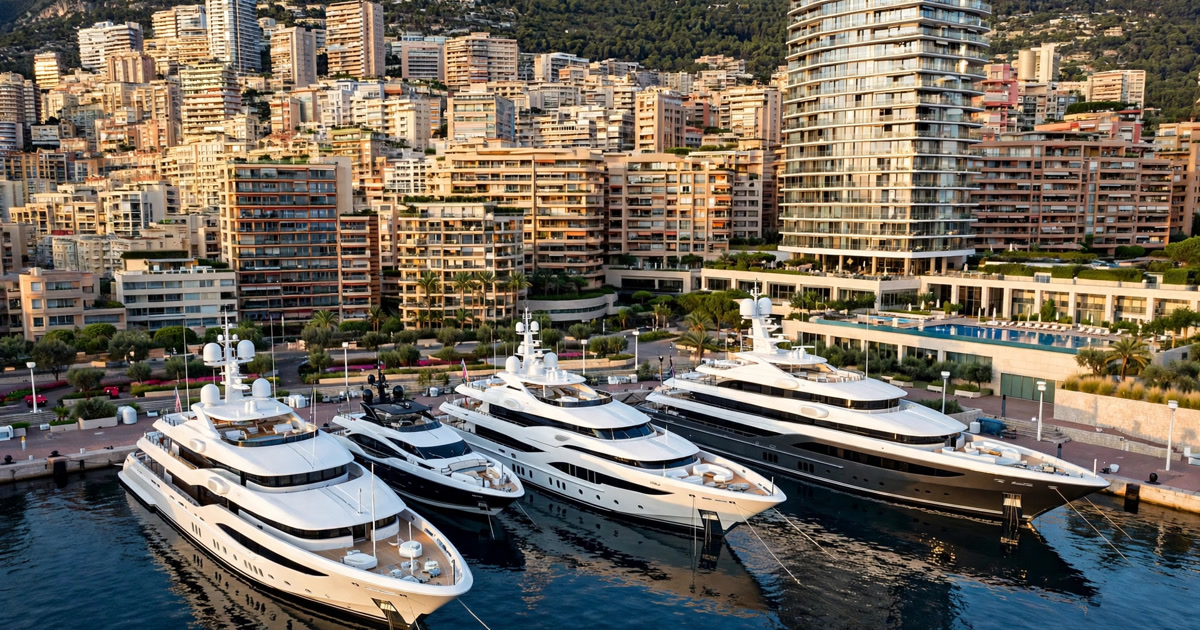
Monaco, the world's second-smallest country, hosts one of its most concentrated wealth centres, with private banks, family offices and a property market among the planet's priciest per square metre. Monaco banking and property attract global wealth through stability, security, Mediterranean lifestyle and favourable tax treatment for residents.
This guide explains Monaco banking and property: private banks, wealth services, the property market, residency links and practical access. It is an explainer, not financial advice, and rules change, so professional advice matters for cross-border wealth.
Private Banks in Monaco
Monaco banking and property starts with private banks, including long-established Monegasque banks and international groups' Monaco branches, focusing on wealth management, investment advisory, family offices and art and yacht financing. Minimum balances reflect bespoke service.
Banks emphasise discretion, security and personal relationships, with multilingual teams serving clients from Europe, the Middle East and beyond. Regulation by Monaco's supervisory authorities, aligned with international standards, shapes compliance and transparency.
Wealth Management Services
Wealth management in Monaco banking and property covers investment portfolios, discretionary management, estate planning, philanthropy, tax structuring and succession, with lawyers, accountants and banks collaborating for international families.
Services suit clients with complex cross-border affairs, multiple residences and business interests, requiring coordination across jurisdictions. Fees vary by assets and complexity, and clients should compare providers, services and reporting standards carefully.
Monaco's Property Market
Monaco banking and property cannot be separated from real estate, where limited land, high demand and luxury stock push prices to world-leading levels, often exceeding 50,000 euros per square metre in prime districts. Districts include Monte Carlo, Larvotto, Fontvieille and La Condamine.
Property types range from studios to penthouses and villas, with new developments, such as land reclamation projects, adding supply slowly. Rental yields are low relative to prices, reflecting capital-preservation and lifestyle motives over income.
Residency, Tax and Property Links
Monaco banking and property links to residency: becoming a Monaco resident generally requires accommodation, financial self-sufficiency and clean records, with property ownership or long-term rental supporting applications. Residents generally pay no personal income tax in Monaco, though home-country rules may still apply.
Tax treatment depends on nationality, residence history and treaties, and professional advice is essential, since moving to Monaco does not automatically end home-country obligations. Understanding how credit scores work helps with property financing, while compound interest frames long-term wealth growth.
Practical Access and Costs
Practical Monaco banking and property access involves bank due diligence, property agents, notaries and legal advisers, with transactions requiring substantial funds, documentation and patience. Service costs, from banking fees to property charges, run high by international standards.
Visitors considering Monaco should research districts, compare agents, verify listings and budget for additional costs beyond purchase prices. Monaco rewards careful planning, but its wealth world is not casual: entry thresholds are real and sustained.
Monaco's Economy Beyond Finance
Monaco's economy beyond finance includes tourism, yachting, gaming, congresses, luxury retail and services, with the Grand Prix, yacht show and Monte Carlo Casino driving visitor spending. Economic diversification supports employment beyond banking.
New sectors, including technology, health and sustainability, grow through MonacoTech incubators and government initiatives, attracting startups to the principality. Economic breadth sustains Monaco's prosperity.
Monaco Tax and Residency Details
Monaco tax details include no personal income tax for most residents, no capital gains tax on personal assets, and corporate taxes for certain businesses, with French nationals facing specific treaty rules. Residency requires accommodation, funds and clean records.
Tax planning for Monaco banking and property clients must account for home-country rules, including exit taxes, controlled foreign company rules and reporting, since Monaco residence alone does not erase prior obligations.
Monaco Property Districts in Detail
Monaco property districts include Monte Carlo for glamour and casinos, Larvotto for beaches, Fontvieille for harbour and modern apartments, La Condamine for markets and port life, and Monaco-Ville for historic charm, each with distinct prices and lifestyles.
District choice affects lifestyle, investment and daily convenience, with harbour views, beach access, old-town character and transport links varying. Agents advise on district trade-offs for buyers and renters.
Monaco Family Offices
Monaco family offices serve ultra-wealthy families with investment management, estate planning, philanthropy, concierge and governance, often from discreet offices in Monte Carlo and Fontvieille. Family offices coordinate banks, lawyers and advisers across jurisdictions.
Family-office services suit families with complex, multigenerational wealth, requiring confidentiality, expertise and personal trust. Costs reflect bespoke service, with single and multi-family models offering different scales.
Monaco Banking and Property: Buying Process
Buying Monaco banking and property involves agents, notaries, legal advisers, bank due diligence and government registrations, with purchase costs, taxes and fees adding to prices. Transactions require substantial funds and patience, with timelines varying by property and financing.
Monaco banking and property buyers should verify titles, building regulations, service charges and rental rules before committing, since principality property law differs from French law. Professional guidance is essential.
Monaco Banking and Property: Rental Market
Monaco banking and property rentals include long-term apartments, short-term luxury lets and corporate housing, with rents among the world's highest and demand driven by residents, workers and event visitors. Rental contracts follow Monegasque law.
Monaco banking and property renters should budget for deposits, agency fees and service charges, plus competition for prime units during Grand Prix and yacht-show periods. Early searching and agent relationships help secure rentals.
Relocating to the Principality
Relocation involves more than finance: schooling, healthcare registration, driving licences and everyday services all need arranging. International schools, private clinics and multilingual services ease the transition for newcomers.
New residents should budget time for administrative appointments, which require documents, translations and proof of accommodation. Local advisers, relocation firms and community groups help families settle into principality life smoothly.
Getting Started as a Newcomer
Newcomers should open local banking relationships early, since accounts support rental contracts, utility setup and residency paperwork. Property searches move fast for prime units, so pre-approval and document readiness matter.
Work with licensed agents and notaries from the start, and verify service charges, building rules and lease terms before signing anything in a fast-moving market.
Monaco banking and property represent concentrated global wealth in a tiny, secure principality. Private banks, luxury property and residency links intertwine, demanding professional guidance for serious participants.
Sources: Monaco Statistics (IMSEE); Association Monégasque des Banques; Monaco property market reports.