
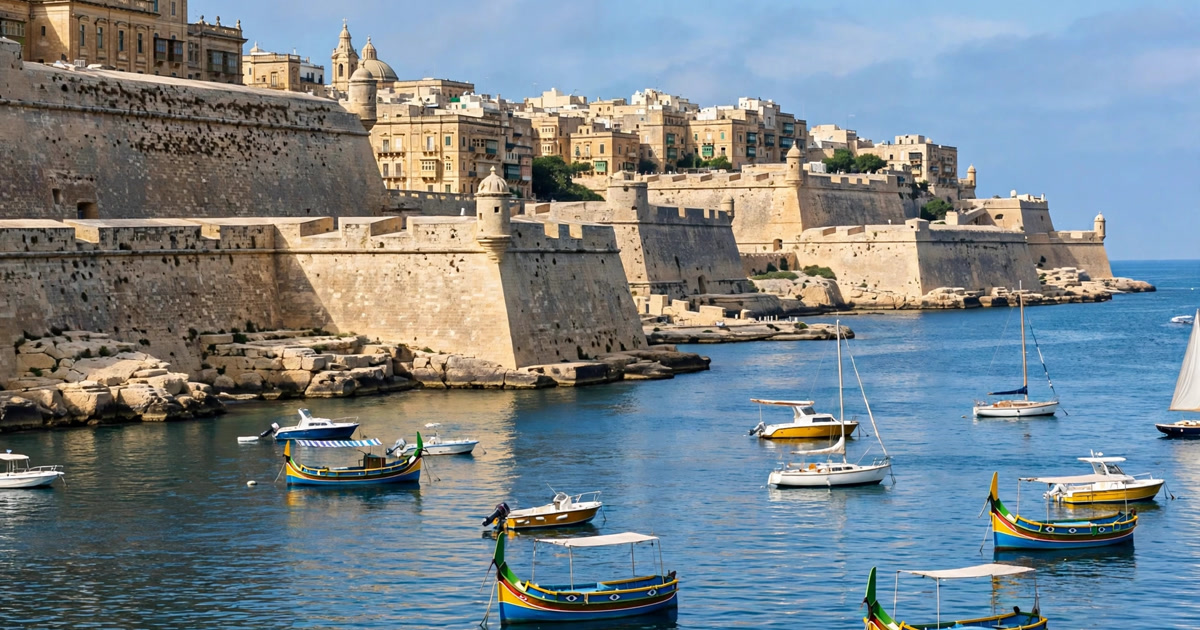
Malta packs thousands of years of history, clear-water beaches and village life into an island you can cross in under an hour. This Malta island travel guide covers Valletta, Mdina, Gozo and Comino, plus beaches, food and practical tips, so first-time visitors can plan a trip that goes beyond a single resort.
Malta suits history lovers, divers, walkers and families alike, and its compact size means you can combine a fortress city, a prehistoric temple and a swim in a single day. Use this Malta island travel guide to choose bases, plan days and avoid the most common visitor mistakes.
Valletta: The Fortress Capital
Valletta, a UNESCO World Heritage city, anchors any Malta island travel guide. Built by the Knights of St John, its grid streets, bastions, Upper Barrakka Gardens and St John's Co-Cathedral combine military history with baroque art, cafes and harbour views.
Spend at least a full day in Valletta, including the Grand Harbour ferry to the Three Cities, the Malta Experience or a harbour cruise, and an evening meal in Strait Street. Valletta is walkable but hilly, so comfortable shoes and water matter, especially in summer.
Mdina, Rabat and the Inland Villages
Mdina, the Silent City, offers a contrasting Malta island travel guide experience: medieval walls, quiet lanes, noble palaces and panoramic views over the island. Neighbouring Rabat adds catacombs, churches and a livelier town centre, while villages such as Marsaxlokk bring fishing boats and Sunday markets.
Inland Malta rewards slow travel: village feasts in summer, parish churches, farmhouse restaurants and walking paths through terraced fields. Renting a car or using buses both work, though village buses run less frequently in evenings.
Gozo and Comino: Malta's Sister Islands
Gozo, reached by ferry from Ċirkewwa, is greener, quieter and more rural, with the Citadel in Victoria, the Ġgantija temples, Ramla Bay's red sand and diving at the Blue Hole. A day trip works, but an overnight stay reveals Gozo's slower rhythm.
Comino, between Malta and Gozo, is tiny and famous for the Blue Lagoon's turquoise water, which draws crowds in summer. Visit early or late in the day, bring supplies, and respect protected areas, since Comino's small size makes it vulnerable to overcrowding.
Beaches, Diving and Outdoor Malta
Malta island travel guide beaches include Golden Bay, Mellieħa Bay and Għajn Tuffieħa for sand, plus rocky swimming spots with ladders and clear water for snorkelling. Diving is world-class, with wrecks, caves and reefs, and diving schools cater to beginners and experts.
Walkers can follow coastal paths, Victoria Lines and Gozo's trails, though summer heat demands early starts, hats and plenty of water. For planning, travel on a budget helps with buses, ferries and stays, and travel insurance covers diving and outdoor activities.
Practical Tips for Malta Travel
Malta uses English widely, drives on the left, and uses the euro, which eases travel for many visitors. Buses cover most of the island, but car hire gives flexibility for villages and Gozo, and ferries connect Malta, Gozo and Comino reliably.
Book Valletta and Gozo accommodation early in summer, check feast dates for village celebrations, and use a holiday travel booking guide to compare stays. Pack reef shoes for rocky shores, respect heritage sites, and allow time simply to wander, since Malta's best moments often come unplanned.
Festivals, Feasts and Village Life
Village feasts, or festi, are a highlight of Malta travel, with parish celebrations featuring marching bands, fireworks, street decorations and food stalls through summer. Each village honours its patron saint, and feasts offer a warm, communal side of Malta beyond tourist sites.
Visitors are welcome at feasts, though they should respect religious processions, dress modestly in churches, and follow local guidance on fireworks safety. Checking feast calendars adds memorable evenings to any summer trip.
Heritage Malta Sites and Temples
Heritage Malta manages prehistoric temples, including Ġgantija, Ħaġar Qim and Mnajdra, which predate Stonehenge and Egypt's pyramids, plus forts, palaces and museums. A heritage pass or combined tickets help visitors cover several sites economically.
Temples are best visited early or late to avoid heat, and guides or audio tours explain their astronomy, construction and ritual uses. Malta's prehistory is a distinctive reason to visit, setting the island apart from other Mediterranean destinations.
Food, Markets and Maltese Cuisine
Maltese cuisine blends Sicilian, British and North African influences, with rabbit stew, bragioli, pastizzi, fresh fish and ħobż biż-żejt, bread with tomato, tuna and olives. Village bakeries, markets and harbour restaurants offer the best introductions.
Marsaxlokk's Sunday fish market, Valletta's food markets and Gozo's farm shops all reward food lovers. Trying local dishes, wines and craft beers turns a Malta trip into a culinary journey, with seafood and seasonal produce at its heart.
Day Trips, Walks and Hidden Corners
Beyond famous sights, Malta offers hidden corners: Dingli Cliffs at sunset, the Victoria Lines walk, Wied il-Għasri gorge in Gozo, and quiet bays reached by coastal paths. These places reward walkers who venture beyond bus routes.
Plan walks for cooler hours, carry water, wear sturdy shoes and check path safety near cliffs. A slower Malta itinerary, mixing famous sites with hidden walks, gives a fuller sense of the islands than a rushed checklist.
Malta Island Travel Guide: Getting Around
This Malta island travel guide transport advice starts with buses, which cover Valletta, resorts, Mdina and Gozo ferries, though evening services thin out. Tallinja cards simplify fares, and route apps help visitors navigate an island where bus stops can be easy to miss.
Car hire suits this Malta island travel guide for villages, cliffs and Gozo, but parking is tight and driving is on the left. Ferries to Gozo run frequently, and harbour ferries link Valletta with the Three Cities, offering scenic shortcuts.
Malta Island Travel Guide: Where to Stay
This Malta island travel guide recommends Valletta or Floriana for culture lovers, Sliema or St Julian's for restaurants and nightlife, Mellieħa for beaches, and Gozo for quiet stays. Each base shapes the trip, so choose by interests rather than price alone.
Accommodation in this Malta island travel guide ranges from Valletta townhouses and Gozo farmhouses to resort hotels and apartments. Book early in summer, check air conditioning, and confirm ferry access for Gozo stays.
Malta rewards curiosity: a fortress city, a silent medieval town, a green sister island and a turquoise lagoon, all within a few miles. Plan loosely, travel slowly, and the island will surprise you.
Sources: Visit Malta; Malta Tourism Authority; Heritage Malta.