
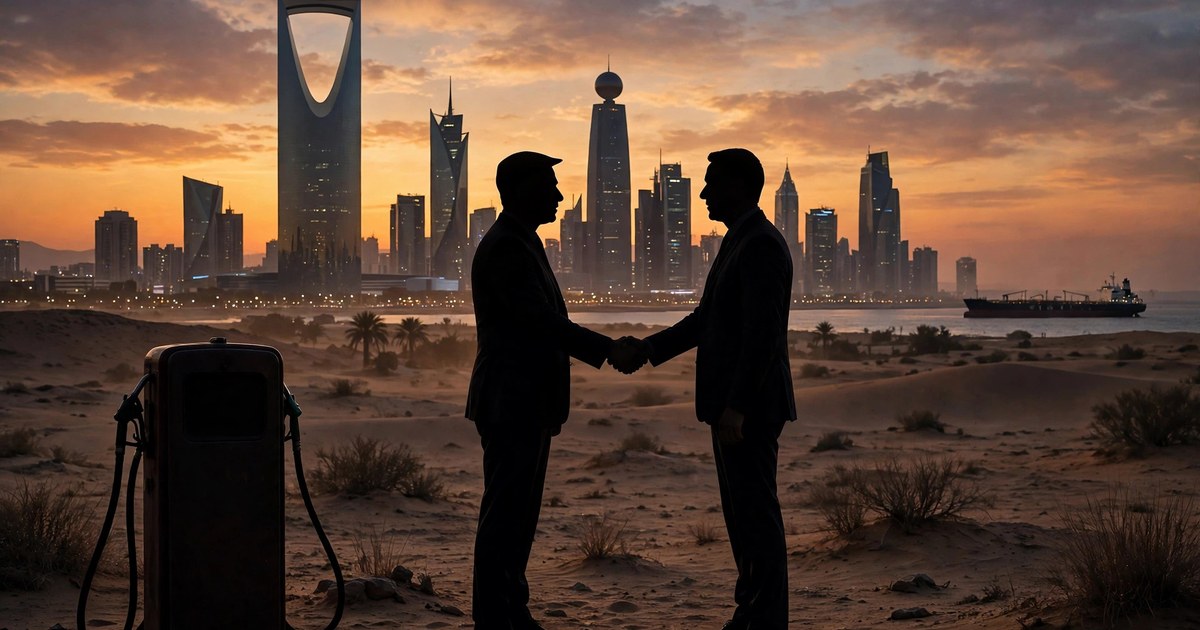
French President Emmanuel Macron landed in Riyadh on October 21, 2026, for a surprise "solidarity" visit with Saudi Crown Prince Mohammed bin Salman — becoming the first Western leader to touch down in the kingdom since Yemen's Houthis intensified their attacks this month. The unannounced three-hour stop ended with a concrete prize: Saudi Arabia agreed to extend extra diesel shipments to France "for as many months as necessary," the Élysée Palace announced.
The visit capped a frantic week-long Gulf tour driven by a single urgent goal: securing the fuel supplies France needs to keep petrol prices down as cost-of-living anger fuels violent protests at home. For Macron, the trip was both energy diplomacy and domestic crisis management.
A three-hour stop with a fuel deal
Macron's stop in the Saudi capital lasted less than three hours, according to an AFP journalist who watched the presidential jet land. He met the Crown Prince at the Al Jamama palace, where the two leaders discussed regional and international developments and agreed to consult on expanded security cooperation and infrastructure projects that would bypass the blockaded Strait of Hormuz, the Saudi Press Agency said.
The headline outcome was diesel. "An agreement has been reached with the Saudi authorities to extend for as many months as necessary the additional quantities of diesel that they had provided us to ensure the supply of our country," the Élysée said in a statement. The pact extends a previous Saudi commitment that covered 95,000 tons for October and November, as reported by Le Monde.
The Saudi deal was the capstone of a tour that had already secured significant supplies. According to figures released by the French presidency and relayed by Al Jazeera: the United Arab Emirates committed about 100,000 tonnes of diesel a month, Bahrain is expected to deliver another 100,000 tonnes a month, and Qatar is providing two terawatt-hours of liquefied gas a month. Counting the Saudi shipments, France now has roughly 295,000 tonnes of diesel a month promised — a little over ten percent of the country's consumption. (Sources differ on some details: France 24 reports Macron locked in an extra 200,000 tonnes a month from the Emirates and Bahrain combined, while Al Jazeera notes the Bahraini volume is still being finalized.)
Solidarity — and self-interest
The Élysée framed the Riyadh stop as a gesture of support: the visit aimed to "demonstrate France's solidarity with the kingdom in the face of the attacks carried out by the Houthis against its territory, and to continue efforts undertaken on securing and diversifying hydrocarbon supplies."
The solidarity has a military dimension. France confirmed a week ago the activation of a military support program for Saudi Arabia that includes the deployment of troops and military equipment, with the objective of reinforcing protection of the Yanbu oil complex against Houthi attacks. Macron is pairing fuel purchases with security commitments on a single tour.
But the domestic motive is impossible to miss. The diplomatic push follows days of rioting in France, fuelled by the cost of living — with petrol prices one of the central grievances. The US-Iran war and Iran's blockade of the Strait of Hormuz have kept energy prices high across Europe, and months of Hormuz disruption plus growing tension around the Bab el Mandeb strait have squeezed French fuel supplies.
Faced with criticism of his Gulf tour at home, Macron told reporters he was just "doing his job" in a bid to "ease tensions" over fuel prices. "There must be no sign of febrility," he said. "I am fulfilling my role. I am at my post."
Why France needs Gulf diesel
France's refineries and supply chains were built for an era of open sea lanes. The Hormuz blockade — now months old — and Houthi attacks on Red Sea shipping have forced European buyers to scramble for alternative supplies and longer, costlier routes. Diesel is particularly exposed: Europe has long depended on imports to cover its diesel deficit, and any disruption transmits quickly to the pump.
The political arithmetic is stark. Fuel prices are among the most politically sensitive numbers in France — the gilets jaunes movement of 2018 was born at the petrol pump. With protests already violent and a budget battle stalled in parliament, Macron cannot afford a winter fuel-price spike. The Gulf deals are an attempt to buy insurance: physical supply commitments that keep French service stations stocked and prices contained.
Beyond fuel, the two leaders agreed to consultations on wider security cooperation and on infrastructure that would bypass the blocked Strait of Hormuz — an acknowledgement that the current crisis is not just about this winter's diesel but about the architecture of Gulf energy flows. If Hormuz remains constrained, alternative pipelines and terminals become strategic assets worth building, and France wants a seat at that table.
The visit also sends a signal to other European capitals. Macron is the first Western leader to show up in person since the Houthi campaign intensified — a visible bet that engagement with Riyadh, rather than distance, is the right posture. Whether Berlin, London, or Brussels follow with their own high-level visits will indicate how Europe collectively reads the Gulf's trajectory.
The risks of the bet
Macron's strategy carries obvious risks. Tying France's energy security to Gulf suppliers deepens dependence on a region in active conflict — the very Houthi attacks that prompted the "solidarity" visit are the reason the supplies are needed. If the conflict escalates further, the supply lines Macron just secured could themselves come under threat.
There is also the climate contradiction. France has positioned itself as a green leader; emergency diesel deals with petrostates sit uneasily with that image — a tension underscored this week by Britain's controversial approval of the Jackdaw gas field on energy-security grounds. Macron's government would argue that keeping the economy running through a supply crisis is a prerequisite for any green transition, but critics see fossil-fuel lock-in.
Finally, there is the question of whether the deals will actually move pump prices. International crude benchmarks, refining margins, and taxes matter more for retail prices than bilateral supply agreements. The Gulf shipments guarantee availability; they do not guarantee cheap fuel.
What happens next
The Élysée will be watching two dashboards: French pump prices through the winter, and the security situation in the Gulf. Further consultations on security cooperation and Hormuz-bypass infrastructure are promised. And with France's parliament deadlocked over the budget and more protests planned, Macron's Gulf gamble will be judged at home not on diplomatic communiqués but on the price displayed at service stations across France. Related reading: Macron's Gulf tour: energy, Hormuz and the four-country push, Turkey's military mandate for Saudi Arabia, and the UK deploying RAF Typhoons to defend the kingdom.