
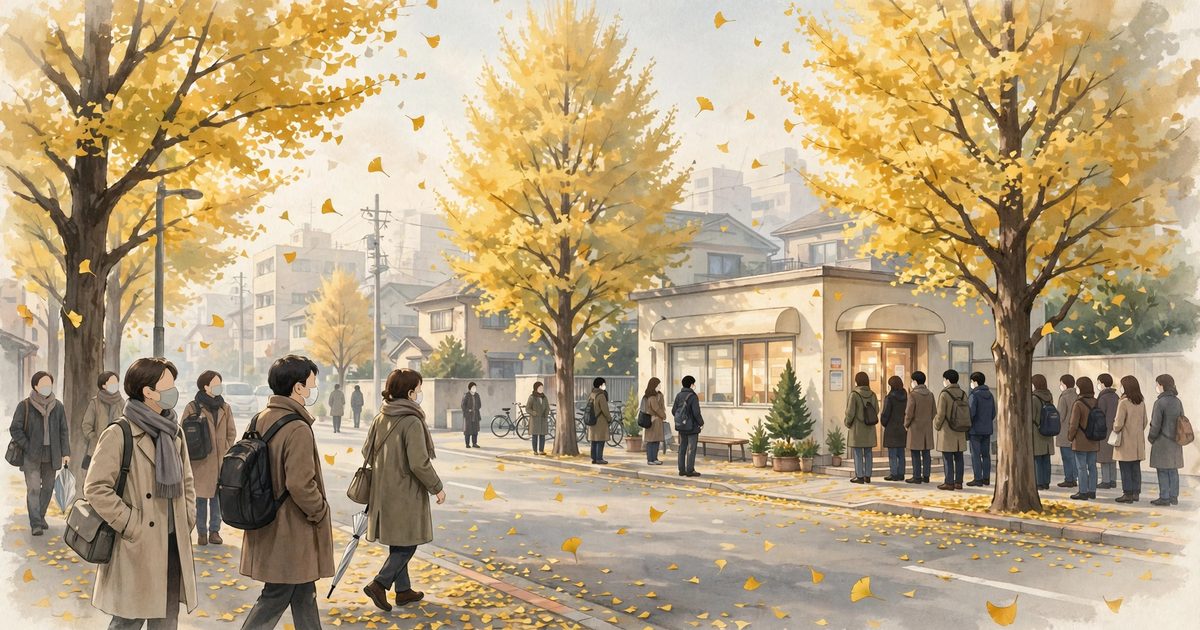
Japan flu season 2026 did not wait for winter. In the week of 17–23 August 2026 — while much of the country was still in late-summer heat — the national average of influenza patients per sentinel clinic reached 1.11, crossing the threshold of 1.0 that officially marks the start of an epidemic. It was the second-earliest start since modern records began in 1999, roughly five weeks ahead of the usual timetable, and the season has been building ever since. This explainer looks at what is driving the early wave, who it is hitting hardest, and why Japan's autumn vaccination window matters more than usual this year. For the underlying science, our guide How Do Vaccines Work? explains how flu shots train the immune system.
Japan flu outbreak 2026: an epidemic that started in August
Japan monitors influenza through a network of roughly 3,000 sentinel clinics that report patient numbers weekly to the Ministry of Health, Labour and Welfare (MHLW). In that August week the clinics recorded 4,094 cases. By the end of September the season was impossible to ignore: by 3 October, more than 4,000 people had been hospitalised with influenza — a fourfold jump in admissions within a week — and at least 135 schools and childcare facilities had temporarily closed classes or shut entirely. Twenty-eight of Japan's 47 prefectures passed epidemic levels. Okinawa, often the country's flu bellwether, ran especially hot, peaking at over 31 patients per sentinel clinic before easing in mid-October while remaining under an official warning; Hyogo prefecture reached advisory level on 15 October.
The pattern is not unique to Japan. Health agencies in the United States and the United Kingdom have also reported influenza arriving early this autumn, with the same dominant strain, suggesting a Northern Hemisphere season that has shifted forward on the calendar — something epidemiologists are watching closely as a possible post-pandemic realignment of respiratory-virus timing.
The strain: an old virus with a new trick
The overwhelming majority of this season's detections — 94.5 percent across the weeks analysed — are A(H1N1)pdm09, the descendant of the virus that caused the 2009 pandemic and has circulated seasonally ever since. What has drawn scientists' attention is a change in the virus known as G155E, which has become common among analysed H1N1 viruses and shows reduced recognition in antibody tests. In plain terms, immunity built from past infections or older vaccines may spot this variant a little less efficiently, which can help it spread — particularly among teenagers and young adults whose first flu exposures shaped their immune memory around a different version of H1N1, a phenomenon called immune imprinting.
Two reassurances accompany that finding. First, testing indicates the 2026–27 vaccine antigens closely match the circulating strains, so this season's shot remains the right tool. Second, the virus remains susceptible to standard antivirals in the great majority of cases: a small share of tested viruses (about 3 percent) showed reduced response to oseltamivir (Tamiflu), but none showed reduced response to peramivir, zanamivir or baloxavir. Japan expects around 51.9 million vaccine doses for the 2026–27 season.
Who is being hit hardest
Across the admissions data, two groups dominate: children under 10 and adults aged 70 and over together account for about three quarters of reported influenza hospitalisations. Schools are both a transmission engine and the most visible pressure point — class closures began as early as September, disrupting the new term — while care homes and hospitals carry the gravest risk, since flu in the very old so often escalates to pneumonia and complications of existing conditions. Japan's school rules reflect the caution: children stay home until five days after symptoms begin and two days after fever subsides.
The early start also collides with an economy already short of slack. As our report on Japan's manufacturing slowdown noted, factories are contending with soft demand; a flu wave moving through workplaces and supply chains in November would add absenteeism to the list of headwinds. The season's unusual timing even broke through the late-summer heat records we covered in Tokyo and Osaka's record October heat — a reminder that respiratory viruses do not always respect the weather cues people rely on.
Japan flu vaccination 2026: the window, the cost and the timing
Japan's routine influenza vaccination season runs from 1 October 2026 to 31 January 2027. For residents aged 65 and over, flu vaccination is a routine public programme with municipal subsidies, and the typical out-of-pocket cost is around ¥2,500, varying by city. Municipalities also subsidise children in many areas; children under 13 generally need two doses a few weeks apart, while everyone 13 and older needs one. Some employers arrange workplace vaccinations as well.
Timing matters this year. Protection takes about two weeks to build after the shot, and with officials projecting the peak around late November into December, vaccination in October or early November covers the worst of the wave. Health authorities expect this season's total supply — about 51.9 million doses — to be sufficient, but early demand is running high precisely because the epidemic arrived early.
Everyday defences still count
Alongside vaccination, the MHLW repeats the familiar liturgy, which Japan practises more diligently than most: masks in crowded places and clinics ("cough etiquette"), thorough handwashing after being out, ventilating indoor spaces, and keeping indoor humidity between 40 and 60 percent, which makes conditions less favourable for the virus. People with symptoms are urged to rest at home rather than push through — advice more Japanese companies are formally enabling — and high-risk patients who do fall ill should seek antivirals early, ideally within 48 hours of symptom onset, when they do the most good.
An early flu season is not, by itself, a crisis: Japan's surveillance system caught this one in August precisely because it is one of the best instrumented in the world. But it is a test of timing. The defences all exist — vaccine supply, antivirals, public habits — and the question for the next six weeks is simply whether they are deployed before the peak, or during it.
Sources: Japan Ministry of Health, Labour and Welfare (MHLW); Asia Daily; IFLScience; Health and Me; City of Inagi, October 2026.